Creative Destruction At Its Best: The Death Of Manual Scavenging?

In a provocative address last year at IDIA's annual conference, Magsaysay Award winner, Dr Bezwada Wilson rhetorically asked: How is it that we managed to send a mission (Mangalyaan) to Mars? And yet, for all our technological prowess, we still have not figured out a way to end manual scavenging! A dastardly practice with deep roots in India's caste hierarchy and one that continues to haunt us to this day…with lower caste communities inflicted with this bountiful burden of cleaning society's shit (pardon the French). So much for the promise of equality after more than 65 years of our Constitution coming into force!
Little did Dr Wilson know that at the very moment when he spoke at IDIA's conference, a bunch of bright boys were working on “Bandicoot”—a robot to replace manual scavenging. Unleashed with much fanfare in Kerala a couple of days ago, this invention proves yet again that the best of change comes from a small group of committed people.
As the noted anthropologist, Margaret Mead once said: “Never doubt that a small group of thoughtful committed citizens can change the world. Indeed, it is the only thing that ever has.”
Also Read: A Robot To Help Kerala Clean Its Sewers
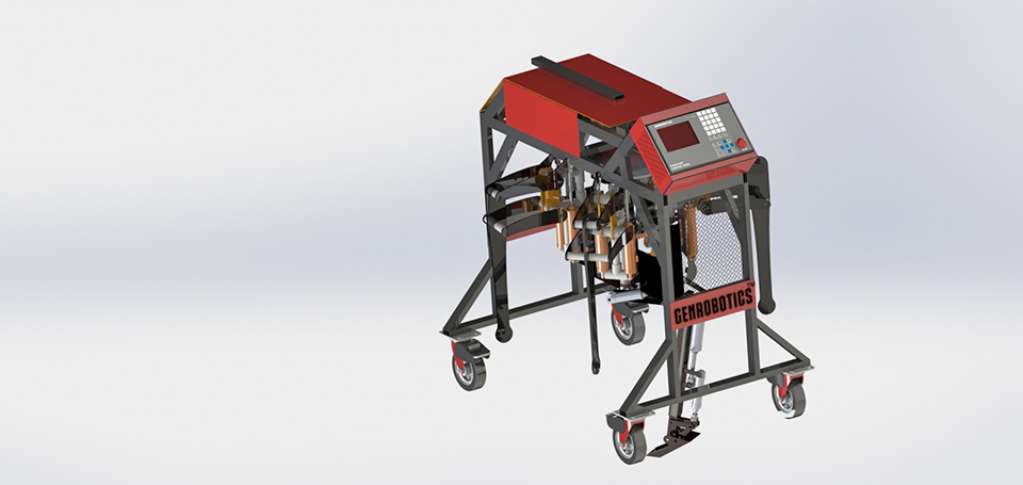
Here is an excerpt from the Quartz on Bandicoot and the boys behind it:
“An Indian startup has found a way to get rid of a centuries-old social problem in India that has only turned deadly in recent times, killing more people in a year than even terrorism does in Kashmir.
Genrobotics, a firm based in Thiruvananthapuram in the southern state of Kerala, has created a robot that cleans sewers—a degrading and dangerous task otherwise performed by thousands of manual scavengers across the country.
On Feb. 26, the startup deployed the first such robot, Bandicoot, in Thiruvananthapuram, in partnership with the Kerala state government. The spider-like machine, with an arm that drops into the manhole, unclogs it, and pulls out the sludge. Bandicoot does in 45 minutes what three workers take two hours to do, one of Genrobotics' founders said.
The company is now in talks with the Indian government's Swachh Bharat Mission (Clean India Mission) to take the four-legged Bandicoot countrywide, said Arun George, a co-founder of the firm.”
As we speak about IP/innovation rankings and indices (speaking of which, the notoriously noxious U.S. Chamber of Commerce rankings is once again doing the rounds), we must find a way to capture and reward inventions with significant social impact…even those, that from a pure IP perspective, may not match up to our higher ideals of “inventiveness”.
We might have got to the Bandicoot before, if only we'd put out a bounty (prize) for anyone who came up with a bright idea to end the menace of manual scavenging. For those interested, here is a piece of mine reflecting on prizes and other non IP incentives.
Putting some teeth back into India's constitutional promise of “equality” for Dalits and other marginalised sections who've had to clean our crap for years. Only a few days ago, the Delhi high court ruled on a case involving the death of two manual scavengers; making the government pay for its murderous negligence!
Anyway, time now to celebrate these innovative minds at Genrobotics who've given us this life saving technology. And yes, they have applied for patents.
PS: I'm advising Genrobotics in an informal capacity, not least because Shainamol, the MD of KWA (Kerala Water Authority) who nurtured and encouraged this ingenious idea happens to be a good friend.
This article was originally published on SpicyIP.
Shamnad Basheer is the founder of SpicyIP. He is currently the Honorary Research Chair of IP Law at Nirma University and a visiting professor of law at the National Law School (NLS), Bangalore.
The views expressed here are those of the author's and do not necessarily represent the views of BloombergQuint or its editorial team.

-
Indians Stay With Family, Not In Hotels | The Reason Why

India still lacks enough clean, reliable and affordable hotels for budget-conscious travellers.
-
The Economic Imperative: Analysing The Material Driving Force Behind India-Canada Strategic Reset
This economic complementarity is further reinforced by deep institutional investment ties and talent mobility, which form the bedrock of the bilateral framework.
-
Medicine Pricing: Where Must Profit Stop?
India must confront excessive margins, hidden incentives and regulatory gaps that threaten the integrity of medicine.
-
Why Amazon And Flipkart Are Struggling To Beat Meesho In India's Smaller Cities
With 274 million users and lowest-cost logistics, Meesho is defending its value commerce crown against giants like Amazon and Flipkart.
-
High US Salaries, No Green Card Certainty: The Financial Calculation Facing Indian H-1B Families
The suspension of PERM processing at eight technology employers does not cancel existing H-1B visas. What it does is force a question many Indian families have been avoiding: is the US salary worth tying your career and family plans to one employer?
-
Swiggy vs Eternal: Food Delivery's Two Rivals Are No Longer In The Same Race
Eternal is building a private AI assistant, dark.ai. Swiggy is still working out how to make Instamart pay, with an operating loss of Rs 895 crore in the July-September quarter while Blinkit stayed profitable.
-
Where You Live Shapes How You Get To Work | The Reason Why
Two-wheelers are the most popular way to get to work in India, accounting for nearly 43% of workplace commutes.
-
Unhedged Position: Can India See An Indonesia-Style Time Correction?
The Nifty is trading below levels it first clocked in 2024. Is there, then, as I have suggested in the headline, potential that the current time correction drags on painfully for the next three-five, even ten years?
-
Navigating Friction And Energy Realities: An Analysis Of Marco Rubio's October Visit To India
Occurring at a critical juncture marked by stalled trade negotiations and escalating geopolitical pressures over global energy supplies, the visit offers a profound window into modern US-India relations.
-
India Exports Capital. Why Not Export Trusteeship?
The big question, then, is whether India can build an institution that global borrowers, investors, banks, and lawyers can trust, even without an Indian connection.










