Covid Second Wave: Economic Impact Not Trivial But May Be Less Enduring, Say Economists
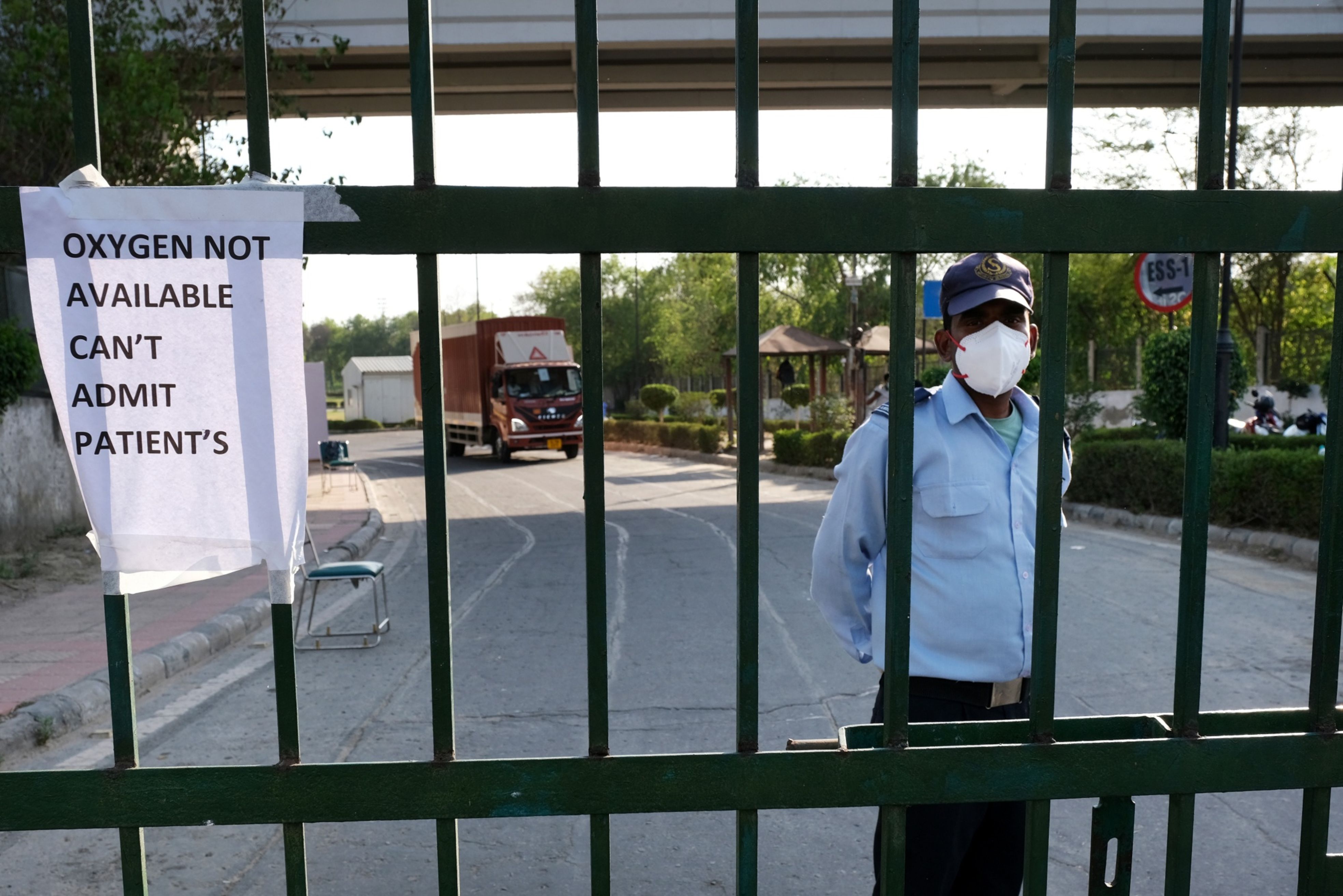
The second wave of Covid-19 infections is spreading across the country and state after state is announcing restrictions even though a nationwide lockdown has been avoided. The outbreak is no longer concentrated in a few states or even in urban areas as was earlier thought.
As the wave spreads, the Indian economy will likely see a sequential contraction in the April-June quarter, warned Sonal Varma, chief India economist at Nomura. Sajjid Chinoy, chief India economist at JPMorgan, cautioned that the impact will be heterogeneous, asynchronous and hopefully less enduring but it won't be trivial.
Watch the full interview here and read edited excerpts below:
Economic Impact: Lesser But Not Trivial
High-frequency indicators are suggesting some impact to the economy already but the damage is not as extensive as during the first wave.
“The level of stringency of lockdowns, even in states where they have been announced, is lesser than what we saw in the nationwide lockdown last year.” As such, while mobility has fallen sharply, other indicators are showing a more limited impact, said Varma. For instance, power demand which was down about 30% in the first wave, is down about 10% so far. The labour participation rate has so far declined by just a percentage point or so and logistics indicators like railway freight traffic have fallen lesser than what we saw during the first wave, Varma said.
Our baseline assumption is that the virus peaks out by May. So we are seeing this as a two-month big hit but an improvement thereon. If that plays out, then on a sequential quarter-on-quarter basis, we are currently looking at contraction (not annualised) of 1.5%.Sonal Varma, Chief India Economist, Nomura
Chinoy agreed the impact would be less than last year but it won't be trivial. The worrying part is that this comes on the back of an incomplete recovery, he said.
We are working with the assumption that April and May is when we see rolling lockdowns and in June there is some degree of mean reversion. That would give you a quarter on quarter annualised contraction of 15% (in April-June quarter). To put it in perspective, last year, this was -65%.Sajjid Chinoy, Chief India Economist
Chinoy cautioned that given the very favourable base effects, the year-on-year numbers will be deceptive. Even with a 15% sequential annualised contraction in the April-June quarter, the year-on-year growth will come in at 23%, he said. For FY22, year-on-year growth could be 10% even if activity remains constant at current levels, given the 8% contraction in the economy last year.
“We need to start measuring the recovery against where we were pre-pandemic. I would argue that even before the second wave, taking into account double-digit growth for this year, we would still be 6-7% short by the end of the year,” Chinoy said.
Vaccine, The Best Stimulus
Both Chinoy and Varma said the speed with which Indian citizens can be vaccinated is all important. In doing so, the challenge remains the limited and staggered supply of vaccines.
As things stand, Bharat Biotech and Serum Institute together have a 75 million dose monthly capacity that is available, said Varma. “While we have opened up vaccinations for those above 18 years, there is significant supply shortage which will continue at least till end of May. I think things should start looking better from June,” she said.
Our estimate is that the inoculation rate should pick up significantly from the 2.5 million doses per day that we are seeing right now. It could go to 5 million and potentially even above 8 million a day [by year end]. That implies that as compared to about 10% of the population that has received a dose right now, about 45% or higher would have received a dose by the end of the year.Sonal Varma, Chief India Economist, Nomura
Higher inoculations, together with people who have been infected and have antibodies, would mean that India should have herd immunity by year end. “This is quite important because we will see multiple waves and it is important to keep fatalities in check. This, in turn, will strengthen the ability of the economy to withstand pressure,” Varma said.
Chinoy said the country has to ensure improved supplies but it also has to try use the private sector's capacity to improve the pace of vaccination. At the same time, you have ensure that for a large section of the population the vaccine is free, given the positive “externalities”.
You want the private sector to be involved in distribution, to get jabs in arms quickly. At the same time, you want to subsidise it for large parts of the population. Vaccine vouchers is one way, there are other options... In terms of cost, the total budgeted fiscal deficit this year is upwards of 10% of GDP. 0.5% of GDP in vaccination costs is not going to break anybody's budget, whether it's the center or the states or however it is divided.Sajjid Chinoy, Chief India Economist, JPMorgan
The Policy Response
Given that the intensity of infections still varies widely across states, the policy response will need to be led by states for now.
So far, the central government has extended a free grains programme, while some local administrations such as Maharashtra and Delhi have announced cash relief to some segments of the population like construction workers.
When you have a monetary union but you have such an asymmetric shock, state specific response seems to be optimal response. And we have begun to see that. Maharashtra and Delhi have announced some cash transfers. The focus over the next two months has to be impart relief urgently both in cash and kind, both to provide a safety net and to prevent reverse migration. This can be done at a state level, backstopped by the centre.Sajjid Chinoy, Chief India Economist, JPMorgan
States are right now first line of defense, agreed Varma. At the central level, food transfers, higher allocations for the rural jobs guarantee programme, if needed, would be important. In addition, given the challenges that MSMEs face, particularly in the high contact services sector, more credit guarantee support may be needed.
Chinoy added that states have enough capacity to spend right now and they should do so.
The cumulative fiscal deficit for major states is pegged at 3.3% of GDP in FY22, below the 4% permitted. States have borrowed Rs 1 lakh crore less than estimated in the last one month because they have high cash balances. “It would be very sub-optimal for states to keep to these deficit levels and cut expenditure if health expenses rise. The centre should urge states to go up to 4% if they have to. They should borrow and spend,” Chinoy said.

-
One El Nino, India Can Handle. Two Could Break The Granary

India's grain stocks can absorb one bad year, but a second El Nino could drain the buffer in two to three years, economists say.
-
India's Troika Of Good Luck | Joining The Dots
As Jensen Huang's exit drags Nvidia down, a cooling AI trade and resilient earnings have revived investor interest in India. A likely RBI rate hike looms.
-
Talking Points This Week: Leadership Shock At Nvidia, Earnings Strength, And The Fog Over Hormuz
The Anthropic IPO pricing and first trading day, Nvidia's upcoming earnings, and any fresh signals from Iran will set the tone for the following week.
-
Signature Play: The Classic Cocktail Is Dead. Or Is It?
Classic cocktails are disappearing from India's cocktail menus. But they're still being ordered, taught to bartenders and borrowed from. So, who's really having the last drink?
-
A New Samvat Wishlist: Inclusive Prosperity And Human Development
India has strengthened its economic foundations through infrastructure, digital access and enterprise. Its next growth chapter must deepen productivity, create better livelihoods and widen participation in prosperity.
-
Love, Sex Aur Dhokha: The Audacious Plot To Spy On Jensen Huang
A Taipei dinner, a Singapore chip buyer and a suspected Chinese asset: inside the alleged spy operation that got close to NVIDIA's Jensen Huang.
-
Ten Things I Learnt This Samvat
Patience can be a trap. Cheap stocks can stay cheap. Leverage can wipe you out. What did Samvat 2082 teach us? Niraj Shah writes on 10 lessons from the year gone by.
-
Talking Points This Week: Tech Nerves, FII Buying, And A Faraway Banking Shock
The global markets are not shining this Diwali. The exception in the large markets is, India.
-
Midterm Rally Lasted A Day. The Hard Reality Of A Divided US May Last Two Years | Opinion
Between a contested AI boom, a debt ceiling that arrives in 2027 and a president with every incentive to act alone, the next two years may prove more volatile than the first day's rally suggests.
-
Blue Wave Will Derail the AI Trade but Won't Dismantle the AI Era | Unhedged Position
The Democrats' sweep of the US Congress will see politics collide with economic forces both over the long and short term.









