Covid-19 Remains Top Risk For Fund Managers, Says BofA Survey

Covid-19 is here to stay and is the biggest risk to investors.
A larger number of global fund managers, overseeing as many as $632 billion in assets, continue to believe in this aspect, according to the latest Global Fund Manager Survey by BofA Securities.
BofA Securities surveyed a total of 224 panellists over a week in October, a majority of whom said that a contested outcome of the U.S. elections will cause maximum market volatility.
Here are the five key takeaways from the survey:
The Risk Of Covid-19
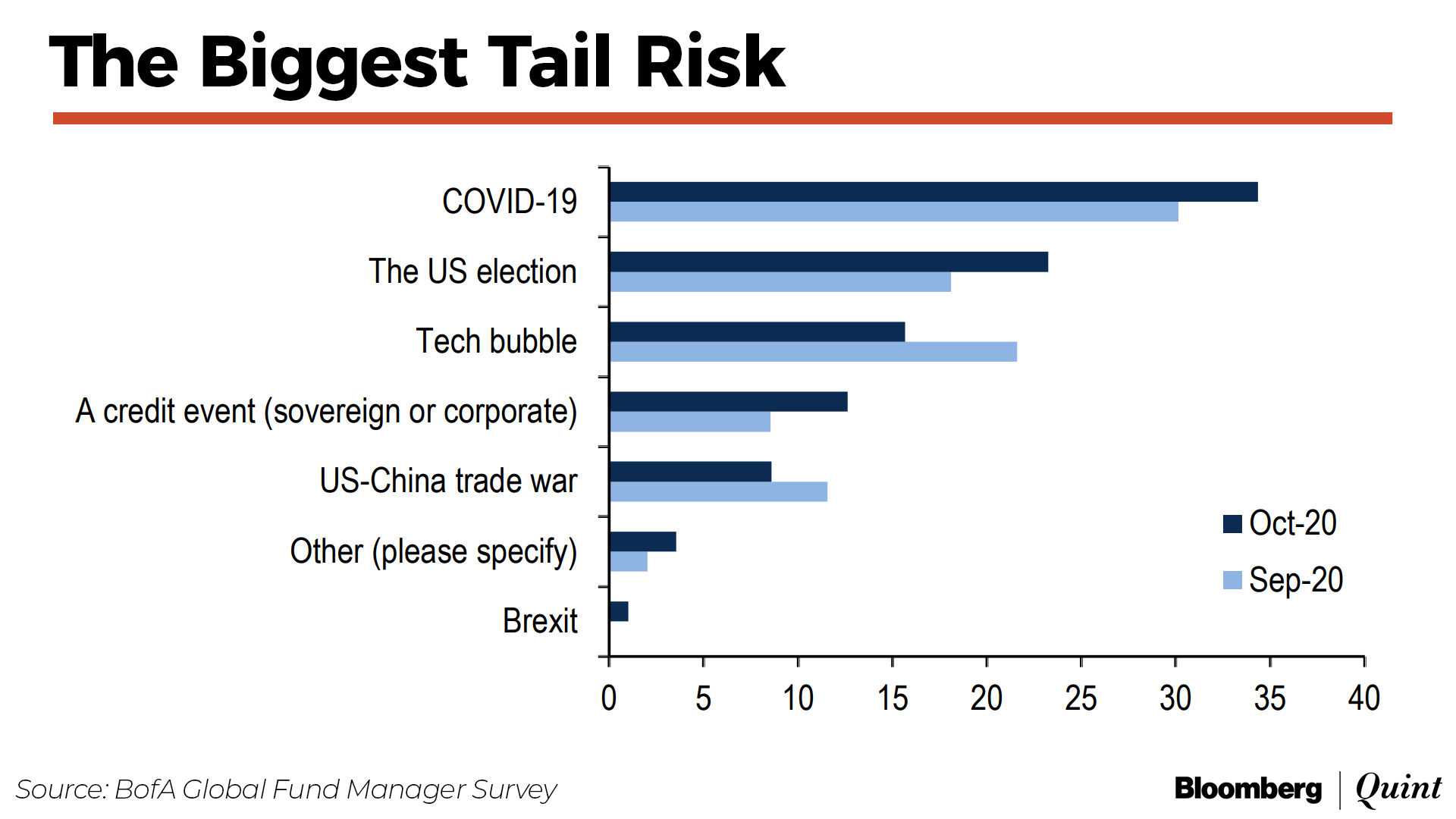
The Covid-19 outbreak, which has infected close to four million people globally and claimed over a million lives, remains the top risk for fund managers worldwide.
As many as 34% of the 224 fund managers surveyed now perceive Covid-19 to be their biggest risk—up from 30% in September.
And 39% of the respondents expect an announcement on a credible Covid-19 vaccine to be made by February 2021.
The probability of a tech bubble risk has gone down to 16% from 22%, while other risks include the U.S. presidential election, at 23%, a sovereign or corporate credit event (13%), the U.S.-China trade war (9%) and Brexit.
U, V Or W?
Rating agencies and fund houses have probably exhausted every letter of the English alphabet to project the trajectory of global economic recovery.
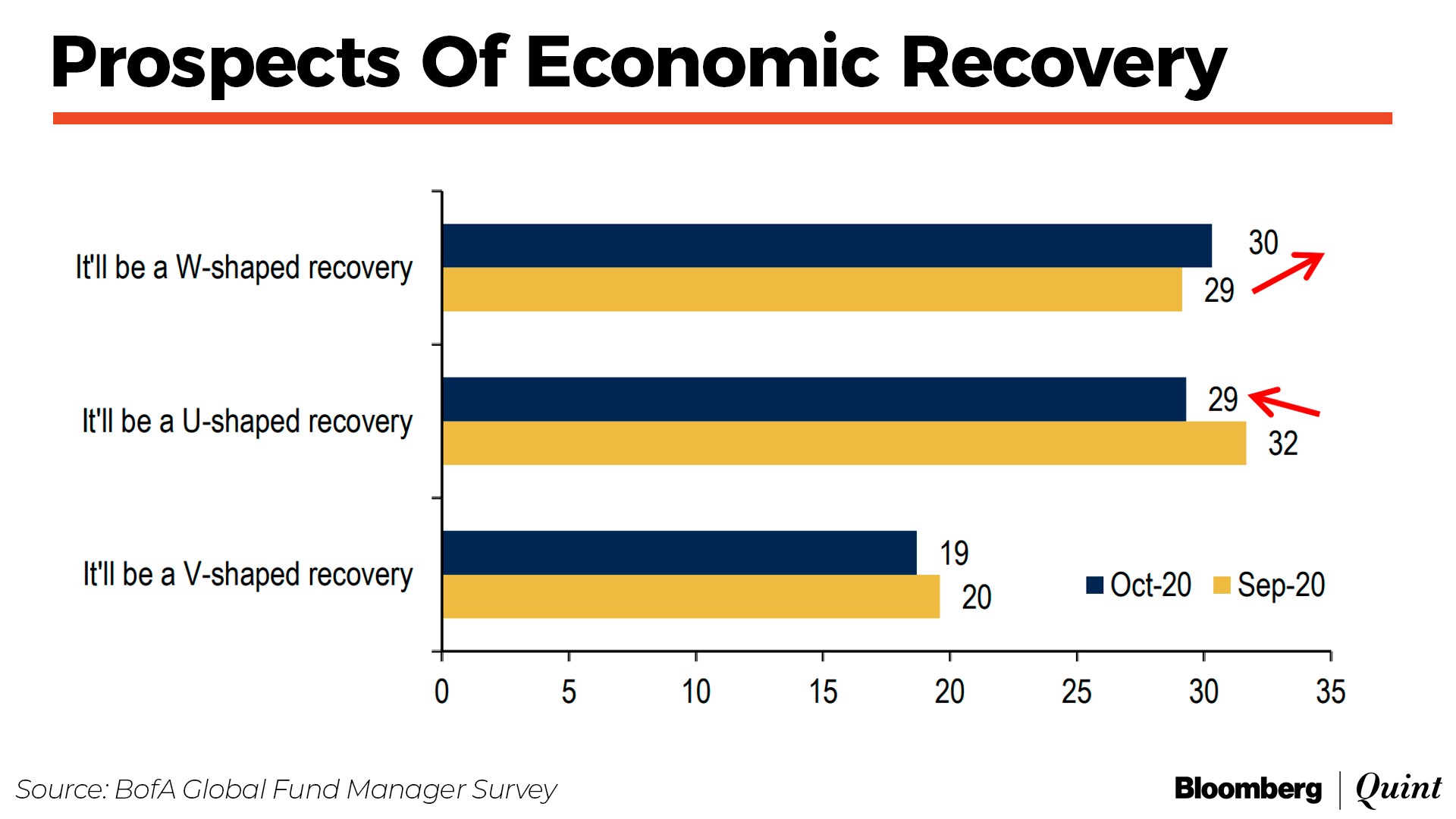
Nearly 30% of the fund managers project a ‘W'-shaped recovery, up marginally from 29% in September.
Prospects of a U-shaped recovery stood second, with its share declining to 29% from 32% a month ago.
Only 19% of the respondents projected a V-shaped recovery.
No Recession Likely
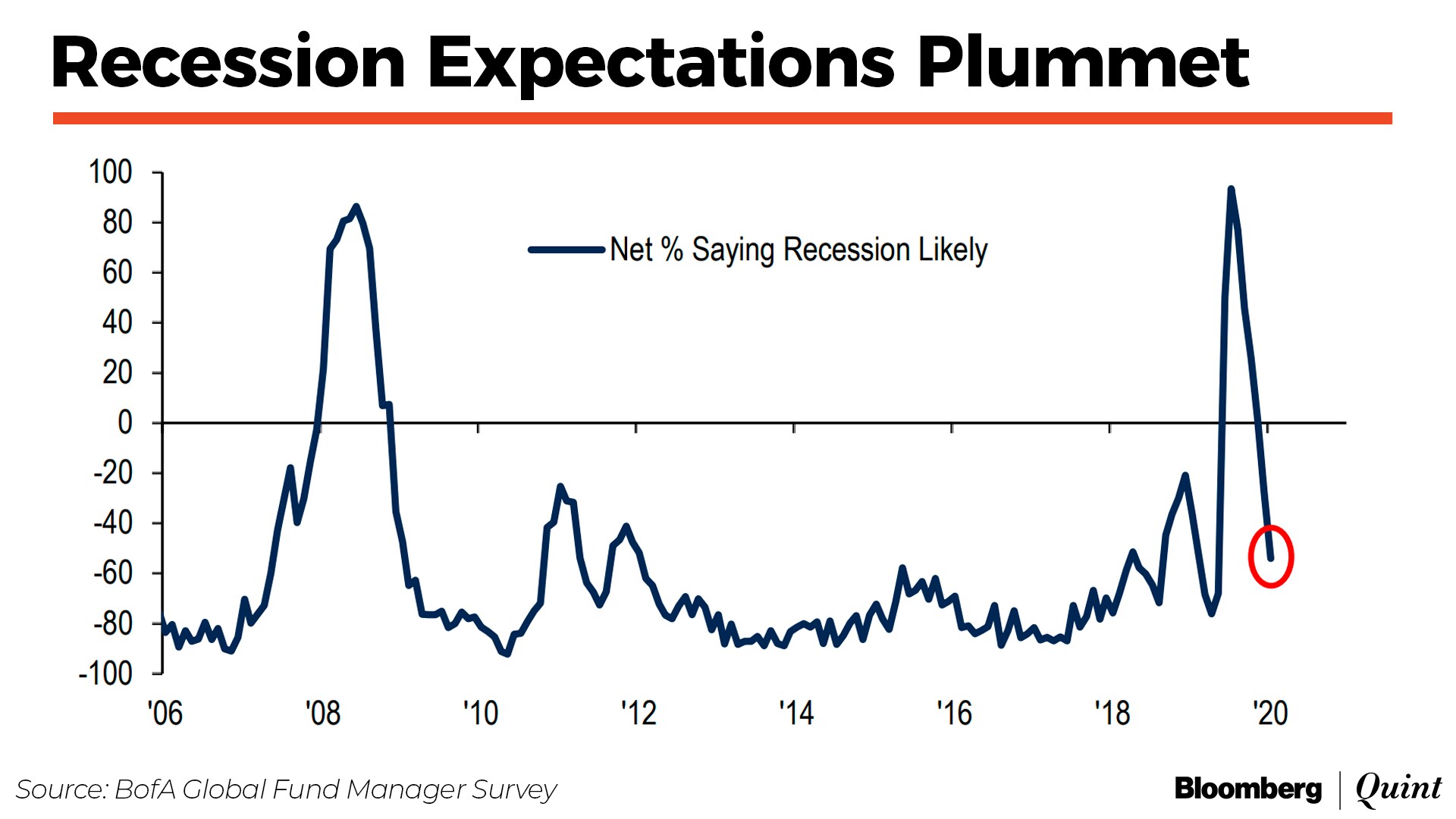
Odds of a recession taking place in the next 12 months has declined further as compared to September.
The figure for October stood at -54%, a drop from -28% in September.
Instead, 60% of the money managers think that the global economy is in an “early-cycle phase”, which in 2009 and 2012 indicated a key milestone for economic recovery.
The U.S. Elections
The U.S. presidential elections are under a month away. While Democratic party nominee Joe Biden has widened his lead over President Donald Trump—according to opinion polls—61% of the fund managers expect the election's results to be contested.
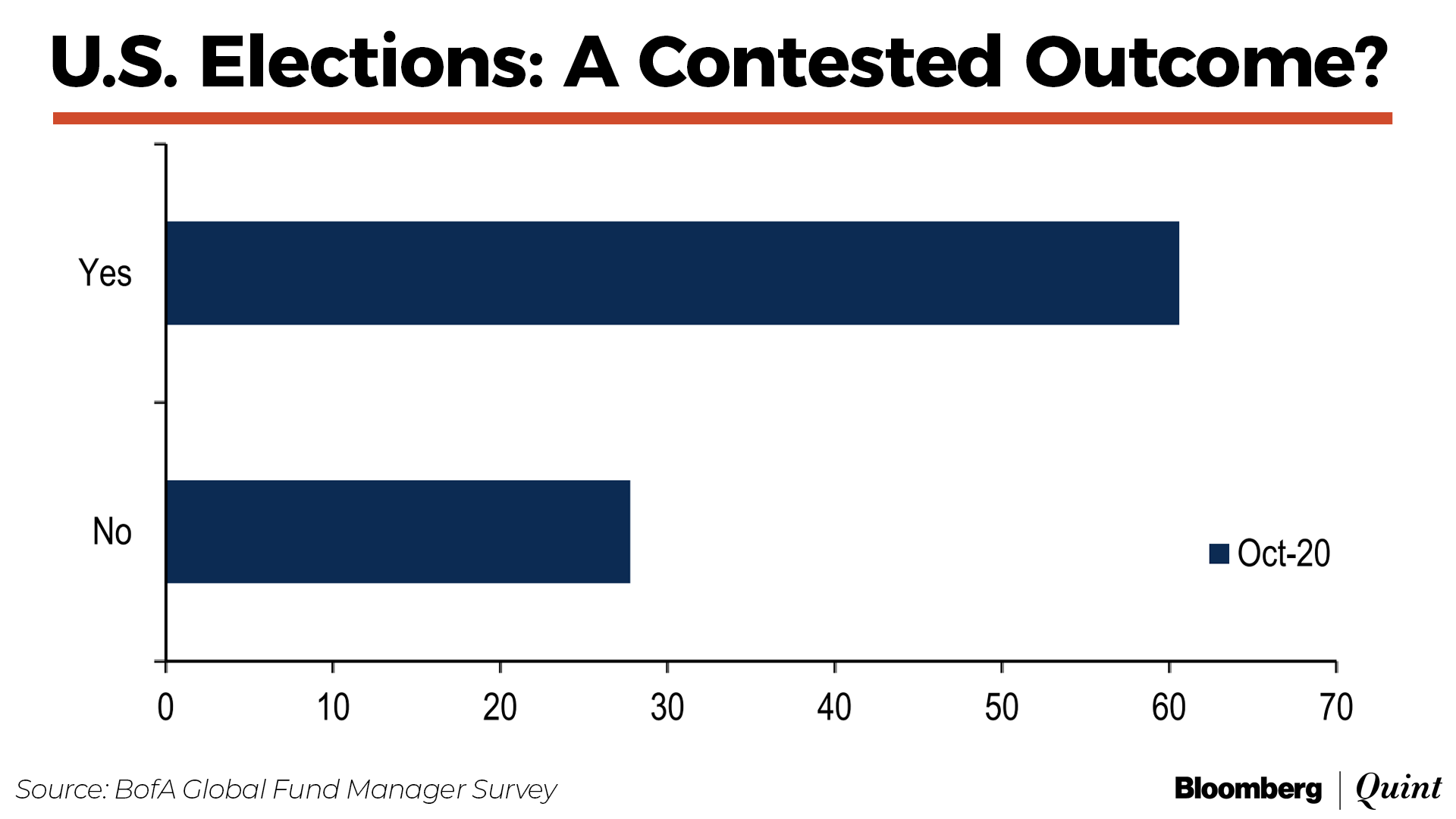
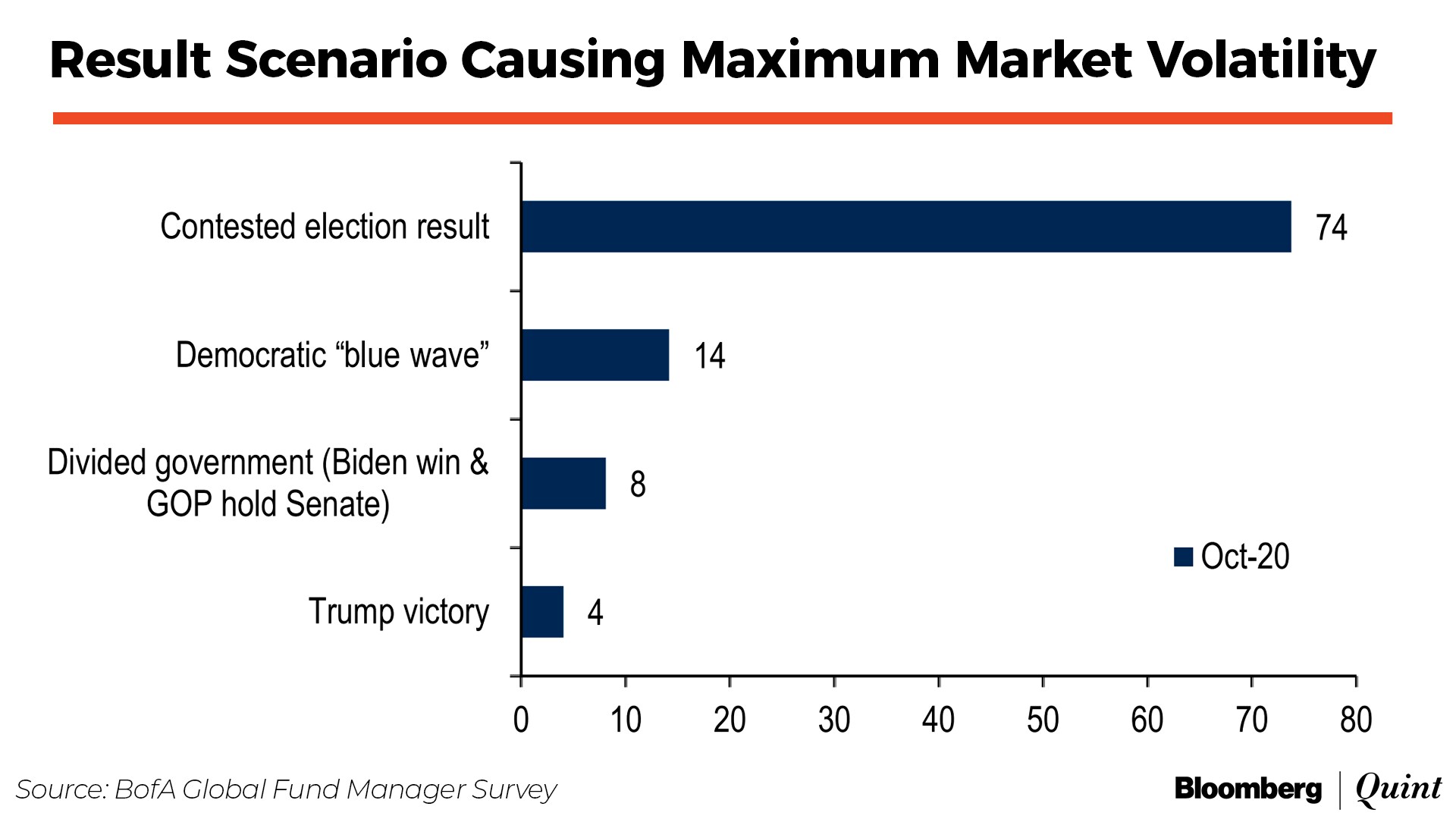
And it will be this contesting of the election results is what will cause the maximum market volatility, according to 74% of the fund managers surveyed.
Other factors here include a Democratic “blue wave”, a divided government (where Biden wins and the Republican party holds the Senate) and a Trump victory.
Sectoral Allocation
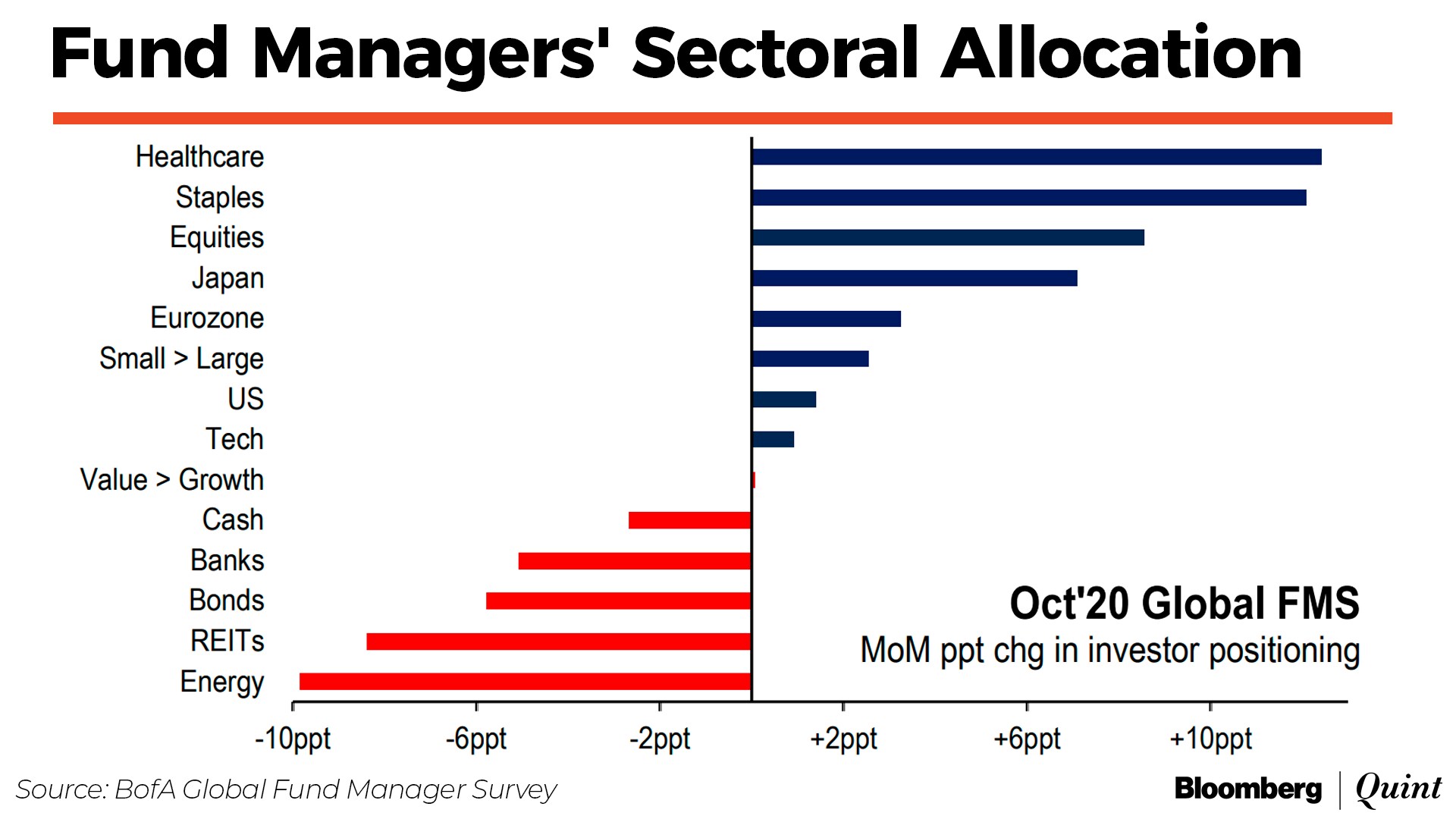
Healthcare continues to be a favoured theme for fund managers across the globe. The allocation to the sector in October stands at the highest since May 2020, the survey indicates.
Allocation has also been increased in sectors like staples while Japan, as a region, has seen increase in allocation compared to a month ago.
Volatile oil prices, demand concerns and rising supply prospects keep fund managers bearish on the energy sector.
The respondents are most underweight on the energy sector in the past six months. Other sectors where allocation has seen a reduction include REITs, bonds and banks.
Sector positioning shows maximum conviction on the technology sector and rising optimism on healthcare.
Other Key Highlights
- Cash levels have declined to 4.4% from 4.8% in September. Cash levels of less than 4% indicate greed while those over 5% indicate fear.
- Cash levels have declined over 1.5% in the last six months, which is the fastest drop since 2003.
- Hedge funds increased their net equity exposure to 42% from 30% in September. This is the highest level since June.
- 50% of the fund managers expect technology stocks to lead the markets in 2021 as well. 43% responded otherwise.
- Increasing underweight in REITs indicates fund managers expect bond yields to rise.
- Long U.S. technology shares as the most crowded trade has declined 9% to 71% in October.
- Equity allocation rose to 27% overweight—the highest since February.
- 24% of assets under management is allocated to ETFs. Last month's figure of 25% was the highest on record.

-
Getting To Work Costs Women More | The Reason Why

It is not just about women paying more than men. It is about women paying much more in cities than in villages.
-
AI Bias In Investing Cannot Be Eliminated, But It Can Be Governed
Framing is a particularly important example as identical financial information presented in terms of gains rather than losses can lead an LLM to reach a different assessment.
-
Joining The Dots | Dark Skies, Steady Diya: Why Hope Holds This Diwali
With war, a weak rupee and foreign outflows weighing on sentiment, policymakers at the NDTV World Summit and market veterans at NDTV Profit Ignite: Diwali Edition offered the same advice: stay invested and filter out the noise.
-
The Curious Case of Equitas Small Finance Bank And A CEO Who Quit For Stock
PN Vasudevan believes persistent investor concerns over a perceived conflict of interest had become a governance overhang on Equitas Small Finance Bank's stock, even as the lender improved profitability and asset quality.
-
Talking Points This Week: AI Cash Burn, A Tiger Comeback And An India That Still Finds Its Own Path
India is not immune to higher oil or tighter global liquidity, yet its earnings base is broader, its domestic policy levers are still available.
-
Foreign Investors Own Half Of HDFC Bank and ICICI Bank. An LTCG Cut Could Matter Most Here
Foreign portfolio investors have US$115 billion parked in HDFC Bank, ICICI Bank. If the government cuts long-term capital gains tax, Jefferies says returning foreign money could land here first.
-
'Never Seen This Level Of Negativity': Sandeep Tandon Says The Next Rally May Be Closer Than You Think
Veteran investor Sandeep Tandon says foreign selling is easing, large-caps are due a comeback and mid-caps are crowded, while he turns positive on gold, power and pharma this Diwali.
-
Indians Stay With Family, Not In Hotels | The Reason Why
India still lacks enough clean, reliable and affordable hotels for budget-conscious travellers.
-
The Economic Imperative: Analysing The Material Driving Force Behind India-Canada Strategic Reset
This economic complementarity is further reinforced by deep institutional investment ties and talent mobility, which form the bedrock of the bilateral framework.
-
Medicine Pricing: Where Must Profit Stop?
India must confront excessive margins, hidden incentives and regulatory gaps that threaten the integrity of medicine.










