Covid-19 Has Disrupted Supply And Demand, HUL Says In Annual Report
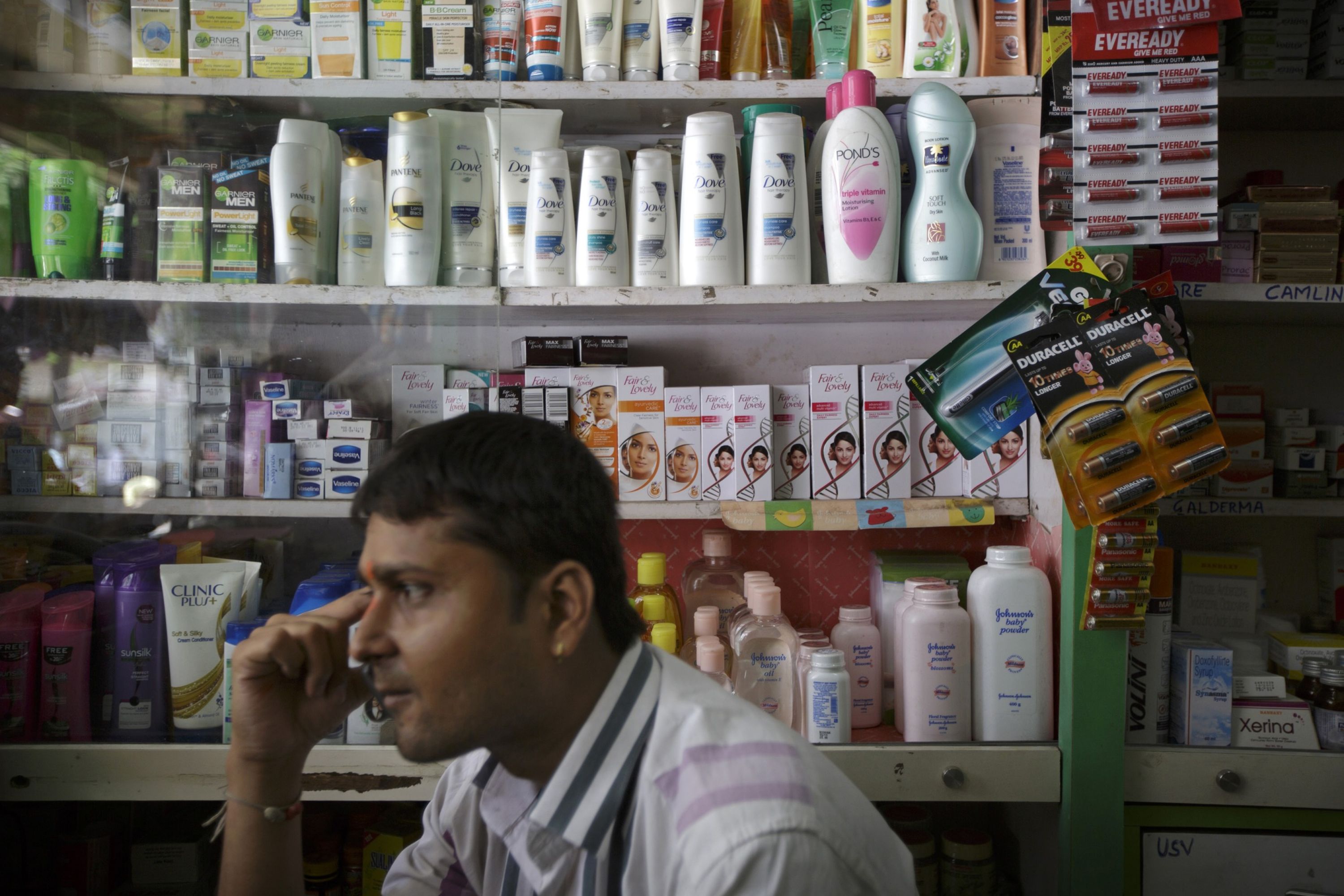
India's largest consumer goods maker said the containment efforts following the Covid-19 outbreak has resulted in supply and demand disruptions, leading to sharper growth deceleration.
“The situation remains volatile with the trajectory of the virus undetermined, evolving hot-spot geographies, the success of containment measures uncertain, the severity and duration of resulting economic crisis and the extent of structural damage unknown,” Hindustan Unilever Ltd. said in its annual report that was released on Friday.
The maker of Lux soap, Knorr soups and Bru coffee also said the near-term outlook for the fast-moving consumer goods sector remains extremely uncertain even as it expressed confidence at medium- and long-term growth prospects.
The nationwide lockdown imposed to contain the pandemic froze all but essential economic activity, and decimated consumption in the first two months of the fiscal. While India has started reopening in phases and the government announced relief packages, the economy is expected to contract for first time in four decades.
Lockdown Effect
There was no production and shipping in the last seven days of March in India, HUL's parent Unilever Plc had said at a recent global conference call with investors, adding that it took the company four to five days to restart its factories in the country. The Indian facilities, the report said, have ramped up production to 80-90% compared to 70% in April.
Sanjiv Mehta, chairman and managing director of HUL, was quoted as saying in a statement to shareholders that the year saw a challenging business environment with lower GDP growth and slowing consumption that resulted in a weakening of consumer sentiment and lower demand for the categories in which the company operates.
“The FMCG market saw disparate trends across divisions. There was a significant shift in discretionary spends and this impacted the beauty & personal care division,” Mehta said in the statement. “Despite the challenges, categories such as skin, hair and oral care delivered good growth.”
Trade Channels
Mehta said HUL's e-commerce channel has continued its strong growth trajectory.
The report said its traditional trade partners are exploring opportunities as consumer and channel landscapes rapidly evolve. “They're focused on leveraging technology through opportunities of e-commerce and app-based ordering, in order to compete with the new channels,” it said. “On the other hand, our modern trade and e-commerce partners are looking to become more competitive by offering convenience, differentiated portfolio and value to consumers.”
The company said its mobile application Shikhar helps retailers order goods directly. The traditional trade channel continues to be relevant and important for the company, and it's focused on modernising trade through data and technology and in turn improving the profitability of retailers with better assortment and optimised capital, the report said.
HUL also said that it engages with its modern trade and e-commerce partners to discuss the appropriate portfolio of each channel. “We continue to focus on the key growth channels of modern trade, e-commerce and health & beauty,” the company said. “Our premiumisation journey is accelerated through the touch and feel benefits of modern trade.”

-
The Economic Imperative: Analysing The Material Driving Force Behind India-Canada Strategic Reset

This economic complementarity is further reinforced by deep institutional investment ties and talent mobility, which form the bedrock of the bilateral framework.
-
Medicine Pricing: Where Must Profit Stop?
India must confront excessive margins, hidden incentives and regulatory gaps that threaten the integrity of medicine.
-
Why Amazon And Flipkart Are Struggling To Beat Meesho In India's Smaller Cities
With 274 million users and lowest-cost logistics, Meesho is defending its value commerce crown against giants like Amazon and Flipkart.
-
High US Salaries, No Green Card Certainty: The Financial Calculation Facing Indian H-1B Families
The suspension of PERM processing at eight technology employers does not cancel existing H-1B visas. What it does is force a question many Indian families have been avoiding: is the US salary worth tying your career and family plans to one employer?
-
Swiggy vs Eternal: Food Delivery's Two Rivals Are No Longer In The Same Race
Eternal is building a private AI assistant, dark.ai. Swiggy is still working out how to make Instamart pay, with an operating loss of Rs 895 crore in the July-September quarter while Blinkit stayed profitable.
-
Where You Live Shapes How You Get To Work | The Reason Why
Two-wheelers are the most popular way to get to work in India, accounting for nearly 43% of workplace commutes.
-
Unhedged Position: Can India See An Indonesia-Style Time Correction?
The Nifty is trading below levels it first clocked in 2024. Is there, then, as I have suggested in the headline, potential that the current time correction drags on painfully for the next three-five, even ten years?
-
Navigating Friction And Energy Realities: An Analysis Of Marco Rubio's October Visit To India
Occurring at a critical juncture marked by stalled trade negotiations and escalating geopolitical pressures over global energy supplies, the visit offers a profound window into modern US-India relations.
-
India Exports Capital. Why Not Export Trusteeship?
The big question, then, is whether India can build an institution that global borrowers, investors, banks, and lawyers can trust, even without an Indian connection.
-
France's Economy & Politics Are In Crisis | The Reason Why
Let's look at how the French economy and politics evolved under Nicolas Sarkozy, Franois Hollande and Emmanuel Macron.










