Recovery Hopes Dashed For India's Recession-Hit Economy: Poll
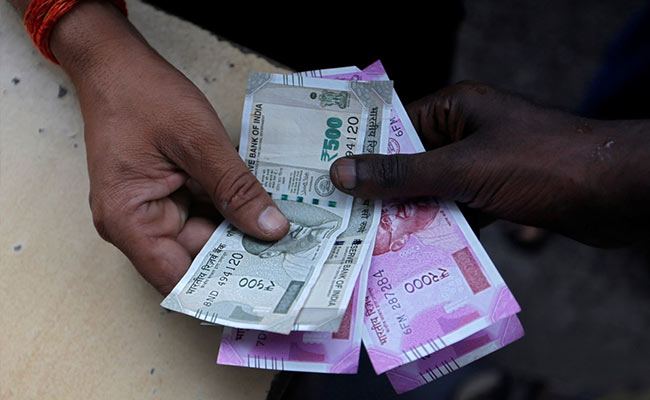
India's deepest recession on record will linger through the rest of this year and begin to lift only in early 2021 as a rapid surge in the coronavirus spread squelches a nascent rebound in consumption and business activity, a Reuters poll showed.
New Delhi has already set aside $266 billion of economic rescue spending and the Reserve Bank of India has slashed interest rates by 115 basis points since March, suggesting more is required to shield the economy from the pandemic-induced disruptions to businesses and livelihoods.
The coronavirus is spreading faster in India than anywhere else in the world, with more than 3.3 million people already infected and related deaths at over 60,000. COVID-19 has kept tens of millions of people shut indoors and made many millions jobless in the world's second most populous country.
"Although this might be the low point in the ongoing crisis, the rapid increase in infections this quarter provides no hope of a near-term recovery," said Prakash Sakpal, senior Asia economist at ING.
"The macro policy has hit a snag amid stretched public finances and rising inflation. This means pretty much nothing can save the economy from continued deep declines for the rest of the year."
With business activity completely stalled for the most part in the previous quarter owing to a nationwide lockdown to contain the virus' spread, the Indian economy likely shrank 18.3 per cent during that period, according to the August 18-27 poll of over 50 economists.
While that was slightly better than the 20.0 per cent contraction predicted in the previous poll, it would still be the weakest rate by far since official reporting for quarterly data began in the mid-1990s.
The economy is forecast to contract 8.1 per cent in the current quarter and 1.0 per cent in the next - a downgrade from 6.0 per cent and 0.3 per cent contraction, respectively, predicted in a July 29 poll, dashing hopes of a recovery this year.
Asia's third-largest economy is expected to grow again in the first three months of 2021, by 3.0 per cent.
But that will still leave it down 6.0 per cent for the fiscal year that ends in March, which would be the worst 12-month performance on record, blowing out -5.2 per cent for calendar year 1979, during the second Iran oil crisis. That latest forecast was revised down from a median forecast of -5.1 per cent last month.
Under a worst-case scenario, the contraction for each of those periods was expected to be much deeper than predictions from last month as well as the latest base-case consensus.
While there have been some signs of recovery, with an increase in agricultural produce on good monsoon rains and targeted government spending, a majority of other businesses continue to show weak performance.
The RBI unexpectedly paused last month on rising inflation concerns.
While the consensus showed the central bank was expected to ease once more next quarter by 25 basis points, taking its repo rate to 3.75 per cent, a significant minority of economists, or 20 of 51, predicted the RBI to stay on the sidelines this year.
Asked when GDP would reach pre-COVID-19 levels, over 80 per cent of economists, or 30 of 36, said it was likely to take more than a year, including nine who predicted it to take more than two years.
"The outlook for economic growth is bleak and there are now signs that the post-lockdown recovery has stalled before it ever really got going," said Darren Aw, Asia economist at Capital Economics, in Singapore.

-
We May Need Another Tukaram Mundhe To Fight Air Pollution | The Reason Why

Developers may install basic measures such as sprinklers and green nets, resume work, and continue violating rules when this equipment stops working.
-
Extracting Value From Battery Scrap Could Be Challenging For India | The Reason Why
A discarded lithium-ion battery still contains valuable materials such as lithium, nickel and cobalt. These can be recovered and reused. When such batteries are crushed and shredded, they produce a dark powder called black mass.
-
One El Nino, India Can Handle. Two Could Break The Granary
India's grain stocks can absorb one bad year, but a second El Nino could drain the buffer in two to three years, economists say.
-
India's Troika Of Good Luck | Joining The Dots
As Jensen Huang's exit drags Nvidia down, a cooling AI trade and resilient earnings have revived investor interest in India. A likely RBI rate hike looms.
-
Talking Points This Week: Leadership Shock At Nvidia, Earnings Strength, And The Fog Over Hormuz
The Anthropic IPO pricing and first trading day, Nvidia's upcoming earnings, and any fresh signals from Iran will set the tone for the following week.
-
Signature Play: The Classic Cocktail Is Dead. Or Is It?
Classic cocktails are disappearing from India's cocktail menus. But they're still being ordered, taught to bartenders and borrowed from. So, who's really having the last drink?
-
A New Samvat Wishlist: Inclusive Prosperity And Human Development
India has strengthened its economic foundations through infrastructure, digital access and enterprise. Its next growth chapter must deepen productivity, create better livelihoods and widen participation in prosperity.
-
Love, Sex Aur Dhokha: The Audacious Plot To Spy On Jensen Huang
A Taipei dinner, a Singapore chip buyer and a suspected Chinese asset: inside the alleged spy operation that got close to NVIDIA's Jensen Huang.
-
Ten Things I Learnt This Samvat
Patience can be a trap. Cheap stocks can stay cheap. Leverage can wipe you out. What did Samvat 2082 teach us? Niraj Shah writes on 10 lessons from the year gone by.
-
Talking Points This Week: Tech Nerves, FII Buying, And A Faraway Banking Shock
The global markets are not shining this Diwali. The exception in the large markets is, India.









