Government May Increase Duty On Petrol, Diesel Again To Fight Outbreak: Report
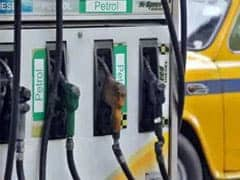
The government may use the current low oil prices to further increase excise duty on petrol and diesel to raise additional resources required for keep rising deficit under check and meet additional expenditure needs arising from COVID-19 outbreak, a State Bank of India report said on Thursday.
It said that crude at $30/barrel could potentially lower the petrol and diesel prices by Rs 10-12 /litre from their present prices assuming excise had stayed at the previous level. But government may limit fall in retail price of the two petroleum products to increase excise duty on them further.
On Saturday, the government had raised excise duty on petrol and diesel by Rs 3 per litre that would provide it additional revenue to the turn of Rs 45,000 crore in one full year.
"... The rise in excise duty of Rs 3 on petrol and diesel prices by the Centre may lead to maximum cut of Rs 4.25 on petrol and Rs 3.75 on diesel from the current level. We thus expect the government may further limit such fall in retail prices and thereby increase the excise more," the SBI Ecowrap report said.
Historical trend in Brent crude oil prices and its relationship with excise duty collection and retail prices, suggests post-GST, excise duty on petro products now contributes 85-90 per cent of overall excise duty collection of Centre. In 2019-20 (April-December), total excise collection on petro products for nine months is close to Rs 1.5 lakh crore.
The SBI Ecowrap report said that if the same run rate (on excise collection) continues for FY20, then there could be shortfall of at least Rs 14,000 crore to the exchequer making case for further increase in the duty.
The report has also highlighted the tough situation government faces in terms of managing fiscal deficit amidst rising demand for fresh expenditure to tackle the novel coronavirus spread.
It said that based on current tax revenue trends, additional expenditure rationalization of Rs 1.2 lakh crores might be required in the current fiscal, if India has to stick to mandated 3.8 per cent fiscal deficit.
"Even COVID-19 will have an impact on GDP through Trade, Hotels, Transport, Communication & Services sub-segment and this will have pressures on fiscal deficit as a percentage of GDP. In FY21, nominal GDP growth is at 10 per cent and every 10 bps slippage in nominal GDP numbers in FY21 will push up fiscal deficit by roughly one basis point. We are already estimating that the impact of a 5 per cent inoperability shock could be 90 basis point on GDP from Trade, Hotel and Transport and Transport, Storage and Communication segment, that could be spread over FY20 and FY21, with a larger impact in FY21," the report said.
The report, however, said it will be completely foolhardy to stick to any mandated fiscal rules in times of current crisis that is now threatening to rip apart the entire global financial ecosystem.
"Globally, state loans, income subsidies and tax deferrals are the most common fiscal packages being offered."

-
Indians Are Travelling, But Not Every Journey Is A Holiday | The Week In Whys

Pilgrims, patients and working women are the real travellers, and the system hasn't quite caught up with them.
-
Getting To Work Costs Women More | The Reason Why
It is not just about women paying more than men. It is about women paying much more in cities than in villages.
-
AI Bias In Investing Cannot Be Eliminated, But It Can Be Governed
Framing is a particularly important example as identical financial information presented in terms of gains rather than losses can lead an LLM to reach a different assessment.
-
Joining The Dots | Dark Skies, Steady Diya: Why Hope Holds This Diwali
With war, a weak rupee and foreign outflows weighing on sentiment, policymakers at the NDTV World Summit and market veterans at NDTV Profit Ignite: Diwali Edition offered the same advice: stay invested and filter out the noise.
-
The Curious Case of Equitas Small Finance Bank And A CEO Who Quit For Stock
PN Vasudevan believes persistent investor concerns over a perceived conflict of interest had become a governance overhang on Equitas Small Finance Bank's stock, even as the lender improved profitability and asset quality.
-
Talking Points This Week: AI Cash Burn, A Tiger Comeback And An India That Still Finds Its Own Path
India is not immune to higher oil or tighter global liquidity, yet its earnings base is broader, its domestic policy levers are still available.
-
Foreign Investors Own Half Of HDFC Bank and ICICI Bank. An LTCG Cut Could Matter Most Here
Foreign portfolio investors have US$115 billion parked in HDFC Bank, ICICI Bank. If the government cuts long-term capital gains tax, Jefferies says returning foreign money could land here first.
-
'Never Seen This Level Of Negativity': Sandeep Tandon Says The Next Rally May Be Closer Than You Think
Veteran investor Sandeep Tandon says foreign selling is easing, large-caps are due a comeback and mid-caps are crowded, while he turns positive on gold, power and pharma this Diwali.
-
Indians Stay With Family, Not In Hotels | The Reason Why
India still lacks enough clean, reliable and affordable hotels for budget-conscious travellers.
-
The Economic Imperative: Analysing The Material Driving Force Behind India-Canada Strategic Reset
This economic complementarity is further reinforced by deep institutional investment ties and talent mobility, which form the bedrock of the bilateral framework.










