Coronavirus: India To Deploy Rapid Test Kits To Speed Up Covid-19 Screening
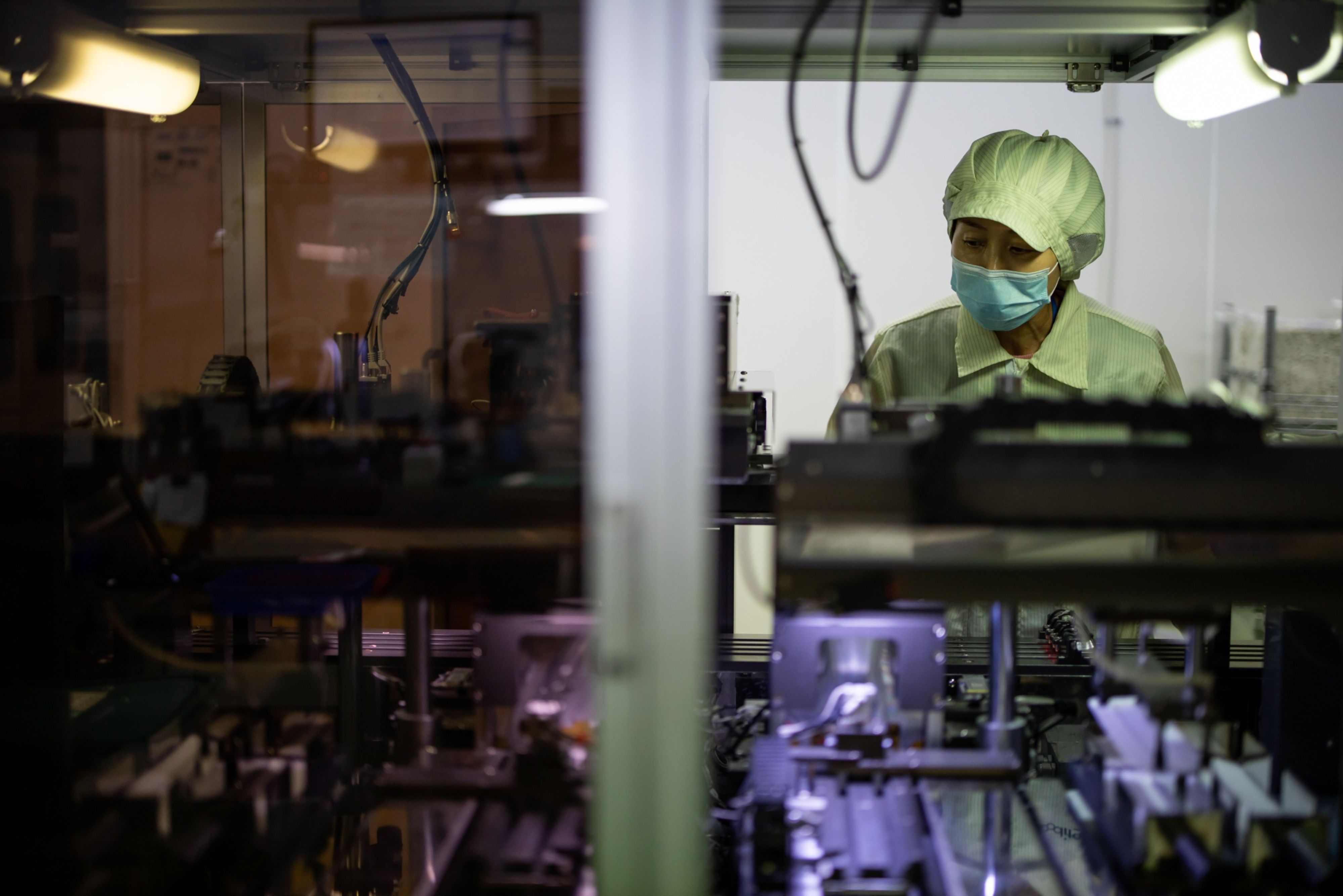
India is looking to deploy rapid test kits to speed up Covid-19 screening, amid a spike in cases and growing coronavirus hotspots in the country.
The serological antibody blood test, which deliver results in 15 minutes, work on blood samples instead of nasal swabs and will tell whether a patient has ever been exposed to the novel virus. If put to use, this would be the first time India will use serology for detection of disease. Similar tests have been widely conducted to check for influenza, human immunodeficiency virus and Zika.
And scores of companies, domestic and international, have now queued up to provide rapid testing kits to India, the Indian Council for Medical Research said in a circular. The council had last month issued tenders for the procurement of 5 lakh antibody test kits. On Sunday, ICMR's Chief Epidemiologist RR Gangakhedkar said that the kits may arrive by Wednesday.
“Population in hotspot areas may be tested using rapid antibody tests,” the ICMR had said in an interim advisory, adding that all the antibody positives would be confirmed by RT-PCR (polymerase chain reaction) using throat/nasal swab, and antibody negatives would be quarantined at home.
ICMR had also released detailed guidelines late yesterday for these tests. These are:
- Rapid antibody tests approved by U.S. FDA/CE-IVD or non-CE-IVD validated by ICMR-NIV with marketing approval by Drug Controller General can be used.
- All such organisations must register themselves on the ICMR portal and upload data in real time.
- Individuals who tested negative must be confirmed by real-time PCR test, if warranted or home quarantined, and repeat the antibody test after 10 days.
Until now, RT-PCR was the only way to identify Sars-CoV-2 virus. While highly accurate, the testing methodology has drawbacks, including taking up to five hours to deliver results.
That's led to some countries lining up the rapid test kits. The U.K. has stocked up on more than 40 lakh finger-prick antibody blood tests, Bloomberg reported, saying that it's also used in China, Singapore and other countries. The U.S., too, recently allowed rapid testing for detecting Covid-19.
The rapid test kits could speed up the screening process in a nation of 1.3 billion people where just about 70 percent of testing capacity has been utilised, according to the Union Ministry of Health. As on April 4, only 70,000 people were tested for Covid-19 at 132 state-run labs and 52 private labs. The number of tests conducted per day has been increased to 10,000, the ministry said.
Also Read: India Bans All Exports of Trump's ‘Game Changer' Virus Drug
What Companies Are Saying
Kit manufacturers that BloombergQuint spoke to said they have the capacity to meet the demand in the country.
Khushroo Pastakia, managing director of Voxtur Bio Ltd., one of the firms to have secured approval from National Institute of Virology in Pune, said they can make 1 crore test kits a month. The firm, which is in the process of getting approval from the Drug Controller General of India, has set up its manufacturing base Maharashtra. “We're hoping to start providing kits from next week if all approvals come in.”
“Mass screening is critical at this stage,” Pastakia said. “These rapid tests will provide a very fast backup plan for the government to take action where real tests are required.”
Bengaluru-based Bione, which said its kit has been validated by the ICMR, said they can run tests in about 10 minutes. Dr Surendra K Chikara, the company's chief executive officer, said they can make up to 20-30,000 kits a week, which are priced between Rs 2,000 and Rs 3,000 apiece. The company, Chikara said, would soon get approval from U.S. FDA, adding that they could even supply kits for at-home screening if permitted.
Tarshant Jain, head of Ozo Life, a company that's said to have been approved by CE-IVD and was listed by ICMR in a circular dated March 28, however, said they may not be able to provide the kits in time.
“At a time of urgency when the players are ready to provide the kits, the government isn't expediting the process of getting the qualification and approval from DCGI to start supplying to India,” he said over the phone. Jain said their firm, which has already sold 6 crore kits around the world, can produce around 2 crore rapid testing kits at Rs 1,500 apiece.
Also Read: Maharashtra Has A Cluster Containment Plan. Here's What It Means
Quality Concerns
With many companies looking to provide rapid test kits to India, concerns over their quality have been raised.
That comes as European countries, including Spain, the Czech Republic and Turkey returned faulty batches and consignments from Chinese kit makers, some of whom even had EU certification.
Shanghai Fosun Pharmaceutical Group, a Chinese drug and diagnostics firm, had cautioned that the new test kits that promise to detect the coronavirus in a few minutes may not be as accurate as conventional kits, Bloomberg reported.
Also Read: When, and How, Does the Coronavirus Pandemic End?
The kits, an ICMR official told BloombergQuint on the condition of anonymity, will be used after due checks, adding they'd be used to narrow down search results when dealing with clusters where the number of people infected by the virus may be higher. Negative samples would be tested again after 10 days, the person said.
More than 150 firms are willing to offer test kits to India, the official said. Besides, National Institute of Virology in Pune has given approval to seven companies that don't have certification from the U.S. FDA or CE-IVD, according to ICMR.

-
Extracting Value From Battery Scrap Could Be Challenging For India | The Reason Why

A discarded lithium-ion battery still contains valuable materials such as lithium, nickel and cobalt. These can be recovered and reused. When such batteries are crushed and shredded, they produce a dark powder called black mass.
-
One El Nino, India Can Handle. Two Could Break The Granary
India's grain stocks can absorb one bad year, but a second El Nino could drain the buffer in two to three years, economists say.
-
India's Troika Of Good Luck | Joining The Dots
As Jensen Huang's exit drags Nvidia down, a cooling AI trade and resilient earnings have revived investor interest in India. A likely RBI rate hike looms.
-
Talking Points This Week: Leadership Shock At Nvidia, Earnings Strength, And The Fog Over Hormuz
The Anthropic IPO pricing and first trading day, Nvidia's upcoming earnings, and any fresh signals from Iran will set the tone for the following week.
-
Signature Play: The Classic Cocktail Is Dead. Or Is It?
Classic cocktails are disappearing from India's cocktail menus. But they're still being ordered, taught to bartenders and borrowed from. So, who's really having the last drink?
-
A New Samvat Wishlist: Inclusive Prosperity And Human Development
India has strengthened its economic foundations through infrastructure, digital access and enterprise. Its next growth chapter must deepen productivity, create better livelihoods and widen participation in prosperity.
-
Love, Sex Aur Dhokha: The Audacious Plot To Spy On Jensen Huang
A Taipei dinner, a Singapore chip buyer and a suspected Chinese asset: inside the alleged spy operation that got close to NVIDIA's Jensen Huang.
-
Ten Things I Learnt This Samvat
Patience can be a trap. Cheap stocks can stay cheap. Leverage can wipe you out. What did Samvat 2082 teach us? Niraj Shah writes on 10 lessons from the year gone by.
-
Talking Points This Week: Tech Nerves, FII Buying, And A Faraway Banking Shock
The global markets are not shining this Diwali. The exception in the large markets is, India.
-
Midterm Rally Lasted A Day. The Hard Reality Of A Divided US May Last Two Years | Opinion
Between a contested AI boom, a debt ceiling that arrives in 2027 and a president with every incentive to act alone, the next two years may prove more volatile than the first day's rally suggests.









