World's Biggest Lockdown Brings Trucks To A Standstill In India
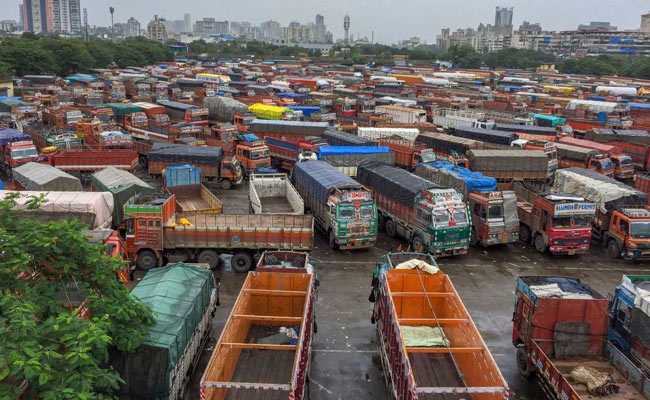
The world's biggest lockdown has brought transportation of goods in India to a near halt, even though the government has exempted the sector from restrictions to halt the spread of coronavirus. Daily movement of trucks has collapsed to less than 10 per cent of normal levels, according to All India Motor Transport Congress, an umbrella body of goods vehicle operators representing about 10 million truckers. Road transport accounts for about 60 per cent of freight traffic in the country and 87 per cent of its passenger traffic, according to the Ministry of Road Transport and Highways.
Trucking has emerged as a major choke-point in global supply chains for everything from food to medical supplies as governments take stringent steps to contain the pandemic, restricting the movement of vehicles and people to drive them. The collapse in India, where Prime Minister Narendra Modi imposed a three-week lockdown on the nation's 1.3 billion people on March 25, is a harbinger of the damage the measures are wreaking on the economy amid forecasts the country could see its first contraction in at least two decades.
“Though the government has allowed movement of both essential and non-essential goods, the situation is very different at the ground level,” said Naveen Kumar Gupta, secretary general of AIMTC, the largest grouping of transporters in the country.
The transport of goods by road was included as one of the essential services exempt from restrictions but the government is making frequent clarifications, causing confusion on the ground, according to the organization's president, Kultaran Singh Atwal. That's just made worse by the time it takes for the latest directives to trickle down to officials enforcing the rules, he said.
One haulage company that's a member of AIMTC had 20 trucks stranded in northern India, according to Gupta. Officials were stopping the vehicles at every checkpoint just a few kilometers apart. They were only allowed to cross the provincial border when the owner went to see the officials in person and showed them several government circulars and notifications, he said.
A spokesman for the transport ministry couldn't immediately comment.
There are some signs of improvement, though. The movement of trucks at ports is easing after efforts taken to restore operations and maintain critical cargo shipments, Mr Gupta said. Traffic to and from ports is about 50 per cent of normal levels, he said, though labor constraints could be a future setback.
The decline in road transport is another major major drain on fuel demand in the world's third biggest oil market, which has already been hit by the collapse in air travel. Diesel and petrol sales in March by India's three biggest state-run fuel retailers shrank by an estimated 26 per cent and 17 per cent, respectively, and the lockdown only came into effect at the end of the month. Jet fuel sales plunged 33 per cent.
Limited freight activities will drag diesel demand to a 15-year low of 680,000 barrels per day in April, according to Senthil Kumaran, an oil markets consultant at Facts Global Energy. “The nationwide lockdown has completely halted industrial activities, thereby resulting in a sharp pullback in freight movements country-wide,” he said.
One of the major problems facing truckers is loading and unloading because of a shortage of labor, according to AIMTC. And with the lockdown shutting highway food establishments and workshops, truckers can't get the services they need even if they are on the road.
“So, even if you allow movement of goods, the supply chain cannot be restored to full normalcy,” Mr Gupta said. “Piecemeal opening of supply chain will not work.”

-
We May Need Another Tukaram Mundhe To Fight Air Pollution | The Reason Why

Developers may install basic measures such as sprinklers and green nets, resume work, and continue violating rules when this equipment stops working.
-
Extracting Value From Battery Scrap Could Be Challenging For India | The Reason Why
A discarded lithium-ion battery still contains valuable materials such as lithium, nickel and cobalt. These can be recovered and reused. When such batteries are crushed and shredded, they produce a dark powder called black mass.
-
One El Nino, India Can Handle. Two Could Break The Granary
India's grain stocks can absorb one bad year, but a second El Nino could drain the buffer in two to three years, economists say.
-
India's Troika Of Good Luck | Joining The Dots
As Jensen Huang's exit drags Nvidia down, a cooling AI trade and resilient earnings have revived investor interest in India. A likely RBI rate hike looms.
-
Talking Points This Week: Leadership Shock At Nvidia, Earnings Strength, And The Fog Over Hormuz
The Anthropic IPO pricing and first trading day, Nvidia's upcoming earnings, and any fresh signals from Iran will set the tone for the following week.
-
Signature Play: The Classic Cocktail Is Dead. Or Is It?
Classic cocktails are disappearing from India's cocktail menus. But they're still being ordered, taught to bartenders and borrowed from. So, who's really having the last drink?
-
A New Samvat Wishlist: Inclusive Prosperity And Human Development
India has strengthened its economic foundations through infrastructure, digital access and enterprise. Its next growth chapter must deepen productivity, create better livelihoods and widen participation in prosperity.
-
Love, Sex Aur Dhokha: The Audacious Plot To Spy On Jensen Huang
A Taipei dinner, a Singapore chip buyer and a suspected Chinese asset: inside the alleged spy operation that got close to NVIDIA's Jensen Huang.
-
Ten Things I Learnt This Samvat
Patience can be a trap. Cheap stocks can stay cheap. Leverage can wipe you out. What did Samvat 2082 teach us? Niraj Shah writes on 10 lessons from the year gone by.
-
Talking Points This Week: Tech Nerves, FII Buying, And A Faraway Banking Shock
The global markets are not shining this Diwali. The exception in the large markets is, India.









