Now Is The Time For Public Investment Projects, Says IMF
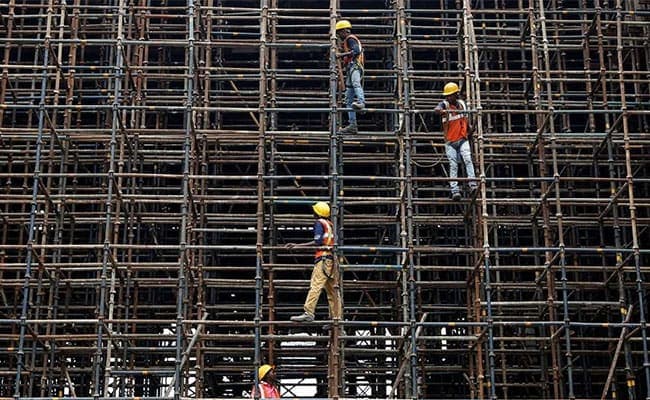
Countries around the world should use the novel coronavirus pandemic as an opportunity to invest in public infrastructure and other projects that take advantage of low interest rates, the International Monetary Fund said in a report on Wednesday. Countries should also strengthen their unemployment benefits and social safety nets in order to reinvigorate economic growth once the virus abates, the global lender said in its semi-annual Fiscal Monitor.
"The COVID-19 pandemic of 2020 has strengthened the case for fiscal policy action and heightened its urgency," the IMF said, referring to the respiratory disease caused by the virus that has been confirmed in more than 3.6 million people around the world.
"Low-for-long interest rates present an opportunity for quality public investment across the world to boost growth."
Last month, the IMF forecast the global economy would shrink 3 percent during 2020 as a result of the pandemic, but warned that its forecasts were marked by "extreme uncertainty" and that outcomes could be far worse.
In outlining ways the countries should handle downturns and times of weaker economic growth more generally, the IMF said it was imperative to invest in health systems, infrastructure, low-carbon technologies, education and research to improve productivity growth, which has been on a mostly downward trend.
Noting that a moderation of capital accumulation over the past decade had slowed economic growth, IMF economists said that modernizing aging infrastructure in advanced economies and addressing infrastructure needs and other sustainable development goals in developing countries were also crucial and should be prioritized now.
Lawmakers and central banks globally have taken unprecedented actions to try to mitigate the fallout from the economic damage wreaked by the virus as a result of countries implementing strict lockdowns among large populations. Unemployment has shot up in many countries.
In the United States, Congress has already allocated almost $3 trillion to help businesses and individuals. Other assistance packages have been put together by governments around the world, but the emphasis has mostly been on the immediate need to get money into people's pockets, not on large-scale public investments.
IMF economists noted that such investment types of spending during previous downturns came too late and were not well targeted, adding they could have the effect of spurring private consumption and investment through higher inflation expectations and lower real interest rates.
"To reduce implementation lags and guide expectations, policymakers should act swiftly to establish a pipeline of appraised investment projects now that can be implemented when the health crisis abates, and plan discretionary measures that can be deployed quickly," the IMF said.

-
AI Bias In Investing Cannot Be Eliminated, But It Can Be Governed

Framing is a particularly important example as identical financial information presented in terms of gains rather than losses can lead an LLM to reach a different assessment.
-
Joining The Dots | Dark Skies, Steady Diya: Why Hope Holds This Diwali
With war, a weak rupee and foreign outflows weighing on sentiment, policymakers at the NDTV World Summit and market veterans at NDTV Profit Ignite: Diwali Edition offered the same advice: stay invested and filter out the noise.
-
The Curious Case of Equitas Small Finance Bank And A CEO Who Quit For Stock
PN Vasudevan believes persistent investor concerns over a perceived conflict of interest had become a governance overhang on Equitas Small Finance Bank's stock, even as the lender improved profitability and asset quality.
-
Talking Points This Week: AI Cash Burn, A Tiger Comeback And An India That Still Finds Its Own Path
India is not immune to higher oil or tighter global liquidity, yet its earnings base is broader, its domestic policy levers are still available.
-
Foreign Investors Own Half Of HDFC Bank and ICICI Bank. An LTCG Cut Could Matter Most Here
Foreign portfolio investors have US$115 billion parked in HDFC Bank, ICICI Bank. If the government cuts long-term capital gains tax, Jefferies says returning foreign money could land here first.
-
'Never Seen This Level Of Negativity': Sandeep Tandon Says The Next Rally May Be Closer Than You Think
Veteran investor Sandeep Tandon says foreign selling is easing, large-caps are due a comeback and mid-caps are crowded, while he turns positive on gold, power and pharma this Diwali.
-
Indians Stay With Family, Not In Hotels | The Reason Why
India still lacks enough clean, reliable and affordable hotels for budget-conscious travellers.
-
The Economic Imperative: Analysing The Material Driving Force Behind India-Canada Strategic Reset
This economic complementarity is further reinforced by deep institutional investment ties and talent mobility, which form the bedrock of the bilateral framework.
-
Medicine Pricing: Where Must Profit Stop?
India must confront excessive margins, hidden incentives and regulatory gaps that threaten the integrity of medicine.
-
Why Amazon And Flipkart Are Struggling To Beat Meesho In India's Smaller Cities
With 274 million users and lowest-cost logistics, Meesho is defending its value commerce crown against giants like Amazon and Flipkart.










