Why Reliance Has Cut Pay At Oil Unit, No Salary For Mukesh Ambani
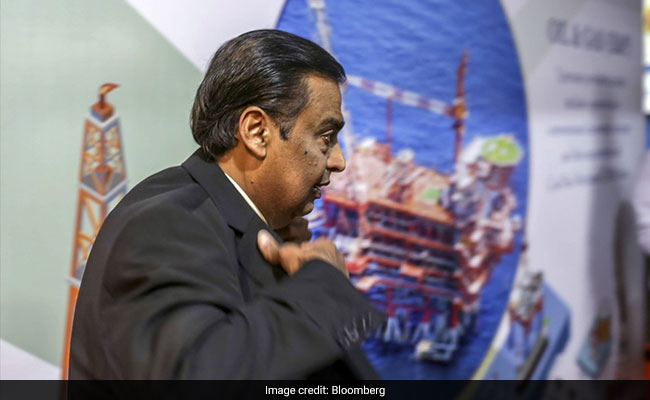
Reliance Industries Ltd., India's biggest company, plans to cut salaries of employees in its oil and petrochemicals business after a slump in fuel sales reduced revenue, people with knowledge of the matter said.
The owner of the world's largest refining complex will cut wages by 10 per cent for all employees earning more than Rs 15 lakh ($20,000) a year, the people said, asking not to be identified citing rules. Salaries of directors on the company's board, and senior executives will be cut by as much as 50 per cent.
The payment of bonuses for the year ended March, normally paid in the June quarter, has also been deferred, while Chairman Mukesh Ambani won't get any salary at all this year, the people said.
Loss of demand for refined oil products and plastics has put pressure on the hydrocarbons business forcing the company to reduce costs, Reliance Industries' Director Hital R Meswani wrote in a letter to employees on Wednesday, the people said. A spokesman at Reliance declined to comment.
Reliance's net income fell 39 per cent in the quarter through March, mainly due to a one-time inventory loss of Rs 4,245 crore ($565 million) in its energy businesses due to a drop in oil prices along with an "unprecedented demand destruction due to Covid-19."
The energy-to-technology conglomerate joins companies from budget carrier SpiceJet Ltd. to South Africa's Sasol Ltd. in cutting salaries as stay-at-home restrictions slash consumer demand and reduce sales. The oil and petrochemicals business contributes about 75 per cent to Reliance's revenues.
Oil majors globally are also slashing dividends and cutting costs to conserve cash. Norway's Equinor ASA became the first large oil company to cut dividends followed by Exxon Mobil Corp. which froze its dividend for the first time in 13 years and slashed $10 billion in spending. BP cut capital spending for 2020 by 25 per cent from its initial full-year guidance and plans to reduce cost by $2.5 billion.
Lockdown of billions of people by governments across the world to contain the pandemic is leading to a gloomy outlook for global oil demand. OPEC expects sales of its crude to fall to the lowest in three decades and the International Energy Agency predicted that oil use would slump by a record this year and potentially make 2020 the worst in the market's history.
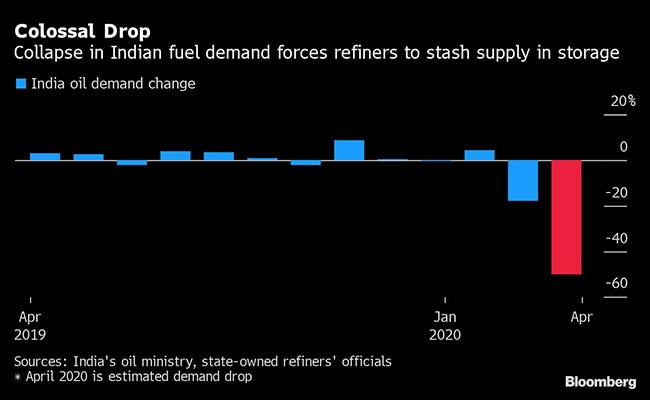
Oil consumption in India, the world's third-biggest market, is set for a unprecedented slump in April amid an extended lockdown that has shut the Indian economy.
- Reliance had a total 28,967 employees as on March 31, 2019, according to the company's annual report
- Mukesh Ambani earned salary and allowances of Rs 4.45 crore that year, apart from Rs 9.53 crore as commission
The country's refiners had to slash operating rates to less than 50 per cent at some units to counter the fall that pushed storage capacity to almost 95 per cent -- including those in the 66,000 pump stations nationwide. A global glut amid weak demand and excessive production hit exports too. The world's biggest independent oil storage company, Royal Vopak NV, has leased out almost all available space to store crude and refined fuels, it had said earlier this month.
Reliance's export focused refinery operated only at 85 per cent of capacity last month. Oil refiners are hunting for vessels to store jet-fuel and gasoline that nobody is buying, sending freight rates sharply higher, an indication that the global refining system is fast approaching a breaking point.

-
We May Need Another Tukaram Mundhe To Fight Air Pollution | The Reason Why

Developers may install basic measures such as sprinklers and green nets, resume work, and continue violating rules when this equipment stops working.
-
Extracting Value From Battery Scrap Could Be Challenging For India | The Reason Why
A discarded lithium-ion battery still contains valuable materials such as lithium, nickel and cobalt. These can be recovered and reused. When such batteries are crushed and shredded, they produce a dark powder called black mass.
-
One El Nino, India Can Handle. Two Could Break The Granary
India's grain stocks can absorb one bad year, but a second El Nino could drain the buffer in two to three years, economists say.
-
India's Troika Of Good Luck | Joining The Dots
As Jensen Huang's exit drags Nvidia down, a cooling AI trade and resilient earnings have revived investor interest in India. A likely RBI rate hike looms.
-
Talking Points This Week: Leadership Shock At Nvidia, Earnings Strength, And The Fog Over Hormuz
The Anthropic IPO pricing and first trading day, Nvidia's upcoming earnings, and any fresh signals from Iran will set the tone for the following week.
-
Signature Play: The Classic Cocktail Is Dead. Or Is It?
Classic cocktails are disappearing from India's cocktail menus. But they're still being ordered, taught to bartenders and borrowed from. So, who's really having the last drink?
-
A New Samvat Wishlist: Inclusive Prosperity And Human Development
India has strengthened its economic foundations through infrastructure, digital access and enterprise. Its next growth chapter must deepen productivity, create better livelihoods and widen participation in prosperity.
-
Love, Sex Aur Dhokha: The Audacious Plot To Spy On Jensen Huang
A Taipei dinner, a Singapore chip buyer and a suspected Chinese asset: inside the alleged spy operation that got close to NVIDIA's Jensen Huang.
-
Ten Things I Learnt This Samvat
Patience can be a trap. Cheap stocks can stay cheap. Leverage can wipe you out. What did Samvat 2082 teach us? Niraj Shah writes on 10 lessons from the year gone by.
-
Talking Points This Week: Tech Nerves, FII Buying, And A Faraway Banking Shock
The global markets are not shining this Diwali. The exception in the large markets is, India.