Goldman Sees Worst India Recession With 45% Second Quarter Slump
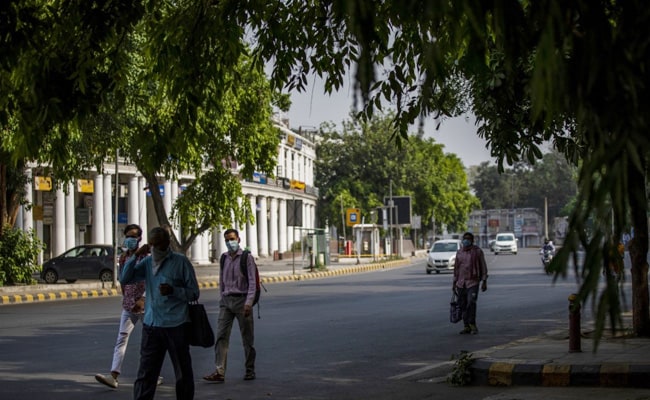
Goldman Sachs expects India will experience its deepest recession ever after a poor run of data underscored the damaging economic impact of lockdowns in the world's second-most populous nation.
Gross domestic product will contract by an annualized 45 per cent in the second quarter from the prior three months, compared with Goldman's previous forecast of a 20 per cent slump. A stronger rebound of 20 per cent is now seen for the third quarter, while projections for the fourth quarter and first of next year are unchanged at 14 per cent and 6.5 per cent.
Those estimates imply that real GDP will fall by 5 per cent in the 2021 fiscal year, which would be deeper than any other recession India has ever experienced, Goldman economists Prachi Mishra and Andrew Tilton wrote in a note dated May 17.
Government has extended its nationwide lockdown until May 31, while further easing restrictions in certain sectors to boost economic activity, as coronavirus cases escalate across the country. The announcement followed Finance Minister Nirmala Sitharaman's fifth briefing in as many days, in which she outlined details of the country's $265 billion virus rescue package, which is equivalent to 10 per cent of the GDP.
"There have been a series of structural reform announcements across several sectors over the past few days," the Goldman economists wrote. "These reforms are more medium-term in nature, and we therefore do not expect these to have an immediate impact on reviving growth. We will continue to monitor their implementation to gauge their effect on the medium-term outlook."
Infections are surging across the South Asian nation of 1.3 billion people, with more than 91,300 infections, including 2,897 deaths as of Sunday, according to data from Johns Hopkins University.

-
We May Need Another Tukaram Mundhe To Fight Air Pollution | The Reason Why

Developers may install basic measures such as sprinklers and green nets, resume work, and continue violating rules when this equipment stops working.
-
Extracting Value From Battery Scrap Could Be Challenging For India | The Reason Why
A discarded lithium-ion battery still contains valuable materials such as lithium, nickel and cobalt. These can be recovered and reused. When such batteries are crushed and shredded, they produce a dark powder called black mass.
-
One El Nino, India Can Handle. Two Could Break The Granary
India's grain stocks can absorb one bad year, but a second El Nino could drain the buffer in two to three years, economists say.
-
India's Troika Of Good Luck | Joining The Dots
As Jensen Huang's exit drags Nvidia down, a cooling AI trade and resilient earnings have revived investor interest in India. A likely RBI rate hike looms.
-
Talking Points This Week: Leadership Shock At Nvidia, Earnings Strength, And The Fog Over Hormuz
The Anthropic IPO pricing and first trading day, Nvidia's upcoming earnings, and any fresh signals from Iran will set the tone for the following week.
-
Signature Play: The Classic Cocktail Is Dead. Or Is It?
Classic cocktails are disappearing from India's cocktail menus. But they're still being ordered, taught to bartenders and borrowed from. So, who's really having the last drink?
-
A New Samvat Wishlist: Inclusive Prosperity And Human Development
India has strengthened its economic foundations through infrastructure, digital access and enterprise. Its next growth chapter must deepen productivity, create better livelihoods and widen participation in prosperity.
-
Love, Sex Aur Dhokha: The Audacious Plot To Spy On Jensen Huang
A Taipei dinner, a Singapore chip buyer and a suspected Chinese asset: inside the alleged spy operation that got close to NVIDIA's Jensen Huang.
-
Ten Things I Learnt This Samvat
Patience can be a trap. Cheap stocks can stay cheap. Leverage can wipe you out. What did Samvat 2082 teach us? Niraj Shah writes on 10 lessons from the year gone by.
-
Talking Points This Week: Tech Nerves, FII Buying, And A Faraway Banking Shock
The global markets are not shining this Diwali. The exception in the large markets is, India.