US Oil Price Crash Amid Coronavirus Crisis, What Next? Here's What Analysts Say
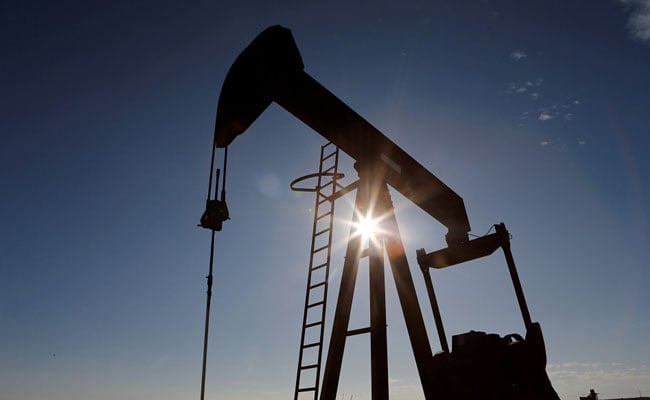
A historic rout in oil markets sent US crude prices plummeting to as much as minus $40 a barrel as traders rushed to get rid of unwanted stocks with storage capacity already overflowing amid a coronavirus-induced demand collapse. US West Texas Intermediate (WTI) crude - the benchmark for US oil prices - for May delivery recouped some losses on Tuesday to be just in positive territory, leaving market participants to assess the wider implications. (Also Read: US Futures Crawl Back To Positive Territory After Record Fall Below $0/Barrel)
Here is what analysts expect in terms of oil market response:
Goldman Sachs
"Such a price dynamic could play out again tomorrow (April 21), the last trading day of the May contract. After that, the physical reality of a still massively oversupplied oil market will likely exert downward pressure on the June WTI contract."
"But with ultimately a finite amount of storage left to fill, production will soon need to fall sizeably to bring the market into balance, finally setting the stage for higher prices once demand gradually recovers."
Sushant Gupta, downstream research director, Wood Mackenzie:
"The historic drop in WTI prices is an indication of the downward pressure which many other crude oil grades could face, given the oversupply situation."
"It also provides an opportunity for large consuming nations in Asia such as China and India to expedite filling up their petroleum reserves. The capacity left this time around is much less compared to the 2014/15 crash."
Howie Lee, economist, OCBC:
"It is not the end of the world, and the negative prices are not reflective of the entire state of the market."
"Will this happen again? I will not bet against it. The lack of storage/expensive storage is unlikely to be resolved unless demand either improves, or the US cuts its output.
"The timeline for the US reopening its economy remains an enigma, although a conservative bet would be from July onwards. At the same time, the US is unwilling to reduce output via centralised planning as that goes against capitalism ideals".
ING Economics:
"A key question is whether we could see a repeat of this with the June expiry next month. It is likely that storage this time next month will be even more of an issue, given the surplus environment, and so in the absence of a meaningful demand recovery, negative prices could return for June.
"Another factor which could add further downward pressure to the June contract as we approach its expiry is index rolling. Retail investors have piled into oil ETFs (exchange traded funds) at these lower prices, and so these ETFs hold a larger than usual share of the June contract open interest."
Stephen Innes, chief market strategist, AxiCorp:
"It's far too early to call this a trade gone wrong with reopening happening around the world amid the increased likelihood of additional short term interventions from the G-20 and OPEC+ producers."
"But this meltdown brought to bear a level of hedging unsophistication that more resembled pen and paper 1980s trading rather than the computer-modeled era of 2020."

-
Gold Is Rs 22,000 Cheaper Than A Month Ago. Should You Buy Amid The Wedding Season?

Gold's potential slide to $3,500 could save around Rs 4,700 per 10 grams, but a soft inflation print could just as easily push prices back up. One way to split the risk is to buy in parts, some now and the rest after the Fed's Dec. 9 decision.
-
AI Agents Are Gaining Power. Who Governs Them?
Artificial intelligence agents promise to transform productivity by moving machines from assisting decisions to executing them. But as organisations delegate greater authority to these AI-agents, they must first establish who controls that authority and who remains accountable when things go wrong.
-
Why Swapping Your Old Gold Can Trigger A Rs 5 Lakh Tax Bill, And How You Can Avoid It Legally
Swapping old gold for new is taxed as a sale and a fresh purchase. Getting your own gold remade can cut most of that bill, though it has its own costs.
-
The AI Trade is Done. The Real Opportunity for Investors Starts in 2027 | Unhedged Position
As pureplay AI stocks plunge and circular, capex-led financing unwinds, 2027 is set to be a year of reckoning for AI companies. Yet the bust clears the way for a better opportunity for investors in 2027 -- shifting the spotlight from AI builders to the companies using AI.
-
Leadership As Mission: Why The Age Of AI Demands More Human Leadership
Debjani Ghosh examines how AI is changing leadership, arguing that its success must be measured by its impact on people and the accountability of those guiding its use.
-
We May Need Another Tukaram Mundhe To Fight Air Pollution | The Reason Why
Developers may install basic measures such as sprinklers and green nets, resume work, and continue violating rules when this equipment stops working.
-
Extracting Value From Battery Scrap Could Be Challenging For India | The Reason Why
A discarded lithium-ion battery still contains valuable materials such as lithium, nickel and cobalt. These can be recovered and reused. When such batteries are crushed and shredded, they produce a dark powder called black mass.
-
One El Nino, India Can Handle. Two Could Break The Granary
India's grain stocks can absorb one bad year, but a second El Nino could drain the buffer in two to three years, economists say.
-
India's Troika Of Good Luck | Joining The Dots
As Jensen Huang's exit drags Nvidia down, a cooling AI trade and resilient earnings have revived investor interest in India. A likely RBI rate hike looms.
-
Talking Points This Week: Leadership Shock At Nvidia, Earnings Strength, And The Fog Over Hormuz
The Anthropic IPO pricing and first trading day, Nvidia's upcoming earnings, and any fresh signals from Iran will set the tone for the following week.









