Panic Buying Could Impact Global Food Supply Chain: United Nations Arm
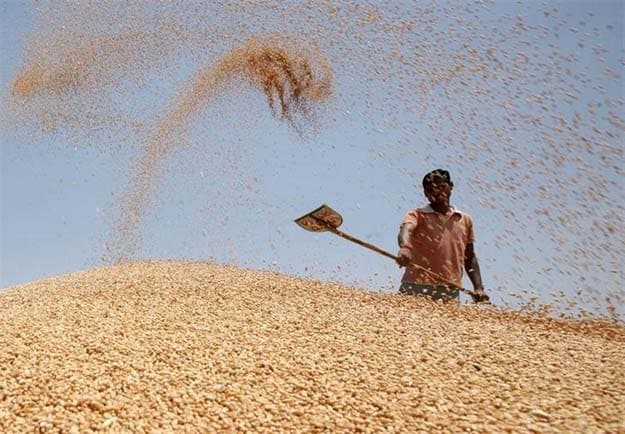
The rapidly-spreading coronavirus pandemic is so far having little impact on the global food supply chain, but that could change for the worse - and soon - if anxiety-driven panic by major food importers takes hold, the World Food Programme (WFP) has said.
In a new report, "COVID-19: Potential impact on the world's poorest people: A WFP analysis of the economic and food security implications of the pandemic", the UN agency said global markets for basic cereals are well-supplied and prices generally low.
However, given the highly globalised nature of food production and supply, commodities need to move from the world's "breadbaskets" to where they are consumed and the novel coronavirus-related containment measures are starting to make this more challenging.
"Disruptions are so far minimal; food supply is adequate, and markets are relatively stable," WFP Senior Spokesperson Elizabeth Byrs said, noting that global cereal stocks are at comfortable levels, and the outlook for wheat and other staple crops is positive for the rest of the year.
"But we may soon expect to see disruptions in food supply chains," she said, explaining that if big importers lose confidence in the reliable flow of basic food commodities, panic buying could ensue, driving prices up.
A grain market analyst at the Food and Agriculture Organisation (FAO), quoted anonymously in the report, said the problem is not supply, but "a behavioural change over food security".
"What if bulk buyers think they can't get wheat or rice shipments in May or June? That is what could lead to a global food supply crisis," the analyst said.
For low-income countries, the consequences could be devastating, with long-term repercussions, with coping strategies coming at the expense of such essential services as health and education.
It recalled that when a food price crisis struck in 2008, the world's poorest households - which typically spend the largest share of income on food - suffered disproportionately.
Using the economic pillar of the Proteus food security index - and taking into account dependency on primary commodities such as fuel, ores and metals for export earnings - the report said that countries in Africa and the Middle East are most vulnerable.
Africa accounts for the majority of the almost 212 million people in the world who are chronically food insecure and the 95 million who live amidst acute food insecurity, the report said.
Ms Byrs said labour shortages could disrupt the production and processing of labour-intensive crops in particularly, especially in vulnerable countries in sub-Saharan Africa.
Other potential sources of disruption include blockages along transport routes - a particular concern for fresh produce - and quarantine measures that could impede farmers' access to markets.
Going forward, the WFP report said, it is essential to monitor food prices and markets, and to transparently disseminate information - thus helping to strengthen government policies while also averting public panic, and social unrest.
It said that in places where food insecurity is caused by restricted access, rather than lack of availability, cash-based transfers -- which can often be made through contact-less solutions -- should be considered as a standard response.
"Planning in-kind food assistance is essential," the report said, noting that supply chain disruptions are likely to affect higher-value items first.
Such items involve more tiers of suppliers, human interaction and dependency on few suppliers - putting specialized nutritious food more at risk than staples, it said.

-
AI Bias In Investing Cannot Be Eliminated, But It Can Be Governed

Framing is a particularly important example as identical financial information presented in terms of gains rather than losses can lead an LLM to reach a different assessment.
-
Joining The Dots | Dark Skies, Steady Diya: Why Hope Holds This Diwali
With war, a weak rupee and foreign outflows weighing on sentiment, policymakers at the NDTV World Summit and market veterans at NDTV Profit Ignite: Diwali Edition offered the same advice: stay invested and filter out the noise.
-
The Curious Case of Equitas Small Finance Bank And A CEO Who Quit For Stock
PN Vasudevan believes persistent investor concerns over a perceived conflict of interest had become a governance overhang on Equitas Small Finance Bank's stock, even as the lender improved profitability and asset quality.
-
Talking Points This Week: AI Cash Burn, A Tiger Comeback And An India That Still Finds Its Own Path
India is not immune to higher oil or tighter global liquidity, yet its earnings base is broader, its domestic policy levers are still available.
-
Foreign Investors Own Half Of HDFC Bank and ICICI Bank. An LTCG Cut Could Matter Most Here
Foreign portfolio investors have US$115 billion parked in HDFC Bank, ICICI Bank. If the government cuts long-term capital gains tax, Jefferies says returning foreign money could land here first.
-
'Never Seen This Level Of Negativity': Sandeep Tandon Says The Next Rally May Be Closer Than You Think
Veteran investor Sandeep Tandon says foreign selling is easing, large-caps are due a comeback and mid-caps are crowded, while he turns positive on gold, power and pharma this Diwali.
-
Indians Stay With Family, Not In Hotels | The Reason Why
India still lacks enough clean, reliable and affordable hotels for budget-conscious travellers.
-
The Economic Imperative: Analysing The Material Driving Force Behind India-Canada Strategic Reset
This economic complementarity is further reinforced by deep institutional investment ties and talent mobility, which form the bedrock of the bilateral framework.
-
Medicine Pricing: Where Must Profit Stop?
India must confront excessive margins, hidden incentives and regulatory gaps that threaten the integrity of medicine.
-
Why Amazon And Flipkart Are Struggling To Beat Meesho In India's Smaller Cities
With 274 million users and lowest-cost logistics, Meesho is defending its value commerce crown against giants like Amazon and Flipkart.










