Crude Oil Price Drops Nearly 4% As Delayed Producer Meet Causes Oversupply
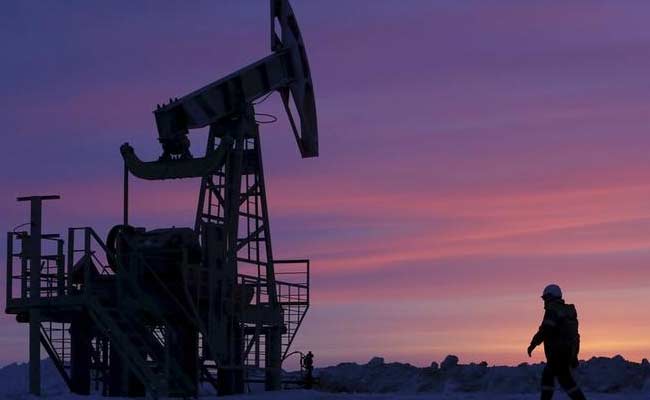
Oil prices slipped more than $1 a barrel on Monday, after the world's top producers delayed a meeting to discuss output cuts that could partly alleviate oversupply in global markets as the coronavirus pandemic pummels demand.
Brent crude slipped close to $30 a barrel in early trade and was at $32.82 by 0203 GMT, down $1.29, or 3.8%. West Texas Intermediate (WTI) crude fell $1.66, or 5.9%, to $26.68 a barrel, after earlier touching a low of $25.28.
Late last week, prices surged, with US and Brent contracts posting their largest ever weekly percentage gains due to hopes that OPEC and its allies would strike a deal to cut crude supply worldwide by at least 10 million barrels per day (bpd).
Prices on both sides of the Atlantic marked their worst month on record in March as the coronavirus pandemic crippled demand while a price war between Saudi Arabia and Russia left the market awash in supplies.
The producers were initially set to meet on Monday, but that has now been pushed to April 9, after they blamed each other for the collapse of talks in March.
It "just took a delay in the meeting between Saudi and Russia to knock the wind out of that rally", said Michael McCarthy, chief strategist at CMC Global Markets in Sydney.
US President Donald Trump said he would impose tariffs on crude imports if necessary to support US oil sector.
The head of the International Energy Agency has said oil inventories would still rise by 15 million bpd in the second quarter even with output cuts of 10 million bpd.
He urged the world's richest economies to discuss broader ways to stabilise oil markets.
Still, a move by Saudi Arabia to delay the release of its crude official selling prices indicates it is not eager to flood the market with low-priced supplies before a potential agreement, said Robert McNally, president of Rapidan Energy Group in Bethesda, Maryland.
"That's a pretty clear sign that they are open to cutting production in May," he said.
The kingdom delayed the release until Friday to wait for the outcome of the meeting between OPEC and its allies regarding possible output cuts, a Saudi source told Reuters.
Oil prices could also firm as decades-low prices have already forced producers to cut output, CMC's McCarthy said.
"There's a lot of talk about potential bankruptcies particularly in US shale producers and that deals with a lot of supply issues that's plaguing the market," McCarthy said.
"In the short term the low prices are very painful, but if it does lead to a lot of those players leaving the industry, the supply side of the equation will balance out."
Rig counts in the United States fell by 62 last week, energy services firm Baker Hughes Co said on Friday, marking the biggest weekly drop in five years, as US energy companies slashed spending on new drilling due to a coronavirus-related slump in economic activity and fuel demand.
Brazil's Petrobras has also doubled its oil output cuts to 200,000 bpd, or 6 per cent of its total production.

-
Gold Is Rs 22,000 Cheaper Than A Month Ago. Should You Buy Amid The Wedding Season?

Gold's potential slide to $3,500 could save around Rs 4,700 per 10 grams, but a soft inflation print could just as easily push prices back up. One way to split the risk is to buy in parts, some now and the rest after the Fed's Dec. 9 decision.
-
AI Agents Are Gaining Power. Who Governs Them?
Artificial intelligence agents promise to transform productivity by moving machines from assisting decisions to executing them. But as organisations delegate greater authority to these AI-agents, they must first establish who controls that authority and who remains accountable when things go wrong.
-
Why Swapping Your Old Gold Can Trigger A Rs 5 Lakh Tax Bill, And How You Can Avoid It Legally
Swapping old gold for new is taxed as a sale and a fresh purchase. Getting your own gold remade can cut most of that bill, though it has its own costs.
-
The AI Trade is Done. The Real Opportunity for Investors Starts in 2027 | Unhedged Position
As pureplay AI stocks plunge and circular, capex-led financing unwinds, 2027 is set to be a year of reckoning for AI companies. Yet the bust clears the way for a better opportunity for investors in 2027 -- shifting the spotlight from AI builders to the companies using AI.
-
Leadership As Mission: Why The Age Of AI Demands More Human Leadership
Debjani Ghosh examines how AI is changing leadership, arguing that its success must be measured by its impact on people and the accountability of those guiding its use.
-
We May Need Another Tukaram Mundhe To Fight Air Pollution | The Reason Why
Developers may install basic measures such as sprinklers and green nets, resume work, and continue violating rules when this equipment stops working.
-
Extracting Value From Battery Scrap Could Be Challenging For India | The Reason Why
A discarded lithium-ion battery still contains valuable materials such as lithium, nickel and cobalt. These can be recovered and reused. When such batteries are crushed and shredded, they produce a dark powder called black mass.
-
One El Nino, India Can Handle. Two Could Break The Granary
India's grain stocks can absorb one bad year, but a second El Nino could drain the buffer in two to three years, economists say.
-
India's Troika Of Good Luck | Joining The Dots
As Jensen Huang's exit drags Nvidia down, a cooling AI trade and resilient earnings have revived investor interest in India. A likely RBI rate hike looms.
-
Talking Points This Week: Leadership Shock At Nvidia, Earnings Strength, And The Fog Over Hormuz
The Anthropic IPO pricing and first trading day, Nvidia's upcoming earnings, and any fresh signals from Iran will set the tone for the following week.









