Government, RBI Try To Cushion An Economy In Slump Even Before COVID-19
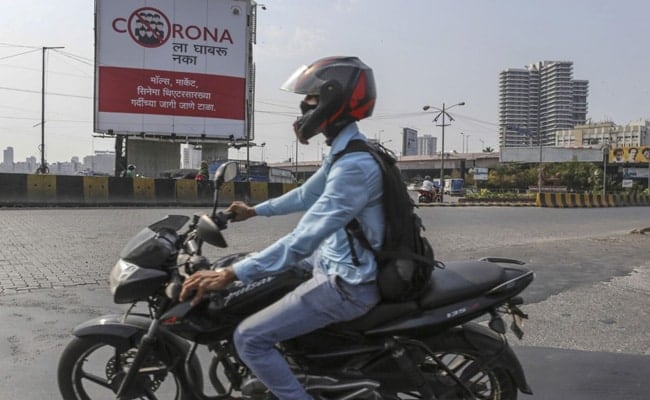
The government and the Reserve Bank of India are trying to cushion an economy that was slowing even before the coronavirus outbreak.
Here's a guide to the measures announced so far:
For Banks:
- CHEAPER CASH: A series of steps announced this year aim to encourage banks to lend. Measures announced by the Reserve Bank of India since early February inject cash equivalent to 3.2 per cent of the country's gross domestic output (GDP)
- Banks don't need to set aside cash reserves for loans given to small businesses between January 31 to July 31, or for credit to help consumers buy a car or home (announced February 6)
- Policy lending rate -- the repurchase rate -- cut by 75 basis points in a single move this year. However, the effective deposit rate has been slashed by 90 basis points to discourage lenders from playing safe and parking the cash with the RBI (March 27)
- Cash Reserve Ratio reduced to 3 per cent from 4 per cent (March 27)
- LOAN FREEZE: RBI Governor Shaktikanta Das has stopped the clock on loan repayments amid an unprecedented three-week lockdown announced by Prime Minister Narendra Modi
- All lenders can freeze repayments for three months on term loans outstanding March 1
- Lenders allowed to suspend interest payments on working capital facilities for three months; accumulated interest can be paid later and the loans won't be in default
- The steps add to previous measures which allow a one-off restructuring of loans to small businesses that were in default as of January 1
- Loans to commercial property projects that are delayed for reasons beyond the control of the developer are allowed to be treated as standard for another year
- REGULATORY DEFERRALS: Implementation of stricter regulations have been delayed
- Rules requiring banks to fund their activities through stable sources has been deferred to October 1 from April 1
- Completion of Capital Conservation Buffer pushed to September 30 from March 31
- MORE MONEY: The RBI has been injecting additional liquidity in the banking system to keep down bond yields
- At its February policy review, the RBI said it will provide Rs 1 lakh crore of one- and three-year cash at the policy rate via long-term repo operations to help monetary transmission (February 6)
- The RBI ramped up these measures in March, with several key steps coming in an emergency announcement March 27
- Two variable rate repo operations of Rs 50,000 crore to fine-tune liquidity at the financial year end
- Enhanced a temporary liquidity tap for primary bond underwriters to Rs 10,000 crore from Rs 28,00 crore
- Rs 1 lakh crore of LTROs
- Open market purchase of govt bonds worth Rs 10,000 crore March 20; another total Rs 30,000 crore of OMO purchases March 24 and March 26
- Rs 1 lakh crore via 16-day variable rate repos
- Rs 1 lakh crore of targeted long term funds from the central bank to banks for investing only in corporate bonds, aimed at easing cash crunch at firms
- MORE DOLLARS: RBI pledged to inject dollars through dollar-rupee swaps
- Two $2 billion swap lines each for March 16 and March 23 provided $2.7 billion
- Allows companies additional 45 days for declaring their quarterly and annual results; extends the date for submission of corporate governance report by a month; company boards exempted from provision of maximum time gap between two meetings (March 19)
- Trading margin in stocks increased, market-wide position reduced to ease volatility in stocks (March 20)
- Compliance requirements relaxed for ReITs, InVITS, extends deadline for risk management rules for liquid mutual funds; timeline for filing debenture and preference share issues extended (March 23)
- Capital, debt market services exempt from lockdown (March 25)
- Allows top 100 listed companies another month to comply with the requirements of holding annual general meeting (March 26)
- Shareholders allowed 45 more days to disclose their consolidated shareholding in companies for the financial year ending March 31 (March 27)
- Relaxed the recognition of default by local credit rating companies if a delay in payment of interest or principal is due; allows foreign portfolio investors relaxation in document processing (March 30)
- FREE FOOD AND FUEL: 80 crore poor people will get 5 kilograms wheat or rice and 1 kg pulses every month during April to June; 8 crore families to get free cooking gas
- CASH TRANSFERS: 20 crore women with basic bank accounts will get Rs 500 a month until June; 3 crore senior citizens, widows and disabled to get Rs 1,000; 8.7 crore farmers will be immediately paid Rs 2,000 under an existing program
- INSURANCE: 22 lakh health workers fighting COVID-19 will get an insurance cover of Rs 50 lakh
- JOBS AND WAGES: For people earning less than Rs 15,000 a month, government will pay 24 per cent of their monthly wages that feed into pension and provident fund accounts; Wages under job guarantee program increased to provide annual benefit of Rs 2,000 to a worker
For Capital Markets:
For Consumers:
For Bonds and Rupee:

-
Gold Is Rs 22,000 Cheaper Than A Month Ago. Should You Buy Amid The Wedding Season?

Gold's potential slide to $3,500 could save around Rs 4,700 per 10 grams, but a soft inflation print could just as easily push prices back up. One way to split the risk is to buy in parts, some now and the rest after the Fed's Dec. 9 decision.
-
AI Agents Are Gaining Power. Who Governs Them?
Artificial intelligence agents promise to transform productivity by moving machines from assisting decisions to executing them. But as organisations delegate greater authority to these AI-agents, they must first establish who controls that authority and who remains accountable when things go wrong.
-
Why Swapping Your Old Gold Can Trigger A Rs 5 Lakh Tax Bill, And How You Can Avoid It Legally
Swapping old gold for new is taxed as a sale and a fresh purchase. Getting your own gold remade can cut most of that bill, though it has its own costs.
-
The AI Trade is Done. The Real Opportunity for Investors Starts in 2027 | Unhedged Position
As pureplay AI stocks plunge and circular, capex-led financing unwinds, 2027 is set to be a year of reckoning for AI companies. Yet the bust clears the way for a better opportunity for investors in 2027 -- shifting the spotlight from AI builders to the companies using AI.
-
Leadership As Mission: Why The Age Of AI Demands More Human Leadership
Debjani Ghosh examines how AI is changing leadership, arguing that its success must be measured by its impact on people and the accountability of those guiding its use.
-
We May Need Another Tukaram Mundhe To Fight Air Pollution | The Reason Why
Developers may install basic measures such as sprinklers and green nets, resume work, and continue violating rules when this equipment stops working.
-
Extracting Value From Battery Scrap Could Be Challenging For India | The Reason Why
A discarded lithium-ion battery still contains valuable materials such as lithium, nickel and cobalt. These can be recovered and reused. When such batteries are crushed and shredded, they produce a dark powder called black mass.
-
One El Nino, India Can Handle. Two Could Break The Granary
India's grain stocks can absorb one bad year, but a second El Nino could drain the buffer in two to three years, economists say.
-
India's Troika Of Good Luck | Joining The Dots
As Jensen Huang's exit drags Nvidia down, a cooling AI trade and resilient earnings have revived investor interest in India. A likely RBI rate hike looms.
-
Talking Points This Week: Leadership Shock At Nvidia, Earnings Strength, And The Fog Over Hormuz
The Anthropic IPO pricing and first trading day, Nvidia's upcoming earnings, and any fresh signals from Iran will set the tone for the following week.









