Consumer Goods Makers Go Online-First To Gauge Buyers’ Response
Consumer goods makers usually bombard prime time television with advertisements, put up giant billboards and offer free samples whenever a new product hits the shelves. They have found a new way to gauge consumers' response: sell only online to begin with.
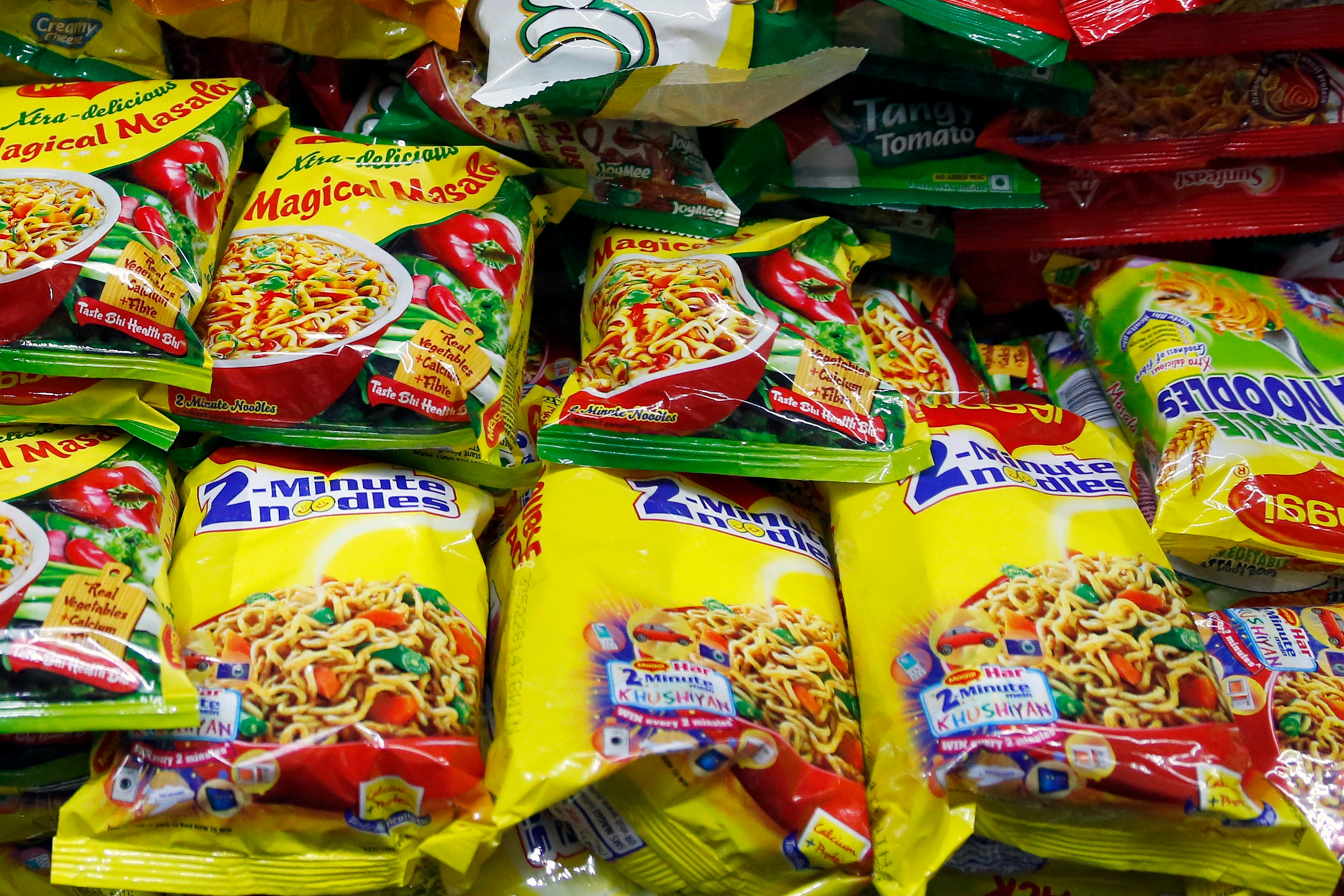
From Hindustan Unilever Ltd., India's largest fast-moving consumer goods maker, to peers like ITC Ltd., Nestle India Ltd. and Marico Ltd., all have introduced products to be sold exclusively online. Nestle's Maggi Masala was sold only on Paytm before it was launched offline and ITC tied up exclusively with BigBasket to sell its instant noodles YiPPee!'s “My” range before taking distribution offline.
“An online launch of a product gives companies an idea of how the product will work once they take it offline as they get feedback from consumers and can accordingly tweak the product,” said Prashant Agarwal, joint managing director at retail consultant Wazir Advisors. “It costs less for companies to launch products online than offline.”
E-commerce presents an opportunity to tap a fast-growing market. Online retail is expanding four times faster than the traditional brick-and-mortar network, according to consulting firm Bain & Company. FMCG companies plan to reach out to young technology-savvy consumers through the internet.
Nearly half of India's 1.3 billion population is under the age of 25. With 35 percent of people using the internet, India is the second-largest internet market globally, Walmart said in a presentation to investors after acquiring Flipkart.
The opportunity is so big that even Paul Polman, whose term as chief executive officer of Unilever Plc ended with 2018, regretted that his company was late to design products for online retail earlier. Its Indian arm HUL, the maker of Lux soap and Pepsodent toothpaste, is now looking at specific products for online sale, which contributes 3 percent to its revenue, said Chief Executive Officer Sanjiv Mehta at the company's global investor meet recently.
Marico Ltd., the maker of Parachute coconut hair oil, launched its Ayurveda haircare brand True Roots exclusively online. A 150 ml bottle of True Roots costs Rs 499 but is sold at a Rs 100 discount to its maximum retail price on Flipkart. The company is also offering a cold-pressed organic coconut oil called Coco Soul online.
Marico gets only 2 percent of its revenue from online sales but it makes for an important medium as it helps get an immediate response of buyers' behaviour, the company's spokesperson said over the phone.
Zydus Wellness Ltd. will also launch its personal and healthcare products for its e-commerce platform next year. “We are quite excited about the personal care space,” Tarun Aurora, chief operating officer and director of the company, told BloombergQuint in an interview. He said there's huge room for growth in the health drinks space due to rising demand.
Consumer goods makers' bet on online-only sales comes on the back of double-digit growth witnessed by the e-commerce sector. “The categories posting the most significant growth in e-commerce channel include packaged grocery, where 40 percent of online consumers said they made a purchase,” Nielsen India said in a December report, adding that it registered a 21 percent growth in 2018 compared to 33 percent in 2017.
Early adopters of any new category are usually technologically savvy, which makes it easier for brands to connect directly with the target audience, said Alpana Parida, managing director the brand strategist DY Works. Brands don't want to be mixed with other categories and online retail gives them that distinction, unlike brick-and-mortar stores where they are more likely to be kept with similar products, she said. “That causes them to lose out on gaining consumers' attention, making the brand communication difficult.”

-
We May Need Another Tukaram Mundhe To Fight Air Pollution | The Reason Why

Developers may install basic measures such as sprinklers and green nets, resume work, and continue violating rules when this equipment stops working.
-
Extracting Value From Battery Scrap Could Be Challenging For India | The Reason Why
A discarded lithium-ion battery still contains valuable materials such as lithium, nickel and cobalt. These can be recovered and reused. When such batteries are crushed and shredded, they produce a dark powder called black mass.
-
One El Nino, India Can Handle. Two Could Break The Granary
India's grain stocks can absorb one bad year, but a second El Nino could drain the buffer in two to three years, economists say.
-
India's Troika Of Good Luck | Joining The Dots
As Jensen Huang's exit drags Nvidia down, a cooling AI trade and resilient earnings have revived investor interest in India. A likely RBI rate hike looms.
-
Talking Points This Week: Leadership Shock At Nvidia, Earnings Strength, And The Fog Over Hormuz
The Anthropic IPO pricing and first trading day, Nvidia's upcoming earnings, and any fresh signals from Iran will set the tone for the following week.
-
Signature Play: The Classic Cocktail Is Dead. Or Is It?
Classic cocktails are disappearing from India's cocktail menus. But they're still being ordered, taught to bartenders and borrowed from. So, who's really having the last drink?
-
A New Samvat Wishlist: Inclusive Prosperity And Human Development
India has strengthened its economic foundations through infrastructure, digital access and enterprise. Its next growth chapter must deepen productivity, create better livelihoods and widen participation in prosperity.
-
Love, Sex Aur Dhokha: The Audacious Plot To Spy On Jensen Huang
A Taipei dinner, a Singapore chip buyer and a suspected Chinese asset: inside the alleged spy operation that got close to NVIDIA's Jensen Huang.
-
Ten Things I Learnt This Samvat
Patience can be a trap. Cheap stocks can stay cheap. Leverage can wipe you out. What did Samvat 2082 teach us? Niraj Shah writes on 10 lessons from the year gone by.
-
Talking Points This Week: Tech Nerves, FII Buying, And A Faraway Banking Shock
The global markets are not shining this Diwali. The exception in the large markets is, India.









