Consumer Confidence Plummets To A Historic Low, RBI Survey Shows
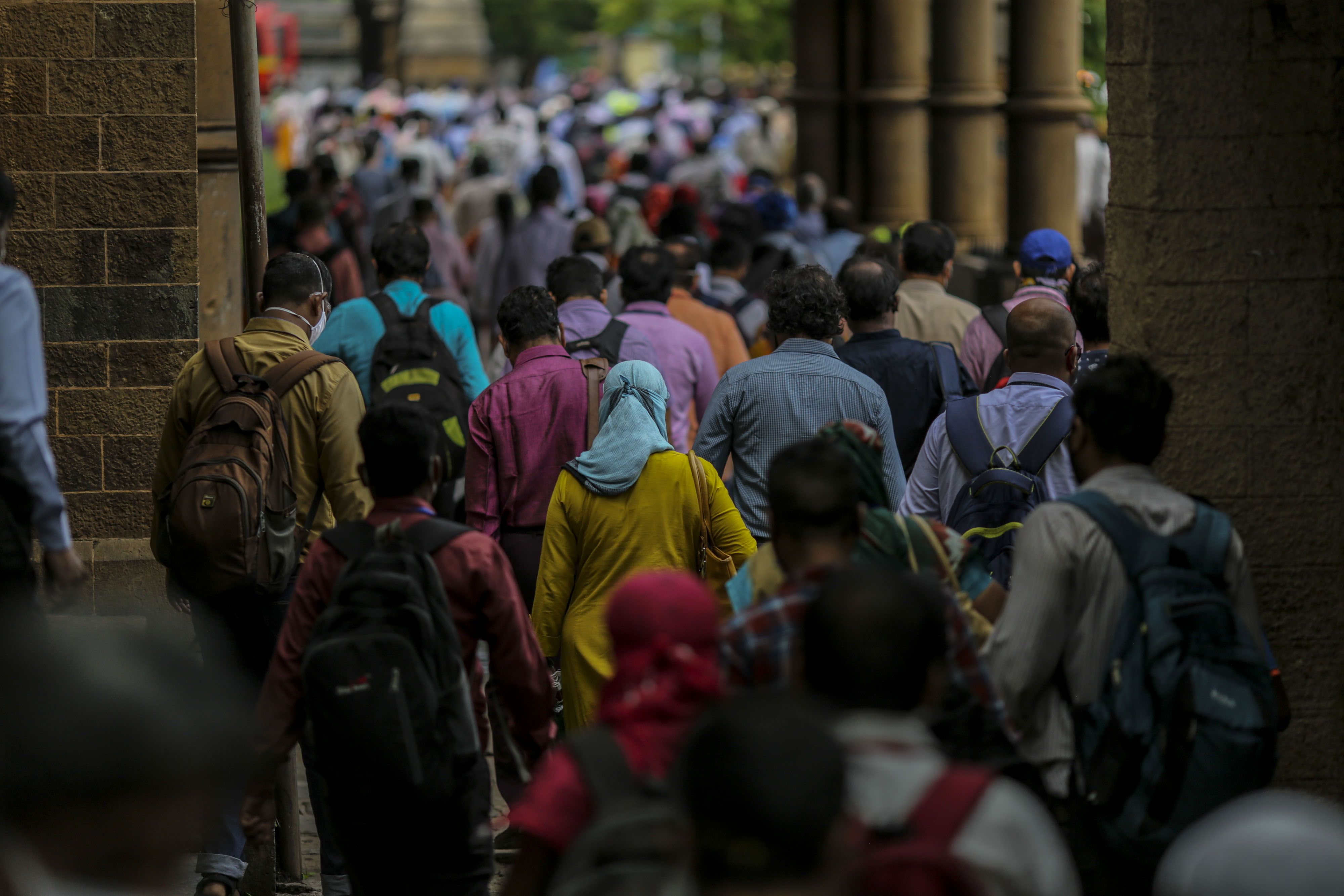
Consumer confidence hit a record low in July on account of a bleak economic scenario amid the disruptions caused by the coronavirus pandemic.
The current situation index dropped to 53.8 in July from 63.7 in May, according to the Reserve Bank of India's forward-looking surveys released on Thursday. The index has remained weak since May last year.
Consumers are pessimistic over the economic situation, employment, price and income compared to the position a year ago, the survey found. Most respondents reported a reduction in discretionary spending, though their overall spending increased during the last one year. They do not expect to increase non-essential spending in the coming year as well, it said.
The respondents, however, remained buoyant over hopes of a more optimistic outlook ahead. The future expectations index for the year ahead rebounded in the survey's July round, rising to 105.4 from 97.9 in May.

Inflation Expectations
Inflation expectations of households saw an uptick in July, continuing the trend from May when the last survey was conducted.
The current median inflation perception rose 60 basis points to 9.9% in July, according to the RBI survey. The three-month ahead median inflation expectation stood higher than the one-year horizon for the second survey round in a row.
“Households' three months ahead expectations remained above their one-year ahead expectations, indicating their anticipation of lower inflation over the longer horizon,” Shaktikanta Das, governor at the central bank, said in his assessment on Thursday.

Also Read: India's Statistics Woes Return With Scrutiny Over Official Inflation Data
Industrial Sentiments Crashed
The Business Assessment Index fell to an all-time low of 55.3 in the quarter ended June from 102.2 in the preceding three months.
The manufacturing companies assessed were pessimistic on major demand indicators like production, order books, capacity utilisation and employment conditions, the survey said.
The business expectations index, however, contracted to 99.5 for the July-September period. Manufacturers expected production and order book to improve in the ongoing quarter, but sentiments on job landscape and external demand to remain weak. Sentiments on profit margins also remained weak for the ongoing quarter, the survey said.
To be sure, the industrial outlook survey was conducted during the April-June period.

- Aggregate capacity utilisation was showing signs of a turnaround before the pandemic hit. It had increased to 69.9% in the January-March quarter from 68.6% in the October-December period—its historic low.
- The seasonally adjusted capacity utilisation remained stable at 68.3% in the three months ended March, compared with 68.4% in the preceding three months.
Also Read: India Manufacturing PMI Slips In July After June Rebound

Real gross domestic product is likely to contract 5.8% in 2020-21 and rebound to 7.4% in the next fiscal, RBI's survey of professional forecasters showed. The central bank has so far abstained from giving its own estimates while acknowledging that the GDP will remain in the contraction zone in the first two quarters of the financial year ending March 2021.

-
The Economic Imperative: Analysing The Material Driving Force Behind India-Canada Strategic Reset

This economic complementarity is further reinforced by deep institutional investment ties and talent mobility, which form the bedrock of the bilateral framework.
-
Medicine Pricing: Where Must Profit Stop?
India must confront excessive margins, hidden incentives and regulatory gaps that threaten the integrity of medicine.
-
Why Amazon And Flipkart Are Struggling To Beat Meesho In India's Smaller Cities
With 274 million users and lowest-cost logistics, Meesho is defending its value commerce crown against giants like Amazon and Flipkart.
-
High US Salaries, No Green Card Certainty: The Financial Calculation Facing Indian H-1B Families
The suspension of PERM processing at eight technology employers does not cancel existing H-1B visas. What it does is force a question many Indian families have been avoiding: is the US salary worth tying your career and family plans to one employer?
-
Swiggy vs Eternal: Food Delivery's Two Rivals Are No Longer In The Same Race
Eternal is building a private AI assistant, dark.ai. Swiggy is still working out how to make Instamart pay, with an operating loss of Rs 895 crore in the July-September quarter while Blinkit stayed profitable.
-
Where You Live Shapes How You Get To Work | The Reason Why
Two-wheelers are the most popular way to get to work in India, accounting for nearly 43% of workplace commutes.
-
Unhedged Position: Can India See An Indonesia-Style Time Correction?
The Nifty is trading below levels it first clocked in 2024. Is there, then, as I have suggested in the headline, potential that the current time correction drags on painfully for the next three-five, even ten years?
-
Navigating Friction And Energy Realities: An Analysis Of Marco Rubio's October Visit To India
Occurring at a critical juncture marked by stalled trade negotiations and escalating geopolitical pressures over global energy supplies, the visit offers a profound window into modern US-India relations.
-
India Exports Capital. Why Not Export Trusteeship?
The big question, then, is whether India can build an institution that global borrowers, investors, banks, and lawyers can trust, even without an Indian connection.
-
France's Economy & Politics Are In Crisis | The Reason Why
Let's look at how the French economy and politics evolved under Nicolas Sarkozy, Franois Hollande and Emmanuel Macron.










