‘Political Executive Responsible For Policy Decisions, Not Civil Servant’
The judgment rendered by the Special Court, convicting former Coal Secretary HC Gupta and two other senior bureaucrats, betrays a complete ignorance of the constitutional fundamentals of a Parliamentary form of Government.
A minister is responsible to Parliament for whatever goes on in his department, whatever the extent of delegation and whether he is personally involved or not. It is this accountability, which provides legitimacy to governance and justifies retention of confidence of the Parliament and consequently consent of the governed. It is thus the minister alone who is the final decision-making authority and remains liable to account to Parliament for all mishaps and operational failures of his ministry.
There cannot, therefore, be a presumption that a minister does not know what is happening in his ministry. The presumption, in fact, is to the contrary because his office is predicated on the affirmation of the principle of accountability, which negates the supposition that he need not know the affairs of his ministry. And an emphatic reiteration of this principle arises where power is exercised by the minister personally as in that event there is no displacement of authority to take decisions and of the consequential liability for the same.
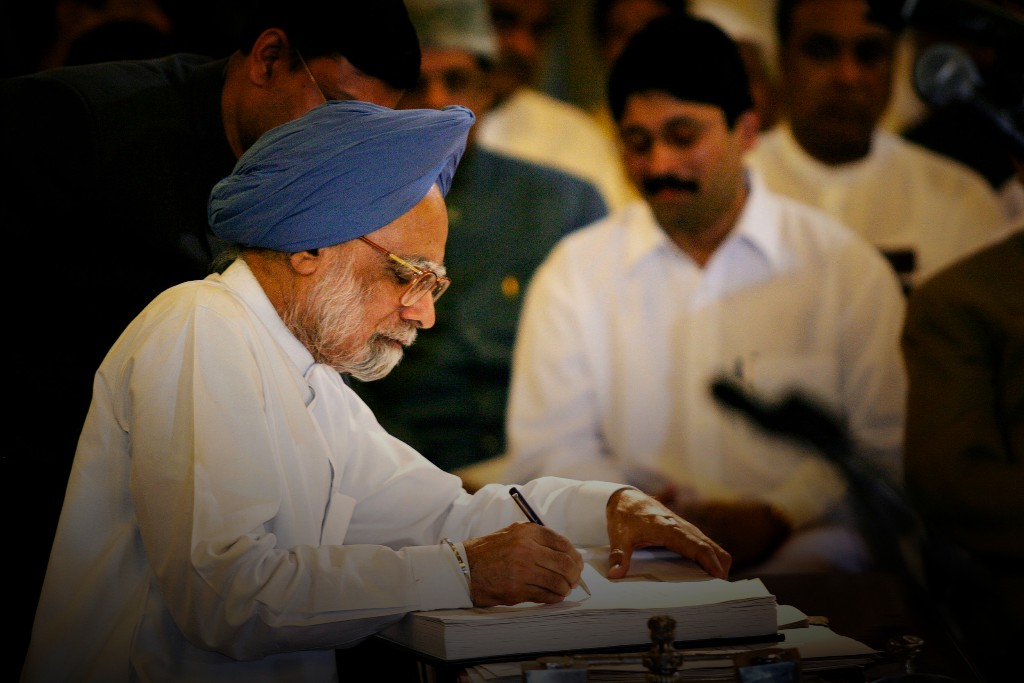
In the case where the Coal Secretary has been convicted, he merely recommended allocation of coal blocks but the eventual approval was granted by the Minister of Coal who also happened to be the Prime Minister at the time – Manmohan Singh.
Yet the Special Judge records in his order;
There was no reason in the facts and circumstances of the case for the Prime Minister as Minister of Coal to presume that the guidelines issued have not been complied with. It is not only apparent from the record but it is certainly permissible to draw a presumption in the overall facts and circumstances of the case that Prime Minister as Minister of Coal proceeded to consider the recommendation of the Screening Committee on the assumption that the applications must have been checked in MOC for their eligibility and completeness or that the guidelines must have been duly followed even by the Screening Committee.Special Judge Bharat Parashar
Moreover, the Judge conflated the Prime Minister with the Government of India. He framed the issue as thus: “Whether dishonest representation continued before the Prime Minister and thereby cheating the Government of India.”
The Prime Minister is NOT the Government of India and the comment betrays a complete lack of understanding about what the government is.
Even where functions entrusted to a minister (or prime minister) are performed by an official, there is in law no delegation because the official's act is constitutionally that of the minister.
Also Read: Former Coal Secretary HC Gupta Convicted In Coal Scam Case

And should an official act in a manner the minister disapproves, the minister has then to act to show his disapproval of the same and should he choose not to so act, despite having the opportunity, the reason and ability his omission becomes part of the blameworthy act itself.
Thus not the secretary alone, but he along with the Prime Minister can be liable to the Government of India.
In fact, in the instant case, the responsibility was more onerous on the Prime Minister for the Special Judge himself records that “the fact that the then Prime Minister of the country Dr Manmohan Singh thought it appropriate to retain the charge of Ministry of Coal with himself only, clearly shows as to how important the work of said Ministry was.” If it was admittedly very important for him, how can it be presumed in his favour that he left it to the discretion of the Screening Committee to make recommendations and then blindly follow them? The presumption would be that he was alert and was fully informed!
Also Read: HC Gupta's Conviction And The Court's Message To Bureaucrats

The wrong becomes more significant still as the concerned minister was also the Prime Minister. Another coal secretary during the period, PC Parakh, however has written that “on the 20th August 2004, the Prime Minister approved allocation through open bidding. He wanted a cabinet note on this. After the Prime Minister's approval, we received a note from the Prime Minister's Office (PMO), enumerating the possible problems in moving to open bidding. It is understood that this note from the PMO was based on an unsigned note given by the Minister of State (for Coal) to the PMO.” Instances such as these are cited to prove the Prime Minister's innocence – the fact that he was helpless. This reputation enabled him to a get relief from the Supreme Court too.
However, if the act or omission is criminal, the goodness of disposition provides no amnesty from prosecution.
The fact remains that the Prime Minister did not remove the MoS, which he was entitled to do, and altered the decision to align with that of the minister! Apart from the fact that omission to act, being intentional, had a behavioral dimension, which took away from it the badge of inactivity and firmly attached it to the unfolding criminality of conduct, the issue transcended from one of individual ministerial responsibility to one collective responsibility of the council of ministers for which, again, the Prime Minister is ultimately responsible.
If the secretary, as the head of the permanent civil service can be prosecuted, the Prime Minister who heads the political executive cannot be immune. In matters of policy, the responsibility is always that of the political executive. And where the political executive allows faulty implementation of policy, the wilful failure to act will make its liability joint with the civil servant. Let there be nothing arbitrary in drawing the bounds of criminality and never play favorites with the accused.
Once the political executive is reined in the permanent civil service can never go astray. If, however, the law provides the possibility of wagering a chance to defeat the system immunizing some and randomly targeting others, it will remain a failure both instrumentally and normatively, and the systemic rot will remain endemic.
Aman Lekhi is a Senior Advocate at the Supreme Court of India and writes on constitutional and commercial law issues.
The views expressed here are those of the author's and do not necessarily represent the views of BloombergQuint or its editorial team.

-
AI Bias In Investing Cannot Be Eliminated, But It Can Be Governed

Framing is a particularly important example as identical financial information presented in terms of gains rather than losses can lead an LLM to reach a different assessment.
-
Joining The Dots | Dark Skies, Steady Diya: Why Hope Holds This Diwali
With war, a weak rupee and foreign outflows weighing on sentiment, policymakers at the NDTV World Summit and market veterans at NDTV Profit Ignite: Diwali Edition offered the same advice: stay invested and filter out the noise.
-
The Curious Case of Equitas Small Finance Bank And A CEO Who Quit For Stock
PN Vasudevan believes persistent investor concerns over a perceived conflict of interest had become a governance overhang on Equitas Small Finance Bank's stock, even as the lender improved profitability and asset quality.
-
Talking Points This Week: AI Cash Burn, A Tiger Comeback And An India That Still Finds Its Own Path
India is not immune to higher oil or tighter global liquidity, yet its earnings base is broader, its domestic policy levers are still available.
-
Foreign Investors Own Half Of HDFC Bank and ICICI Bank. An LTCG Cut Could Matter Most Here
Foreign portfolio investors have US$115 billion parked in HDFC Bank, ICICI Bank. If the government cuts long-term capital gains tax, Jefferies says returning foreign money could land here first.
-
'Never Seen This Level Of Negativity': Sandeep Tandon Says The Next Rally May Be Closer Than You Think
Veteran investor Sandeep Tandon says foreign selling is easing, large-caps are due a comeback and mid-caps are crowded, while he turns positive on gold, power and pharma this Diwali.
-
Indians Stay With Family, Not In Hotels | The Reason Why
India still lacks enough clean, reliable and affordable hotels for budget-conscious travellers.
-
The Economic Imperative: Analysing The Material Driving Force Behind India-Canada Strategic Reset
This economic complementarity is further reinforced by deep institutional investment ties and talent mobility, which form the bedrock of the bilateral framework.
-
Medicine Pricing: Where Must Profit Stop?
India must confront excessive margins, hidden incentives and regulatory gaps that threaten the integrity of medicine.
-
Why Amazon And Flipkart Are Struggling To Beat Meesho In India's Smaller Cities
With 274 million users and lowest-cost logistics, Meesho is defending its value commerce crown against giants like Amazon and Flipkart.










