The Origins Of Indian Citizenship
The recently enacted Citizenship (Amendment) Act, 2019, carves out a special pathway to citizenship for non-Muslim immigrants from some countries. This sort of discrimination against Muslims is popularly thought of as being a relatively recent phenomenon. However, at the founding of India's republic, the citizenship provisions of the Constitution also discriminated against Muslim immigrants and made it difficult for them to acquire Indian citizenship.

The Permit System
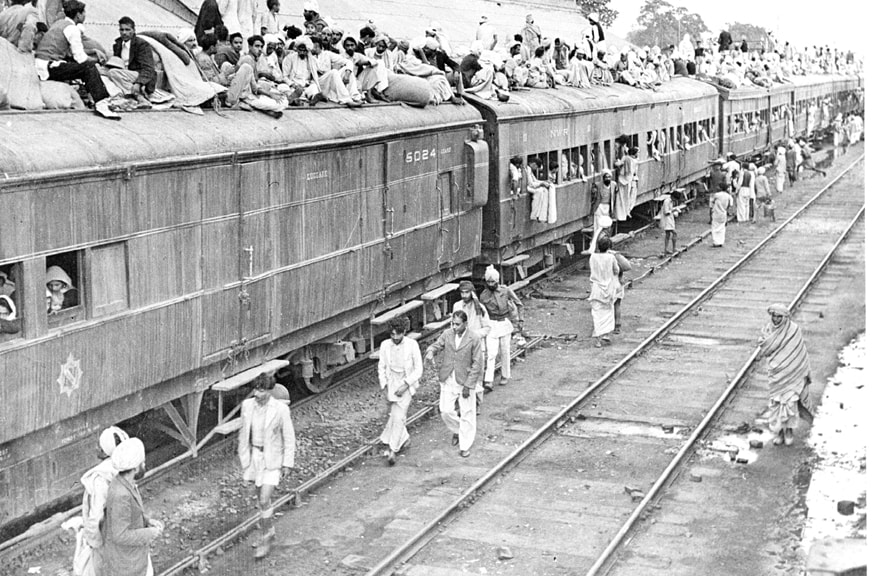
After the partition of the country, two waves of immigration occurred from West Pakistan to India. In the first wave, which started from March 1, 1947, large numbers of Hindus and Sikhs arrived here. In the second wave in 1948, many Indian Muslims who had migrated to West Pakistan sought to return to India because of poor conditions there, especially in Karachi. This second wave of immigration created problems. The homes of Indian Muslims who had migrated to West Pakistan were being used to house Hindu and Sikh refugees who had come to India. If the Muslim owners of those homes returned to India, what would happen to the non-Muslim refugees who were living there?
In April 1948, Nehru acknowledged that the “influx … of Muslims to Delhi and other parts of India from Pakistan has raised certain difficulties”. The following month, Sardar Vallabhbhai Patel wrote to Nehru that there was “considerable discontent” among the public in general and refugees in particular about the Indian government's “failure to prevent the inflow of Muslims from Pakistan.” The return of “these Muslims”, he explained, “while we are not yet able to rehabilitate Hindus and Sikhs from Pakistan… would again be the breeding ground of communal poison, on which activities of organisation[s] like the RSS thrive.” He believed that returning Indian Muslims were “a great source of danger to the peace and security of Delhi”. Nehru replied and said that this was an “undoubtedly serious” matter.

Among the several kinds of permits that were available, the “permanent resettlement” permit, meant for Indian Muslims who had migrated to West Pakistan and who now wanted to permanently resettle in India, was incredibly difficult to obtain. The application form had to be personally scrutinised by the Indian High Commissioner or Deputy High Commissioner. If the home in India of the Indian Muslim who had migrated to West Pakistan was being used to rehabilitate non-Muslim refugees, then his return to India could be blackballed by the provincial government where that home was situated. In June 1949, Nehru wrote to Mehr Chand Khanna that “we should be strict about the return of large numbers of Muslims to India from Pakistan or even a small number”.
Tellingly, a person immigrating to India from East Pakistan did not require a permit.
This was because the immigration of Hindus and Sikhs from West Pakistan to India had virtually come to an end by July 1948 when the permit system was introduced, but there were still large numbers of Hindus in East Pakistan who were arriving in India as refugees at that time. In November 1948, several months after the permit system was introduced for immigration to India from West Pakistan, there were around 16 million Hindus in East Pakistan, many of whom were being forced to either convert to Islam or leave for India. Meant to prevent Muslims from permanently re-entering India, the permit system, if introduced for immigrations from East Pakistan, would have prevented Hindu refugees from arriving in India.

Hidden Constitutional Premises
In the Constituent Assembly, the citizenship provisions of the Indian Constitution were prepared on the basis of two hidden premises. These were that firstly, among those who had migrated to India from Pakistan prior to the introduction of the permit system on July 19, 1948, the vast majority were non-Muslims. Secondly, those who found themselves on the Indian side of the border at partition, migrated to Pakistan after March 1, 1947, and subsequently returned to India in order to permanently resettle here, were Muslims.
The Constitution treated these two categories of persons differently. Those who had migrated from Pakistan to India in the first wave prior to the permit system, presumed to mostly be Hindus and Sikhs, were given an easy path to citizenship. In Ambedkar's words, their “citizenship is automatic. No conditions, no procedure is laid down with regard to them.”

In the Constituent Assembly, it was Nehru who outlined the Constitution's hidden citizenship premises. He explained that those who came into India in the first wave were mostly Hindus and Sikhs, and India accepted them as citizens “practically without demur or enquiry”. “You cannot have rules for Hindus, for Muslims or for Christians only”, he said, “but in effect we say that we allow the first year's migration and obviously that huge migration was a migration of Hindus and Sikhs from Pakistan.” “The others”, i.e., Muslims, “hardly came into the picture at all” at this time. On the other hand, “[i]t is possible that later, because of [the] permit system, some non-Hindus and non-Sikhs came in.”
The permit system substantially reduced the number of Muslim refugees in India. Nehru explained that “a very great deal of care has been taken” before issuing a permit for resettlement. Before the permit system, some 20,000 Muslims from West Pakistan had arrived in Delhi between March-July 1948 alone. By August 1949, only around 2,000 to 3,000 such permits were issued.

The CAA
The CAA creates a pathway to Indian citizenship for Hindus, Sikhs, Buddhists, Jains, Parsis and Christians who were “compelled to seek shelter in India due to religious persecution or fear of religious persecution” and who entered India before December 31, 2014. In providing an easier road to citizenship for non-Muslim immigrants from Pakistan and Bangladesh, it carries forward the old discrimination against Muslim immigrants that was prevalent at the founding of India's republic.
However, those times were different. Muslim immigrants were then prevented from coming here because of partition-era housing shortages and to prevent communal rioting in a charged environment. Today, the CAA is unconstitutional for several reasons.
- Firstly, it discriminates against other religious minority communities in Pakistan, Bangladesh and Afghanistan which might equally be persecuted there – Jews, Muslim minorities like Shias or Ahmadiyas, even atheists or agnostics.
- Secondly, it is not only the citizens of those countries who may face religious persecution. The CAA ignores religious asylum seekers from other countries.
- Thirdly, those who face religious persecution after December 31, 2014, there do not have a right to seek citizenship in India.
- Fourthly, the CAA ignores the citizens of those countries who may seek asylum in India for non-religious persecution – e.g., based on sexual orientation or political views.
Further, the real problem with the CAA lies elsewhere. Under the usual rules of evidence, the burden of proving a fact is on the person who asserts that fact. However, as a consequence of laws enacted in 1939 and 1946, the burden is on the “foreigner” to prove that he is an Indian citizen. So if a person's name is not set out in the proposed National Register of Citizens, it is his responsibility to prove his citizenship. For those born after 1987, this means proving that one or both parents are Indian citizens, which may be very hard to do.
The CAA also turns a blind eye towards Muslim “dreamers” – innocent children born in India to illegal immigrants, or who accompanied their illegal immigrant parents to India at a very young age. Though these children (who may now be adults) entered India illegally due to no fault of their own and have only known India to be their homeland since childhood, they would not be considered citizens here merely because they are Muslims whose parents came from the outside.
Abhinav Chandrachud is an advocate at the Bombay High Court.
The views expressed here are those of the author and do not necessarily represent the views of BloombergQuint or its editorial team.

-
The Curious Case of Equitas Small Finance Bank And A CEO Who Quit For Stock

PN Vasudevan believes persistent investor concerns over a perceived conflict of interest had become a governance overhang on Equitas Small Finance Bank's stock, even as the lender improved profitability and asset quality.
-
Talking Points This Week: AI Cash Burn, A Tiger Comeback And An India That Still Finds Its Own Path
India is not immune to higher oil or tighter global liquidity, yet its earnings base is broader, its domestic policy levers are still available.
-
Foreign Investors Own Half Of HDFC Bank and ICICI Bank. An LTCG Cut Could Matter Most Here
Foreign portfolio investors have US$115 billion parked in HDFC Bank, ICICI Bank. If the government cuts long-term capital gains tax, Jefferies says returning foreign money could land here first.
-
'Never Seen This Level Of Negativity': Sandeep Tandon Says The Next Rally May Be Closer Than You Think
Veteran investor Sandeep Tandon says foreign selling is easing, large-caps are due a comeback and mid-caps are crowded, while he turns positive on gold, power and pharma this Diwali.
-
Indians Stay With Family, Not In Hotels | The Reason Why
India still lacks enough clean, reliable and affordable hotels for budget-conscious travellers.
-
The Economic Imperative: Analysing The Material Driving Force Behind India-Canada Strategic Reset
This economic complementarity is further reinforced by deep institutional investment ties and talent mobility, which form the bedrock of the bilateral framework.
-
Medicine Pricing: Where Must Profit Stop?
India must confront excessive margins, hidden incentives and regulatory gaps that threaten the integrity of medicine.
-
Why Amazon And Flipkart Are Struggling To Beat Meesho In India's Smaller Cities
With 274 million users and lowest-cost logistics, Meesho is defending its value commerce crown against giants like Amazon and Flipkart.
-
High US Salaries, No Green Card Certainty: The Financial Calculation Facing Indian H-1B Families
The suspension of PERM processing at eight technology employers does not cancel existing H-1B visas. What it does is force a question many Indian families have been avoiding: is the US salary worth tying your career and family plans to one employer?
-
Swiggy vs Eternal: Food Delivery's Two Rivals Are No Longer In The Same Race
Eternal is building a private AI assistant, dark.ai. Swiggy is still working out how to make Instamart pay, with an operating loss of Rs 895 crore in the July-September quarter while Blinkit stayed profitable.










