Citing US Values, Yellen Says Greatly Concerned by Rise in Economic Inequality
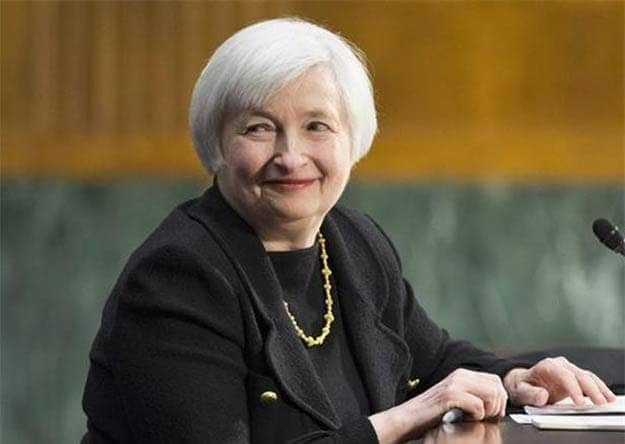
Boston: Federal Reserve Chair Janet Yellen said on Friday the growth of economic inequality in the United States "greatly" concerned her, and suggested in a detailed speech on the politically charged issue that Americans should ask whether it was compatible with their values.
With global financial markets rebounding from days of frenzied selling, Ms Yellen did not comment on the volatility or on monetary policy. Instead she focused on the gulf between rich and poor that has only grown wider over the last several decades and, she said, through the US economic recovery.
The data-heavy speech amounted to a broad social critique and treatise that supported government interventions to help boost Americans at the bottom of the economic ladder. It continued Mr Yellen's focus as head of the US central bank on the trials of the unemployed and underemployed, a concern that has delayed an interest-rate rise in the wake of the recession.
"The extent of and continuing increase in inequality in the United States greatly concern me," Ms Yellen told a conference on the topic at the Boston branch of the central bank.
"It is no secret that the past few decades of widening inequality can be summed up as significant income and wealth gains for those at the very top and stagnant living standards for the majority," she told economists, professors and community workers.
"I think it is appropriate to ask whether this trend is compatible with values rooted in our nation's history, among them the high value Americans have traditionally placed on equality of opportunity."
Income disparity between the richest Americans and the rest has risen since the 2007-2009 recession. An extensive Fed study published last month suggests wealth and income is concentrated not just within the top 1 per cent, as some analyses have suggested, but actually among a slightly broader slice of the ultra-rich: the top 3 per cent.
From 2010 to 2013, all of the income growth was concentrated among the top earners with the top 3 per cent of US families accounting for some 30 per cent of all income. The disparity was even greater by wealth, the study found, with the 3 per cent holding 54.4 per cent of all net worth in 2013.
Nudging lawmakers
Ms Yellen, who has given major speeches on inequality for some two decades and on Thursday toured a hard-hit neighborhood of Boston, acknowledged that a rebound in house prices over the last two years has restored much wealth to those at the bottom.
But she cited several troubling contributors to a lack of equality of opportunity, including the expensive cost of higher education faced by the young. The slowdown in business formation may depress productivity and further threaten economic opportunity, she said.
Heading into unfamiliar territory for a Fed chair, Ms Yellen compared school funding in the United States with that of other countries, including approaches to those in lower-income neighborhoods. She also analyzed the role large inheritances play in "the fairly limited intergenerational mobility."
By some estimates, she said, "income and wealth inequality are near their highest levels in the past hundred years, much higher than the average during that time span and probably higher than for much of American history before then."
Ms Yellen, who did not take questions, said she aimed to provide a factual basis for further discussion and she sat in the audience to hear research on race and economic inequality.
"This seems like a pretty deep dive into some pretty specific policy issues," unusual terrain for a Fed chair, said Josh Bivens, research director for the Economic Policy Institute, a think tank that has focused on employment and inequality issues. "As a diagnosis there is a pretty convincing case for what we can do to increase economic mobility."
Ms Yellen did not comment on the economic outlook after a sharp global stock market selloff that led investors to reappraise the Fed's likely policy path, and that led Fed officials to open a debate over their next steps.
The Fed has embraced extraordinary policies to boost employment and, from former Fed Chair Ben Bernanke to Janet Yellen, has not hesitated to express frustration at a lack of fiscal stimulus from Washington. Some Republican lawmakers, meanwhile, have criticized the Fed's easy-money policies for allowing Congress to put off cost cuts.
Among the issues the Fed has been debating is whether the country's long-term growth potential has declined, and whether there are things that could be done to increase it.
"It may be," said Bivens, "that even the bread and butter job of Fed chair is made harder by the rise of inequality and they are maybe trying to alert people to that."
Copyright: Thomson Reuters 2014

-
The Curious Case of Equitas Small Finance Bank And A CEO Who Quit For Stock

PN Vasudevan believes persistent investor concerns over a perceived conflict of interest had become a governance overhang on Equitas Small Finance Bank's stock, even as the lender improved profitability and asset quality.
-
Talking Points This Week: AI Cash Burn, A Tiger Comeback And An India That Still Finds Its Own Path
India is not immune to higher oil or tighter global liquidity, yet its earnings base is broader, its domestic policy levers are still available.
-
Foreign Investors Own Half Of HDFC Bank and ICICI Bank. An LTCG Cut Could Matter Most Here
Foreign portfolio investors have US$115 billion parked in HDFC Bank, ICICI Bank. If the government cuts long-term capital gains tax, Jefferies says returning foreign money could land here first.
-
'Never Seen This Level Of Negativity': Sandeep Tandon Says The Next Rally May Be Closer Than You Think
Veteran investor Sandeep Tandon says foreign selling is easing, large-caps are due a comeback and mid-caps are crowded, while he turns positive on gold, power and pharma this Diwali.
-
Indians Stay With Family, Not In Hotels | The Reason Why
India still lacks enough clean, reliable and affordable hotels for budget-conscious travellers.
-
The Economic Imperative: Analysing The Material Driving Force Behind India-Canada Strategic Reset
This economic complementarity is further reinforced by deep institutional investment ties and talent mobility, which form the bedrock of the bilateral framework.
-
Medicine Pricing: Where Must Profit Stop?
India must confront excessive margins, hidden incentives and regulatory gaps that threaten the integrity of medicine.
-
Why Amazon And Flipkart Are Struggling To Beat Meesho In India's Smaller Cities
With 274 million users and lowest-cost logistics, Meesho is defending its value commerce crown against giants like Amazon and Flipkart.
-
High US Salaries, No Green Card Certainty: The Financial Calculation Facing Indian H-1B Families
The suspension of PERM processing at eight technology employers does not cancel existing H-1B visas. What it does is force a question many Indian families have been avoiding: is the US salary worth tying your career and family plans to one employer?
-
Swiggy vs Eternal: Food Delivery's Two Rivals Are No Longer In The Same Race
Eternal is building a private AI assistant, dark.ai. Swiggy is still working out how to make Instamart pay, with an operating loss of Rs 895 crore in the July-September quarter while Blinkit stayed profitable.










