China's GDP Growth Falls To 3% In 2022, Second Lowest Growth In 50 Years
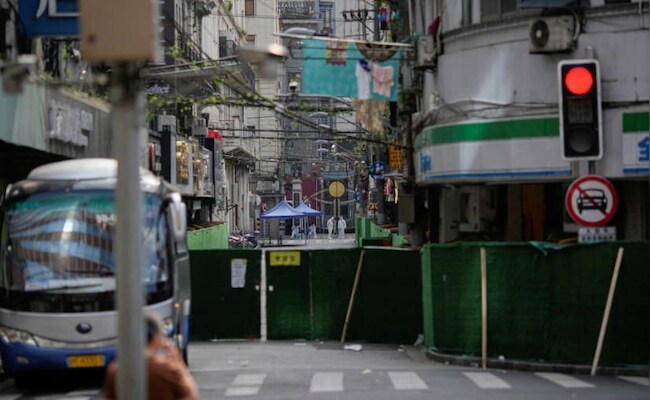
Hit hard by the zero-Covid policy and slump in the real estate market, China's economy shrank to three per cent in 2022, registering its second lowest growth rate in 50 years in the world's second-largest economy, according to official data released here on Tuesday.
The annual GDP of China totalled 121.02 trillion yuan ( $17.94 trillion) in 2022, falling below the 5.5 per cent official target, the National Bureau of Statistics (NBS) said.
The slow pace was blamed mainly on the strictly implemented zero-Covid policy leading to periodic lockdowns and the ruling Communist Party's crackdown on big industrial firms besides the lingering real estate crisis.
This is the slowest growth of the Chinese economy since the 2.3 per cent registered in GDP in 1974.
Significantly this year, China's GDP in terms of dollars declined from $18 trillion in 2021 to USD 17.94 trillion last year mainly due to a sharp rise of the dollar against RMB (the Chinese currency) in 2022.
In RMB terms, the Chinese economy last year posted 121.02 trillion yuan against the 2021 figure of 114.37 trillion yuan.
The GDP growth in the fourth quarter was 2.9 per cent year-on-year, compared with 3.9 per cent in the third quarter as it was hit hard by recurring covid lockdowns of various urban centres, including the top industrial and business hubs like Shanghai.
Industrial output, an important economic indicator, expanded by 3.6 per cent year-on-year in 2022 and 1.3 per cent in December.
China's fixed-asset investment went up 5.1 per cent in 2022.
The NBS said "despite the overall stable economic performance", the foundation for economic recovery remains "unstable".
The country will comprehensively deepen reform and opening-up and focus on strengthening market confidence to promote improvements of the economy to revive the economy, it said.
Last year's annual GDP growth of 3 per cent marked a slowdown from 8.4 per cent in 2021, a sharp decline blamed on a host of factors mainly China shutting itself from the outside world due to zero Covid policy.
China had set a modest economic growth target of around 5.5 per cent for last year, but it remained unattainable due to the impact of the coronavirus.
The urban surveyed jobless rate, meanwhile, stood at 5.5 per cent in December, down from 5.7 per cent in November amid reports that one among five persons in China was unemployed.
But according to NBS data, China's job market remained generally stable in 2022.
A total of 12.06 million new urban jobs were created last year, exceeding the annual target of 11 million, the data showed.
"The national economy continued to develop despite downward pressure, the economic output reached a new level, the employment and prices were generally stable, people's lives were continuously improved, new achievements were secured in high-quality development, and the overall economic and social development was stable and healthy," Kang Yi, head of the NBS, told the media after releasing the data.
However, the foundation of domestic economic recovery is not solid as the international situation is still complicated and severe while the domestic triple pressure of demand contraction, supply shock and weakening expectations is still looming, Kang YI said.
China will make economic stability its top priority and pursue progress while ensuring stability this year, he said.
The disquieting slowdown of the economy came as Chinese President Xi Jinping began his unprecedented third term towards the end of last year after being re-elected by the ruling Communist Party China's once-in-five-years Congress.
Besides the zero-Covid policy which his government completely lifted this month opening China to the outside world for the first time in three years, a host of other reasons including the slump in the real estate market and the crackdown on top business houses like Alibaba were blamed for the decline of the Chinese economy.
The Managing director of the International Monetary Fund, Kristalina Georgieva, this month asked China to continue reopening its economy.
"What is most important is for China to stay the course, not to back off from that reopening," Kristalina Georgieva said.
"If they stay the course, by mid-year or there around, China will turn into a positive contributor to average global growth," she said.
Yating Xu, principal economist at S&P Global Market Intelligence, told the BBC that she has seen signs of a gradual recovery in Chinese consumer activity since its reopening.
"The government's increasing pro-growth stance and the economic recovery entering 2023 reduces the likelihood of a pandemic-policy reversal," she said.
"However, the full reopening of mainland China's borders is likely to be delayed until international restrictions against China originated travel are dropped," she said.
(Except for the headline, this story has not been edited by NDTV staff and is published from a syndicated feed.)

-
Getting To Work Costs Women More | The Reason Why

It is not just about women paying more than men. It is about women paying much more in cities than in villages.
-
AI Bias In Investing Cannot Be Eliminated, But It Can Be Governed
Framing is a particularly important example as identical financial information presented in terms of gains rather than losses can lead an LLM to reach a different assessment.
-
Joining The Dots | Dark Skies, Steady Diya: Why Hope Holds This Diwali
With war, a weak rupee and foreign outflows weighing on sentiment, policymakers at the NDTV World Summit and market veterans at NDTV Profit Ignite: Diwali Edition offered the same advice: stay invested and filter out the noise.
-
The Curious Case of Equitas Small Finance Bank And A CEO Who Quit For Stock
PN Vasudevan believes persistent investor concerns over a perceived conflict of interest had become a governance overhang on Equitas Small Finance Bank's stock, even as the lender improved profitability and asset quality.
-
Talking Points This Week: AI Cash Burn, A Tiger Comeback And An India That Still Finds Its Own Path
India is not immune to higher oil or tighter global liquidity, yet its earnings base is broader, its domestic policy levers are still available.
-
Foreign Investors Own Half Of HDFC Bank and ICICI Bank. An LTCG Cut Could Matter Most Here
Foreign portfolio investors have US$115 billion parked in HDFC Bank, ICICI Bank. If the government cuts long-term capital gains tax, Jefferies says returning foreign money could land here first.
-
'Never Seen This Level Of Negativity': Sandeep Tandon Says The Next Rally May Be Closer Than You Think
Veteran investor Sandeep Tandon says foreign selling is easing, large-caps are due a comeback and mid-caps are crowded, while he turns positive on gold, power and pharma this Diwali.
-
Indians Stay With Family, Not In Hotels | The Reason Why
India still lacks enough clean, reliable and affordable hotels for budget-conscious travellers.
-
The Economic Imperative: Analysing The Material Driving Force Behind India-Canada Strategic Reset
This economic complementarity is further reinforced by deep institutional investment ties and talent mobility, which form the bedrock of the bilateral framework.
-
Medicine Pricing: Where Must Profit Stop?
India must confront excessive margins, hidden incentives and regulatory gaps that threaten the integrity of medicine.










