World’s Top Steel Producer Warns of ‘Severe’ Industry Crisis
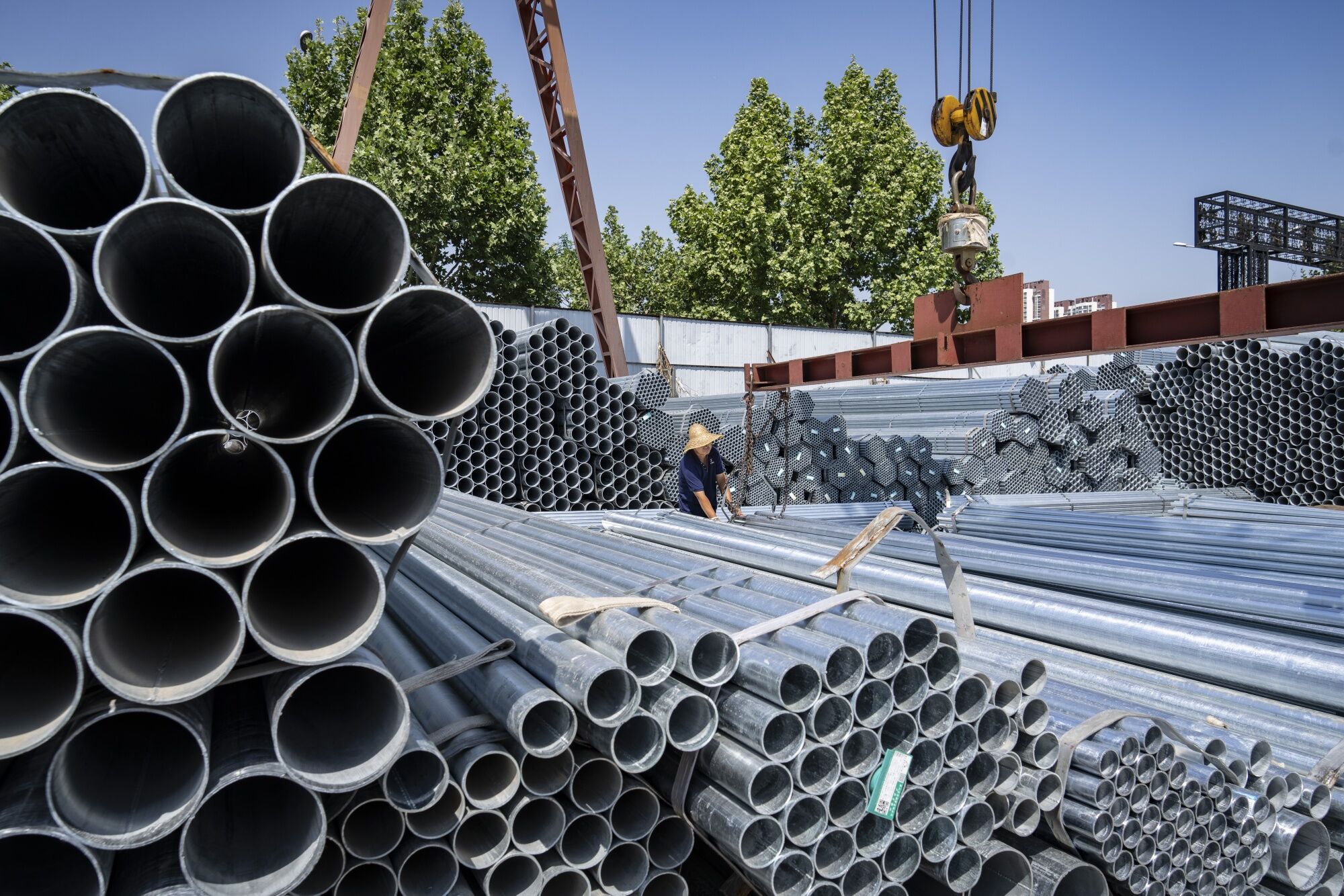
(Bloomberg) -- China's steel industry is facing a crisis more serious than the downturns of 2008 and 2015, the world's biggest producer warned, highlighting a need to preserve cash and likening conditions to a “severe winter.”
The crisis will likely be longer and “more difficult to endure than we expected,” Hu Wangming, chairman of China Baowu Steel Group Corp., told the company's half-year meeting, according to a statement.
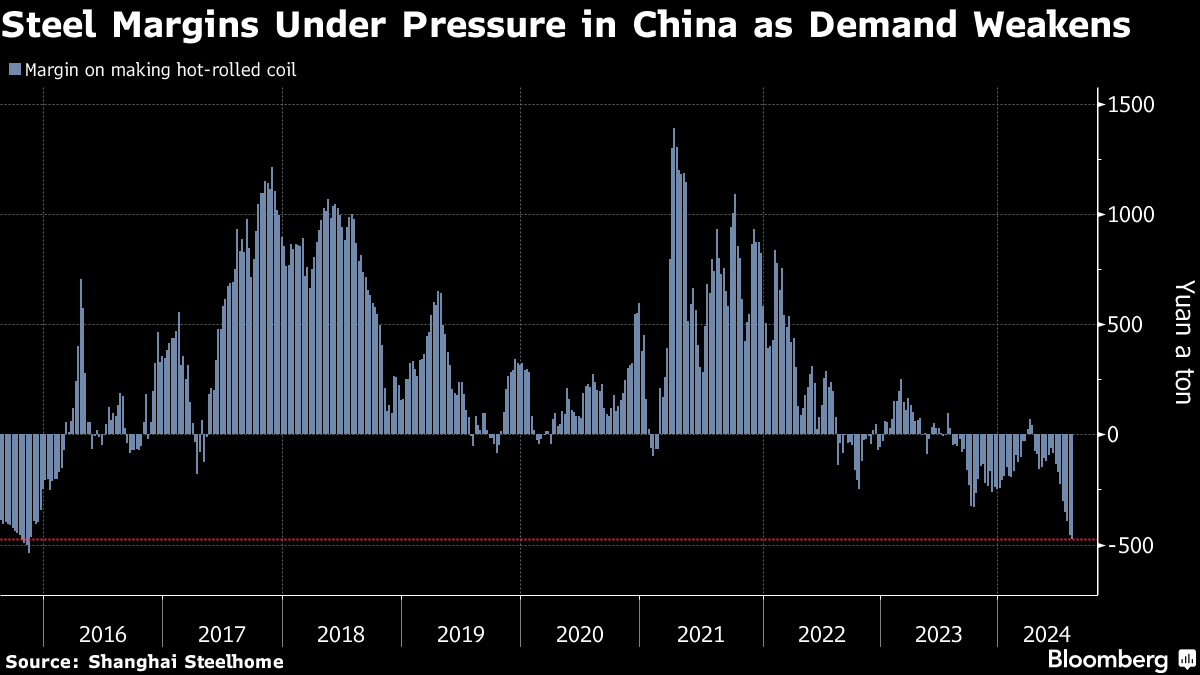
Hu's comments contributed to fresh weakness across iron ore and steel markets on Wednesday. The raw material plunged to its lowest since last year, and rebar futures in Shanghai slumped more than 4% to trade at their weakest since 2017.
China's steel market — by far the world's largest — is flashing multiple warning signs as the property downturn and weaker factory activity have ravaged domestic demand this year, with prices plunging to multiyear lows and mills racking up losses. Baowu alone produces about 7% of the world's steel, and Hu's stark message will likely be a worry for rivals across Asia, Europe and North America as they grapple with a fresh wave of Chinese exports.
China's country's steel industry suffered devastating slumps during the Global Financial Crisis of 2008-2009, and again in 2015-2016. In both cases, the crises were ultimately resolved by massive stimulus — a prospect that looks more remote in 2024 as President Xi Jinping bids to reshape the economy.
Baowu didn't offer much on the causes of the current downturn, focusing on how employees should respond: by preserving cash and minimizing risks.
“Financial departments at all levels should pay more attention to the security of the company's funding,” the statement said, with a need to strengthen controls, including for overdue payments and detecting fake trades. “In the process of crossing the long and harsh winter, cash is more important than profit.”
As mills struggle, iron ore inventories are swelling, while reinforcement bar, used in construction, is cheaper than at any time since 2017. It's increasingly unprofitable to make steel, putting mills under pressure to cut production. Meanwhile, exports are on course to top 100 million tons, the most since 2016.
(Updates with iron ore, steel prices in fourth paragraph.)
More stories like this are available on bloomberg.com
©2024 Bloomberg L.P.

-
The Curious Case of Equitas Small Finance Bank And A CEO Who Quit For Stock

PN Vasudevan believes persistent investor concerns over a perceived conflict of interest had become a governance overhang on Equitas Small Finance Bank's stock, even as the lender improved profitability and asset quality.
-
Talking Points This Week: AI Cash Burn, A Tiger Comeback And An India That Still Finds Its Own Path
India is not immune to higher oil or tighter global liquidity, yet its earnings base is broader, its domestic policy levers are still available.
-
Foreign Investors Own Half Of HDFC Bank and ICICI Bank. An LTCG Cut Could Matter Most Here
Foreign portfolio investors have US$115 billion parked in HDFC Bank, ICICI Bank. If the government cuts long-term capital gains tax, Jefferies says returning foreign money could land here first.
-
'Never Seen This Level Of Negativity': Sandeep Tandon Says The Next Rally May Be Closer Than You Think
Veteran investor Sandeep Tandon says foreign selling is easing, large-caps are due a comeback and mid-caps are crowded, while he turns positive on gold, power and pharma this Diwali.
-
Indians Stay With Family, Not In Hotels | The Reason Why
India still lacks enough clean, reliable and affordable hotels for budget-conscious travellers.
-
The Economic Imperative: Analysing The Material Driving Force Behind India-Canada Strategic Reset
This economic complementarity is further reinforced by deep institutional investment ties and talent mobility, which form the bedrock of the bilateral framework.
-
Medicine Pricing: Where Must Profit Stop?
India must confront excessive margins, hidden incentives and regulatory gaps that threaten the integrity of medicine.
-
Why Amazon And Flipkart Are Struggling To Beat Meesho In India's Smaller Cities
With 274 million users and lowest-cost logistics, Meesho is defending its value commerce crown against giants like Amazon and Flipkart.
-
High US Salaries, No Green Card Certainty: The Financial Calculation Facing Indian H-1B Families
The suspension of PERM processing at eight technology employers does not cancel existing H-1B visas. What it does is force a question many Indian families have been avoiding: is the US salary worth tying your career and family plans to one employer?
-
Swiggy vs Eternal: Food Delivery's Two Rivals Are No Longer In The Same Race
Eternal is building a private AI assistant, dark.ai. Swiggy is still working out how to make Instamart pay, with an operating loss of Rs 895 crore in the July-September quarter while Blinkit stayed profitable.










