China Scraps Australian Barley Tariffs As Trade Relations Thaw
(Bloomberg) -- China will scrap import tariffs on Australian barley from Aug. 5 in the latest sign of improving ties between the two countries.
The commerce ministry said it's no longer necessary to continue imposing anti-dumping and anti-subsidy tariffs on Australian barley following changes in the Chinese market, according to a statement Friday.
Beijing imposed tariffs of more than 80% on Australian barley in May 2020, accusing its exporters of dumping on the Chinese market. The move came as bilateral ties were spiraling downward after then-Prime Minister Scott Morrison called for an international investigation into the origins of Covid-19. Beijing also restricted imports of other Australian goods including wine and lobsters.
But since the election of the center-left Labor government in May 2022, communications between Canberra and Beijing have resumed and relations improved markedly.
The Australian government said Friday it expects to follow a similar process to remove Chinese duties on the country's wine. “In the meantime, we are continuing to pursue our wine dispute at the WTO and remain confident in a positive outcome,” according to the statement, referring to the World Trade Organization by its initials.
Shares of Australia's Treasury Wine Estates Ltd. rose as much as 3.9%, the most since April 11. Barley exporters including United Malt Group Ltd. and GrainCorp Ltd. also edged higher before paring gains.
In April, Beijing announced it would hold a three-month review into the barley tariffs, in return for which Canberra agreed to suspend its case against China in the WTO. Beijing sought a one-month extension of the barley review in July, meaning a decision was due by late next week.
The value of Australian barley exports to China averaged around A$1.2 billion ($790 million) a year between 2014–15 and 2018–19, according to estimates from the Canberra government.
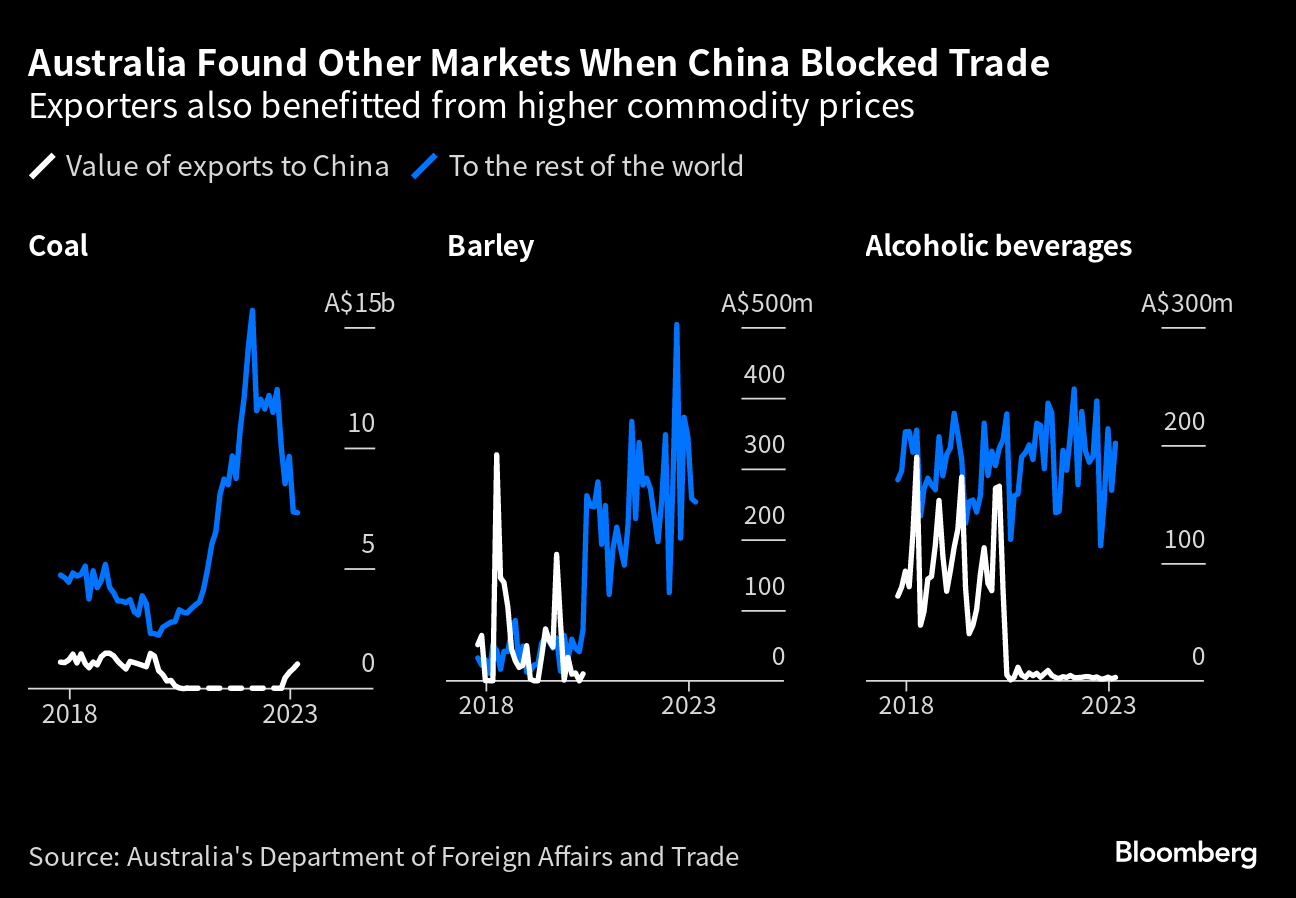
Even with the tariffs lifting, Australian barley exporters will remain cautious of rushing back to China. Many have found new markets, boosting shipments to Saudi Arabia, Japan, Vietnam, Kuwait and Mexico.
“It's important to note that Australia found alternative buyers of barley while the Chinese anti-dumping tariffs were in place,” Rabobank agricultural analyst Dennis Voznesenski said. “A risk premium will likely be required, at least initially, for exporters to redirect trade flows into China.”
--With assistance from Hallie Gu, Jackie Edwards and Ben Sharples.
More stories like this are available on bloomberg.com
©2023 Bloomberg L.P.

-
Signature Play: The Classic Cocktail Is Dead. Or Is It?

Classic cocktails are disappearing from India's cocktail menus. But they're still being ordered, taught to bartenders and borrowed from. So, who's really having the last drink?
-
A New Samvat Wishlist: Inclusive Prosperity And Human Development
India has strengthened its economic foundations through infrastructure, digital access and enterprise. Its next growth chapter must deepen productivity, create better livelihoods and widen participation in prosperity.
-
Love, Sex Aur Dhokha: The Audacious Plot To Spy On Jensen Huang
A Taipei dinner, a Singapore chip buyer and a suspected Chinese asset: inside the alleged spy operation that got close to NVIDIA's Jensen Huang.
-
Ten Things I Learnt This Samvat
Patience can be a trap. Cheap stocks can stay cheap. Leverage can wipe you out. What did Samvat 2082 teach us? Niraj Shah writes on 10 lessons from the year gone by.
-
Talking Points This Week: Tech Nerves, FII Buying, And A Faraway Banking Shock
The global markets are not shining this Diwali. The exception in the large markets is, India.
-
Midterm Rally Lasted A Day. The Hard Reality Of A Divided US May Last Two Years | Opinion
Between a contested AI boom, a debt ceiling that arrives in 2027 and a president with every incentive to act alone, the next two years may prove more volatile than the first day's rally suggests.
-
Blue Wave Will Derail the AI Trade but Won't Dismantle the AI Era | Unhedged Position
The Democrats' sweep of the US Congress will see politics collide with economic forces both over the long and short term.
-
It's Time To Take The GST Council's Bet On Trust Global
Payment records can prove India's services exports, and clear, proportionate rules can bring foreign digital sellers into the tax net.
-
Opinion | India at 38: From Innovation Overperformer to Innovation Powerhouse
India now has 453 VC-backed deep science startups, 18 of them late-stage, after 117 percent growth since 2020. Laurus Labs, at USD 9.3 billion, is the most valuable deep science company in any middle-income economy outside China.









