China’s Weak Trade Data Signals More Economic Pain To Come

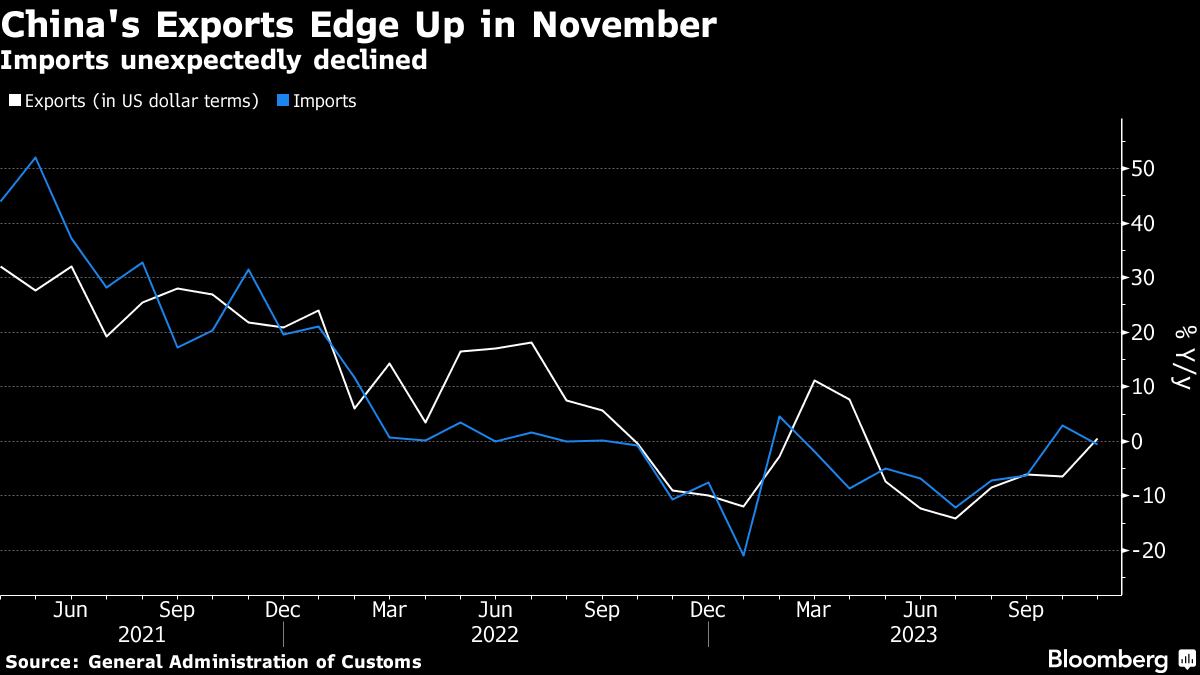
(Bloomberg) -- China's imports unexpectedly shrank in November from a Covid-hit period a year ago, while exports edged up from a low base, suggesting the nation's slowing economy still hasn't bottomed out.
Imports in dollar terms declined 0.6% after clocking an improvement the previous month, according to official data released Thursday. That was worse than economists' consensus forecast of a 3.9% gain.
Overseas shipments rose 0.5% from a year ago, slightly better than the consensus estimate of no change, and marked the first year-on-year expansion since April. The resulting trade surplus was $68.39 billion.
“Domestic demand is not really improving, even as we compared it to a low base last year,” said Woei Chen Ho, an economist at United Overseas Bank Ltd. “There is also no discernible improvement trend in exports despite a slightly better than expected export growth in November. Taken together, it suggests a weak recovery trend in China.”
The data will fan concerns over China's economic outlook and could prompt calls for stimulus to bolster domestic spending. Policymakers' efforts to step up growth this year have focused more on stimulating supply and stabilizing the property market rather generating demand.
An expected seasonal surge in trade also failed to deliver because of weak global demand. Exports are usually stronger in the final months of a year, due to a boost in demand ahead of the Christmas and holiday season overseas. Disruptions from the pandemic in November last year resulted in a steep contraction in trade, which makes the headline numbers this year look better by comparison.
What Bloomberg Economics Says ...
The first increase in China's exports in six months in November is not a sign external demand is returning in a sustainable way to support growth ... at 0.5% year on year, it's hardly the usual surge ahead of the year-end China is used to. Considering a low base was at play, it's also not a powerful boost to exporting industries.
David Qu, economist
Read the full report here
China's exports next year could benefit from a “global upswing” in tech demand, as well as low domestic inflation and a weak yuan, Nomura Holdings Inc. economists wrote in a note Wednesday. But it's “still too early to call the bottom” for growth, they said. “There might yet be another economic dip in spring 2024 due to a worsening property sector.'
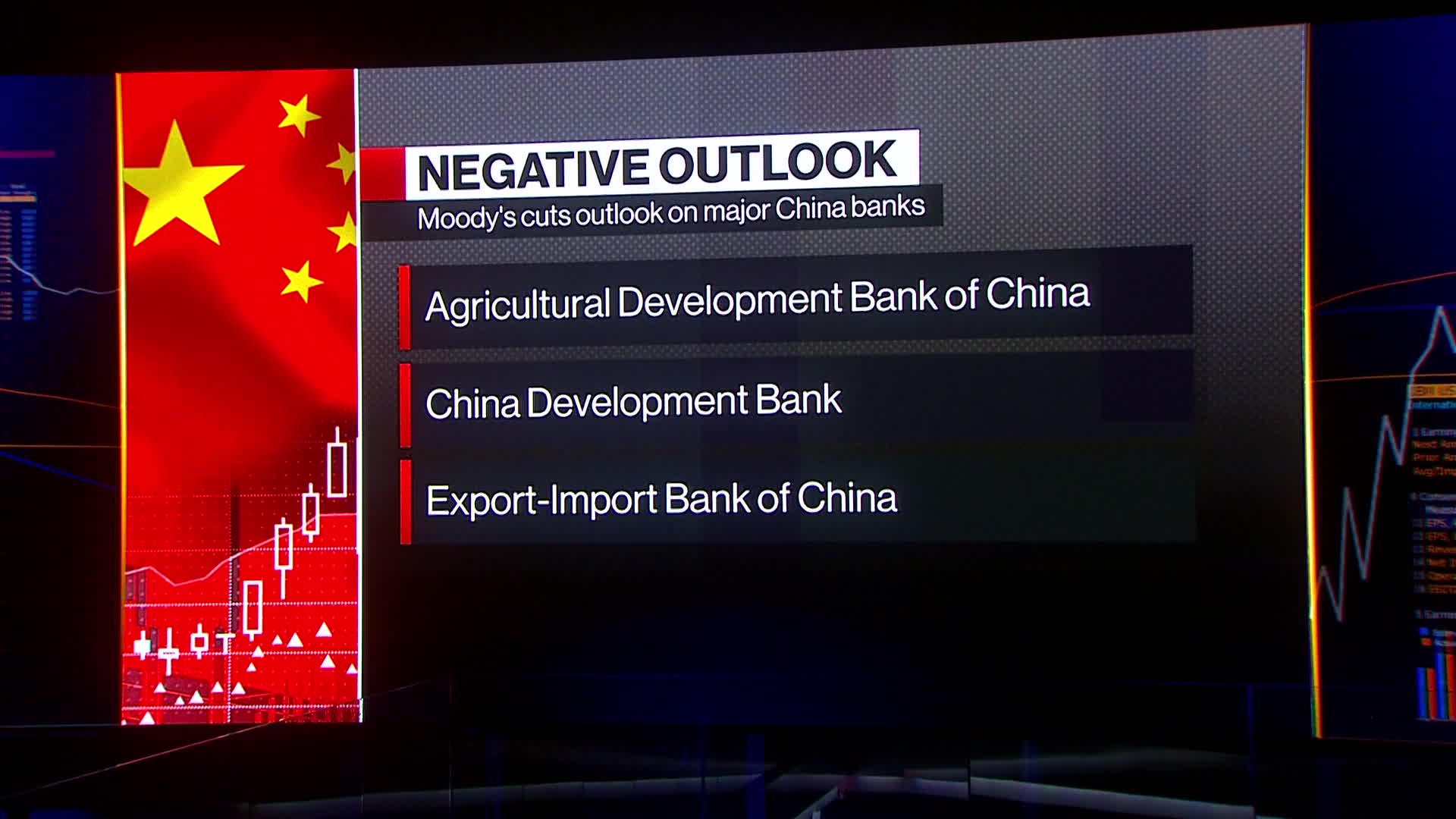
Reaction in the stock market was muted Thursday as much of the softness was already priced in. A gauge of Chinese stocks listed in Hong Kong largely maintained its earlier losses as sentiment took a hit after Moody's lowered its outlook on a number of banks and placed some local government financing vehicles on review for a downgrade.
The Hang Seng China Enterprises Index was down about 1.7%, among the worst performing key indexes in Asia Pacific.
Investors are watching for signs of how President Xi Jinping's government will boost economic activity in 2024, after this year's post-pandemic recovery struggled. China is expected to convene two key economic policy meetings this month, where top leaders may signal a more pro-growth stance and hint at the kind of stimulus they are planning.
After soaring demand during the pandemic helped drive China's economy, net exports has turned into a drag for growth this year, as demand for goods wanes.
Capital Economics analyst Zichun Huang said in a Thursday note that November's uptick in exports was likely driven by price cuts. “This is not sustainable and is negatively affecting firms' profit margins, which have dropped near to levels not seen since at least 2010,” she added.
Exports to the US and European Union have fallen by over 10% so far this year from the same period last year, while those to Russia surged 50%, according to the official data. Imports of steel plunged 27% so far in 2023 as the property downturn deepened, while chips declined by 16.5%.
“It is unclear if exports can contribute as a growth pillar into next year,” said Zhang Zhiwei, chief economist at Pinpoint Asset Management Ltd. “The European and US economies are cooling. China still needs to depend on the domestic demand as the main driver for growth in 2024.”
--With assistance from Zhu Lin and Fran Wang.
(Updates with additional details throughout.)
More stories like this are available on bloomberg.com
©2023 Bloomberg L.P.

-
Indians Stay With Family, Not In Hotels | The Reason Why

India still lacks enough clean, reliable and affordable hotels for budget-conscious travellers.
-
The Economic Imperative: Analysing The Material Driving Force Behind India-Canada Strategic Reset
This economic complementarity is further reinforced by deep institutional investment ties and talent mobility, which form the bedrock of the bilateral framework.
-
Medicine Pricing: Where Must Profit Stop?
India must confront excessive margins, hidden incentives and regulatory gaps that threaten the integrity of medicine.
-
Why Amazon And Flipkart Are Struggling To Beat Meesho In India's Smaller Cities
With 274 million users and lowest-cost logistics, Meesho is defending its value commerce crown against giants like Amazon and Flipkart.
-
High US Salaries, No Green Card Certainty: The Financial Calculation Facing Indian H-1B Families
The suspension of PERM processing at eight technology employers does not cancel existing H-1B visas. What it does is force a question many Indian families have been avoiding: is the US salary worth tying your career and family plans to one employer?
-
Swiggy vs Eternal: Food Delivery's Two Rivals Are No Longer In The Same Race
Eternal is building a private AI assistant, dark.ai. Swiggy is still working out how to make Instamart pay, with an operating loss of Rs 895 crore in the July-September quarter while Blinkit stayed profitable.
-
Where You Live Shapes How You Get To Work | The Reason Why
Two-wheelers are the most popular way to get to work in India, accounting for nearly 43% of workplace commutes.
-
Unhedged Position: Can India See An Indonesia-Style Time Correction?
The Nifty is trading below levels it first clocked in 2024. Is there, then, as I have suggested in the headline, potential that the current time correction drags on painfully for the next three-five, even ten years?
-
Navigating Friction And Energy Realities: An Analysis Of Marco Rubio's October Visit To India
Occurring at a critical juncture marked by stalled trade negotiations and escalating geopolitical pressures over global energy supplies, the visit offers a profound window into modern US-India relations.
-
India Exports Capital. Why Not Export Trusteeship?
The big question, then, is whether India can build an institution that global borrowers, investors, banks, and lawyers can trust, even without an Indian connection.










