China’s 2024 Growth May Even Beat 2023, Ex-PBOC Adviser Says
(Bloomberg) -- China's economy could expand at a faster pace next year than in 2023 even as big questions remain about the eventual return of investor confidence, according to a former central bank adviser.
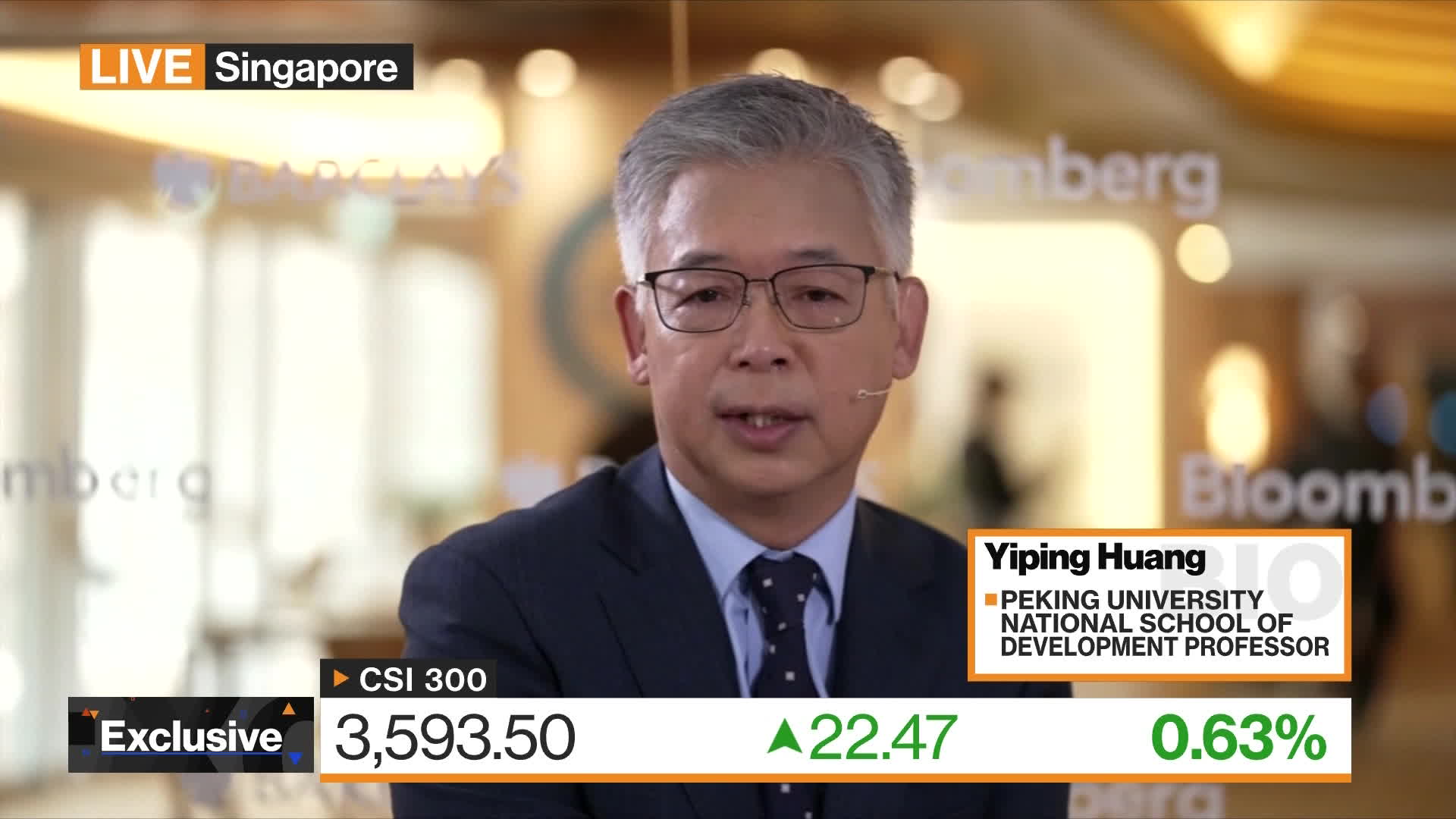
“My own sense is that the trend of growth potential at the moment is probably at around five or five-and-a-half” percent, Huang Yiping, a former member of the Monetary Policy Committee of the People's Bank of China, told Bloomberg TV on Thursday. “If things do well next year, I think the growth can continue at the current pace and probably go up a little bit.”
Achieving the official target of about 5% growth for this year shouldn't be “any problem at all,” he added.
Investors have been looking for evidence that China's recent stimulus measures are shoring up economic growth, which faces challenges from weak consumer and business confidence and an ongoing property crisis. The government last month announced more support for the economy, including issuing extra sovereign debt and raising the fiscal deficit ratio — a rare move.
There are signs the economy's recovery remains fragile: October delivered weaker-than-expected data on factory activity and an unexpected easing in the services sector. Even so, figures for the July-to-September period surpassed estimates and appeared to secure growth of about 5% for 2023, meaning the economy will likely hit the target Beijing announced in March.
Government-associated economists have projected Beijing can achieve a maximum potential growth rate of 5% to 5.5% between 2021 and 2025, without running the economy too hot.
Slower growth during lockdown-hit 2022 and risks from the property sector have spurred other analysts to turn more cautious. Australia and New Zealand Banking Group Ltd. sees economic growth slowing to 4% in the next few years due to structural problems.
“The economy is on the way up, but it's a very gradual process so we shouldn't be surprised that some numbers don't show a significant strength,” said Huang, who is now the chair professor of finance and economics at Peking University. “One big question remains unanswered and will need to be seen is the confidence issue by investors and entrepreneurs. So we probably need to be a bit more patient.”
The nation faces other challenges to growth. At a usually twice-a-decade policy meeting this week, China vowed to clean up debt risks tied to local authorities with a “long-term mechanism,” and signaled a willingness to expand central government borrowing. Beijing is grappling with rising risks to the country's $61 trillion financial sector, which has been hit by failing property developers and troubled local governments.
“The main challenge we are facing is that local governments have lots of spending responsibilities, but they don't have enough revenue sources,” Huang said, in response to a question about which mechanisms might be used to resolve risk.
“We need a proper division of revenues, and probably should consider decentralizing some revenues to the local government,” he said. He floated the prospect of taxing property and the digital economy to provide new sources of income.
Still, Huang stressed the importance for local governments to be responsible about borrowing.
“If your fiscal position is not strong, you have to pay higher prices. That kind of mechanism was not there,” he said. “This is something we need to work on going forward.”
--With assistance from Fran Wang, Tom Hancock, Haslinda Amin and Rishaad Salamat.
More stories like this are available on bloomberg.com
©2023 Bloomberg L.P.

-
Talking Points This Week: Leadership Shock At Nvidia, Earnings Strength, And The Fog Over Hormuz

The Anthropic IPO pricing and first trading day, Nvidia's upcoming earnings, and any fresh signals from Iran will set the tone for the following week.
-
Signature Play: The Classic Cocktail Is Dead. Or Is It?
Classic cocktails are disappearing from India's cocktail menus. But they're still being ordered, taught to bartenders and borrowed from. So, who's really having the last drink?
-
A New Samvat Wishlist: Inclusive Prosperity And Human Development
India has strengthened its economic foundations through infrastructure, digital access and enterprise. Its next growth chapter must deepen productivity, create better livelihoods and widen participation in prosperity.
-
Love, Sex Aur Dhokha: The Audacious Plot To Spy On Jensen Huang
A Taipei dinner, a Singapore chip buyer and a suspected Chinese asset: inside the alleged spy operation that got close to NVIDIA's Jensen Huang.
-
Ten Things I Learnt This Samvat
Patience can be a trap. Cheap stocks can stay cheap. Leverage can wipe you out. What did Samvat 2082 teach us? Niraj Shah writes on 10 lessons from the year gone by.
-
Talking Points This Week: Tech Nerves, FII Buying, And A Faraway Banking Shock
The global markets are not shining this Diwali. The exception in the large markets is, India.
-
Midterm Rally Lasted A Day. The Hard Reality Of A Divided US May Last Two Years | Opinion
Between a contested AI boom, a debt ceiling that arrives in 2027 and a president with every incentive to act alone, the next two years may prove more volatile than the first day's rally suggests.
-
Blue Wave Will Derail the AI Trade but Won't Dismantle the AI Era | Unhedged Position
The Democrats' sweep of the US Congress will see politics collide with economic forces both over the long and short term.
-
It's Time To Take The GST Council's Bet On Trust Global
Payment records can prove India's services exports, and clear, proportionate rules can bring foreign digital sellers into the tax net.
-
Opinion | India at 38: From Innovation Overperformer to Innovation Powerhouse
India now has 453 VC-backed deep science startups, 18 of them late-stage, after 117 percent growth since 2020. Laurus Labs, at USD 9.3 billion, is the most valuable deep science company in any middle-income economy outside China.









