Cheaper Oil, Foreign Flows A Tailwind For Rupee
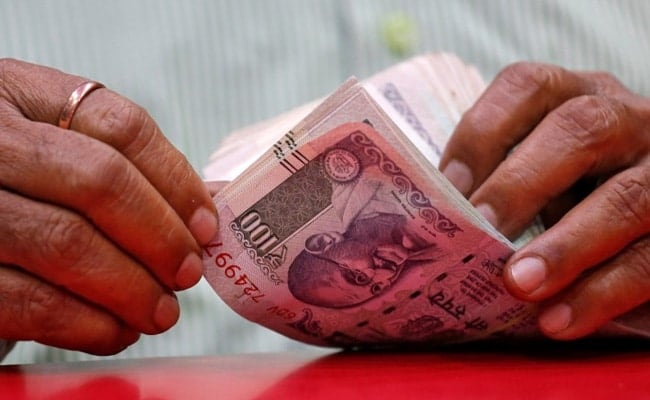
The rupee, among Asia's worst performing currencies this year, could be the fastest in the region to rally as the world restarts economic activities after the coronavirus pandemic, oil prices weaken and the US dollar eases broadly, analysts said.
The partially convertible Indian rupee has lost nearly 7 per cent against the dollar so far this year, despite heavy dollar supplying intervention by the central bank. It hit a life low of 76.92 to the dollar on Wednesday.
But a turnaround could be swift because of the collapse in the price of oil, which is a major import for the country, and the return of foreign investment into rupee stocks and bonds.
The crash in oil prices to 18-year lows is in particular a tailwind for the rupee and could even return the country's current account balance to a surplus for the first time in 15 years, economists said.
"Global liquidity glut and prolonged lower global rates is expected to bring back risk-on sooner than the recovery in the real economy. I expect to see a recovery in the rupee in the next month or so," said Upasna Bhardwaj, economist at Kotak Mahindra Bank.
For the second-most populous nation in the world, India has so far seen only a little over 23,000 coronavirus infections and 718 deaths. Reported cases worldwide have crossed 2.6 million. India has had a nation-wide lockdown for more than a month.
"The only challenge for the rupee is if the health situation worsens," said Sameer Narang, chief economist at Bank of Baroda, referring to the possibility of a second wave of infections in the country once the lockdown is lifted.
"With oil prices at less than $20 a barrel, we don't have to pay out too many dollars," he added.
But a prolonged drop in oil prices from the virus-induced falloff in demand will not benefit even heavy importers such as India, and will likely lead to more monetary easing from its central bank.
"Asian currencies generally fare poorly in a weak growth environment, hence its strong correlation to oil prices. We expect low oil prices to coincide with further downward pressure on the region's currencies," economists at ANZ said in a note.
Some analysts, however, said the high interest rate differential in India was still likely to attract investors.
A Reuters poll of market strategists and analysts in early April predicted the rupee would strengthen to 74.00 per U.S. dollar in a year from its level in early April.
A Reuters positioning poll on Asian currencies in mid-April showed market participants had started marginally trimming their short bets on the rupee.
"The rupee will overall remain a solid currency. We could see the rupee go back to 72/dollar (in 12 months) which would be a 10 per cent appreciation," Narang said.
A return of foreign capital via equity and debt flows is also expected to aid the rupee, such as Facebook's plan to spend $5.7 billion to buy a 9.99 per cent stake in Reliance Industries' digital arm.
The Reserve Bank of India's decision to allow foreign investors to buy unlimited amounts of some bonds is also seen boosting dollar inflows seeking India's higher yields.

-
Leadership As Mission: Why The Age Of AI Demands More Human Leadership

Debjani Ghosh examines how AI is changing leadership, arguing that its success must be measured by its impact on people and the accountability of those guiding its use.
-
We May Need Another Tukaram Mundhe To Fight Air Pollution | The Reason Why
Developers may install basic measures such as sprinklers and green nets, resume work, and continue violating rules when this equipment stops working.
-
Extracting Value From Battery Scrap Could Be Challenging For India | The Reason Why
A discarded lithium-ion battery still contains valuable materials such as lithium, nickel and cobalt. These can be recovered and reused. When such batteries are crushed and shredded, they produce a dark powder called black mass.
-
One El Nino, India Can Handle. Two Could Break The Granary
India's grain stocks can absorb one bad year, but a second El Nino could drain the buffer in two to three years, economists say.
-
India's Troika Of Good Luck | Joining The Dots
As Jensen Huang's exit drags Nvidia down, a cooling AI trade and resilient earnings have revived investor interest in India. A likely RBI rate hike looms.
-
Talking Points This Week: Leadership Shock At Nvidia, Earnings Strength, And The Fog Over Hormuz
The Anthropic IPO pricing and first trading day, Nvidia's upcoming earnings, and any fresh signals from Iran will set the tone for the following week.
-
Signature Play: The Classic Cocktail Is Dead. Or Is It?
Classic cocktails are disappearing from India's cocktail menus. But they're still being ordered, taught to bartenders and borrowed from. So, who's really having the last drink?
-
A New Samvat Wishlist: Inclusive Prosperity And Human Development
India has strengthened its economic foundations through infrastructure, digital access and enterprise. Its next growth chapter must deepen productivity, create better livelihoods and widen participation in prosperity.
-
Love, Sex Aur Dhokha: The Audacious Plot To Spy On Jensen Huang
A Taipei dinner, a Singapore chip buyer and a suspected Chinese asset: inside the alleged spy operation that got close to NVIDIA's Jensen Huang.
-
Ten Things I Learnt This Samvat
Patience can be a trap. Cheap stocks can stay cheap. Leverage can wipe you out. What did Samvat 2082 teach us? Niraj Shah writes on 10 lessons from the year gone by.









