Centre's Ease Of Doing Business 2.0 Aims To Remove Compliance Overlap
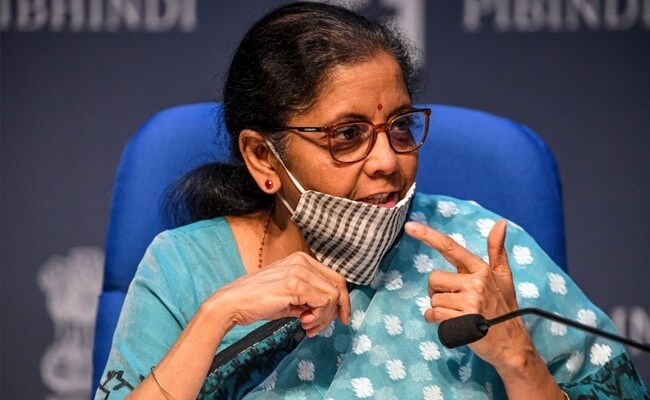
Union Finance Minister Nirmala Sitharaman today announced that the government will launch the next phase of Ease of Doing Business - Ease of Doing Business 2.0.
Presenting the Union Budget 2022-23 in Parliament, the Finance Minister said the new phase will be guided by the active involvement of the states, digitization of manual processes and interventions, integration of the central and the state-level systems through IT bridges, single-point access for all citizen-centric services, and standardization and removal of overlapping compliances.
Crowd-sourcing of suggestions and ground-level assessment of the impact with the active involvement of citizens and businesses will be encouraged, she said.
The Finance Minister stated that it is the "endeavour of the government to improve productive efficiency of capital and human resources" and that the government will follow the idea of "trust-based governance".
As a result of the government's strong commitment towards "minimum government and maximum governance", over 25,000 compliances were reduced and 1,486 Union laws were repealed in recent years, she pointed out.
This is the outcome of the Government's trust in the public along with measures such as Ease of Doing Business (EODB), Ms Sitharaman said.
The Finance Minister proposed to expand the scope of a single-window portal - PARIVESH - to provide information to the applicants. Based on the location of units, information about specific approvals will be provided. It will enable application for all four approvals through a single form, and tracking of the process through Centralised Processing Centre-Green (CPC-Green).
This portal, for all green clearances, was launched in 2018. It has been instrumental in reducing the time required for approvals significantly.
States will be encouraged to adopt the Unique Land Parcel Identification Number to facilitate IT-based management of land records as efficient use of land resources is a strong imperative. The facility for transliteration of land records across any of the Schedule VIII languages will also be rolled out.
As a further step to enhance transparency and reduce delays in payments, the Finance Minister proposed a completely paperless, end-to-end online e-Bill System to be launched for use by all Central ministries for their procurements. The system will enable the suppliers and contractors to submit online their digitally signed bills and claims and track their status from anywhere.
To reduce indirect costs for suppliers and work contractors, the use of surety bonds as a substitute for bank guarantees will be made acceptable in government procurements, the Finance Minister stated. She said that businesses such as gold imports may also find this useful. IRDAI has given the framework for the issue of surety bonds by insurance companies.
The Finance Minister proposed that an animation, visual effects, gaming, and comics (AVGC) promotion task force with all stakeholders be set up to recommend ways to tap into the immense potential of this sector to employ youth and build domestic capacity for serving our markets and the global demand.
(Except for the headline, this story has not been edited by NDTV staff and is published from a syndicated feed.)

-
Why Swapping Your Old Gold Can Trigger A Rs 5 Lakh Tax Bill, And How You Can Avoid It Legally

Swapping old gold for new is taxed as a sale and a fresh purchase. Getting your own gold remade can cut most of that bill, though it has its own costs.
-
The AI Trade is Done. The Real Opportunity for Investors Starts in 2027 | Unhedged Position
As pureplay AI stocks plunge and circular, capex-led financing unwinds, 2027 is set to be a year of reckoning for AI companies. Yet the bust clears the way for a better opportunity for investors in 2027 -- shifting the spotlight from AI builders to the companies using AI.
-
Leadership As Mission: Why The Age Of AI Demands More Human Leadership
Debjani Ghosh examines how AI is changing leadership, arguing that its success must be measured by its impact on people and the accountability of those guiding its use.
-
We May Need Another Tukaram Mundhe To Fight Air Pollution | The Reason Why
Developers may install basic measures such as sprinklers and green nets, resume work, and continue violating rules when this equipment stops working.
-
Extracting Value From Battery Scrap Could Be Challenging For India | The Reason Why
A discarded lithium-ion battery still contains valuable materials such as lithium, nickel and cobalt. These can be recovered and reused. When such batteries are crushed and shredded, they produce a dark powder called black mass.
-
One El Nino, India Can Handle. Two Could Break The Granary
India's grain stocks can absorb one bad year, but a second El Nino could drain the buffer in two to three years, economists say.
-
India's Troika Of Good Luck | Joining The Dots
As Jensen Huang's exit drags Nvidia down, a cooling AI trade and resilient earnings have revived investor interest in India. A likely RBI rate hike looms.
-
Talking Points This Week: Leadership Shock At Nvidia, Earnings Strength, And The Fog Over Hormuz
The Anthropic IPO pricing and first trading day, Nvidia's upcoming earnings, and any fresh signals from Iran will set the tone for the following week.
-
Signature Play: The Classic Cocktail Is Dead. Or Is It?
Classic cocktails are disappearing from India's cocktail menus. But they're still being ordered, taught to bartenders and borrowed from. So, who's really having the last drink?
-
A New Samvat Wishlist: Inclusive Prosperity And Human Development
India has strengthened its economic foundations through infrastructure, digital access and enterprise. Its next growth chapter must deepen productivity, create better livelihoods and widen participation in prosperity.









