Centre Hikes Minimum Support Price For Kharif Crops By 4-9%
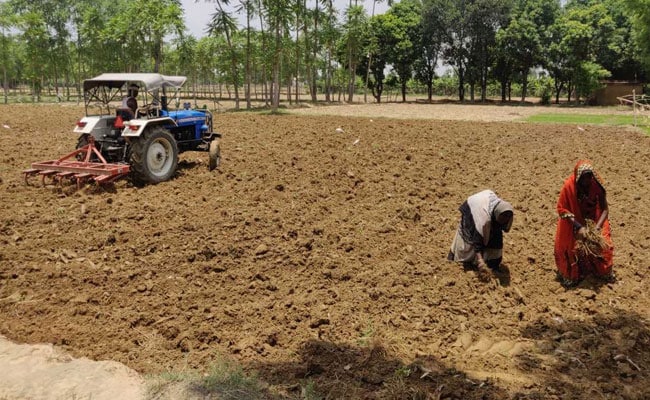
The Centre on Wednesday hiked the minimum support price for kharif crops by 4-9 per cent for the 2022-23 crop year, with paddy MSP being raised by Rs 100 to Rs 2,040 per quintal, a move aimed at encouraging farmers to bring more area under cultivation and boost their income.
The Cabinet Committee on Economic Affairs (CCEA), chaired by Prime Minister Narendra Modi, approved the increase in MSPs for all 14 kharif (summer) crops for 2022-23 crop year.
Describing it as an important decision, the Prime Minister tweeted that the increase in MSP of kharif crops will empower crores of farmers in the country.
"The MSP of kharif crops has been increase in the range of Rs 92 to Rs 523 per quintal and this will help farmers fetch 50-85 per cent profits on cost of production," Agriculture Minister Narendra Singh Tomar tweeted after the cabinet decision.
The maximum hike has been given in sesamum at Rs 523 per quintal, while the lowest Rs 92 per quintal is in case of maize. In percentage terms, the maximum increase is in soybean MSP at 9 per cent, while support price of bajra has been raised by 4 per cent for this year.
"Government has increased the MSP of kharif crops for 2022-23, to ensure remunerative prices to the growers for their produce and to encourage crop diversification," an official statement said.
Briefing reporters, Information and Broadcasting Minister Anurag Thakur said the Modi government has taken several steps 'beej se bazaar tak' (from seed to market) in last eight years that have helped increase income of farmers.
Announcing the MSP hike before the sowing of kharif crops will give farmers an indication about the price which they would get and help them in deciding which crops to grow, he added.
As per the CCEA decision, the MSP of paddy and bajra has been increased by Rs 100 per quintal, while tur, urad and groundnut MSP has been hiked by Rs 300 per quintal each for the 2022-23 crop year.
The MSP of common grade variety of paddy has been increased to Rs 2,040 per quintal for 2022-23 crop year from Rs 1,940 per quintal in the previous year.
The support price for 'A' grade variety of paddy has been increased to Rs 2,060 per quintal from Rs 1,960.
Paddy is the main kharif crop, the sowing of which has already begun. The Met department has projected normal monsoon for the June-September period.
Among commercial crops, the MSP of cotton has been raised to Rs 6,080 for medium staple variety from Rs 5,726 per quintal last year, while MSP for long staple variety of cotton has been increased to Rs 6,380 per quintal from Rs 6,025.
In the pulses category, the MSP of tur (arhar) has been increased to Rs 6,600 per quintal from Rs 6,300 last year, while that of moong has been raised to Rs 7,755 per quintal from Rs 7,275.
The MSP of urad has been increased to Rs 6,600 per quintal for 2022-23 crop year, as against Rs 6,300 last year.
Among oilseeds, MSP of soyabean is at Rs 4,300 per quintal as against Rs 3,950 last year, while for sunflower seed, the support price has been raised to Rs 6,400 per quintal from Rs 6,015.
Groundnut support price has been increased to Rs 5,850 per quintal from Rs 5,550 last year, while seasamum MSP has been increased to Rs 7,830 per quintal from Rs 7,307.
Nigerseed MSP stands at Rs 7,287 per quintal for 2022-23 compared to Rs 6,930 last year.
In coarse cereals, the MSP of maize has been increased to Rs 1,962 per quintal from Rs 1,870 last year, while for ragi, support price now is Rs 3,578 per quintal as against Rs 3,377 earlier.
In case of bajra, the MSP has been increased to 2,350 per quintal from Rs 2,250.
The MSP of jowar (hybrid) has been increased to Rs 2,970 per quintal in 2022-23 from Rs 2,738, while for jowar (maldani), support price has been increased to Rs 2,990 per quintal from Rs 2,758.
Thakur said MSP of eight crops are 1.5 times higher than the cost of production, while the support price of remaining six crops are between 51-85 per cent.
He further said increase in the MSP of oilseeds and pulses in the last few years has helped reduce the country's import dependency. There has also been a sharp increase in the procurement of wheat, paddy, some oilseeds and pulses.
Concerted efforts have been made over the last few years to realign the MSP in favour of oilseeds, pulses and coarse cereals to encourage farmers to shift larger area under these crops and adopt best technologies and farm practices, to correct demand-supply imbalance, he added.
He also highlighted several programmes launched during last eight years by the government to boost farmers' income and ensure comprehensive growth of the farm sector.
The MSP of all the 14 crops for 2022-23 is higher by 46-131 per cent when compared to 2014-15. For example, the MSP of paddy (common variety) has been increased by 50 per cent to Rs 2,040 per quintal as against Rs 1,360 per quintal in 2014-15.

-
'Never Seen This Level Of Negativity': Sandeep Tandon Says The Next Rally May Be Closer Than You Think

Veteran investor Sandeep Tandon says foreign selling is easing, large-caps are due a comeback and mid-caps are crowded, while he turns positive on gold, power and pharma this Diwali.
-
Indians Stay With Family, Not In Hotels | The Reason Why
India still lacks enough clean, reliable and affordable hotels for budget-conscious travellers.
-
The Economic Imperative: Analysing The Material Driving Force Behind India-Canada Strategic Reset
This economic complementarity is further reinforced by deep institutional investment ties and talent mobility, which form the bedrock of the bilateral framework.
-
Medicine Pricing: Where Must Profit Stop?
India must confront excessive margins, hidden incentives and regulatory gaps that threaten the integrity of medicine.
-
Why Amazon And Flipkart Are Struggling To Beat Meesho In India's Smaller Cities
With 274 million users and lowest-cost logistics, Meesho is defending its value commerce crown against giants like Amazon and Flipkart.
-
High US Salaries, No Green Card Certainty: The Financial Calculation Facing Indian H-1B Families
The suspension of PERM processing at eight technology employers does not cancel existing H-1B visas. What it does is force a question many Indian families have been avoiding: is the US salary worth tying your career and family plans to one employer?
-
Swiggy vs Eternal: Food Delivery's Two Rivals Are No Longer In The Same Race
Eternal is building a private AI assistant, dark.ai. Swiggy is still working out how to make Instamart pay, with an operating loss of Rs 895 crore in the July-September quarter while Blinkit stayed profitable.
-
Where You Live Shapes How You Get To Work | The Reason Why
Two-wheelers are the most popular way to get to work in India, accounting for nearly 43% of workplace commutes.
-
Unhedged Position: Can India See An Indonesia-Style Time Correction?
The Nifty is trading below levels it first clocked in 2024. Is there, then, as I have suggested in the headline, potential that the current time correction drags on painfully for the next three-five, even ten years?
-
Navigating Friction And Energy Realities: An Analysis Of Marco Rubio's October Visit To India
Occurring at a critical juncture marked by stalled trade negotiations and escalating geopolitical pressures over global energy supplies, the visit offers a profound window into modern US-India relations.










