Centre Asks State-Run Banks To Save Jet Airways From Bankruptcy: Report
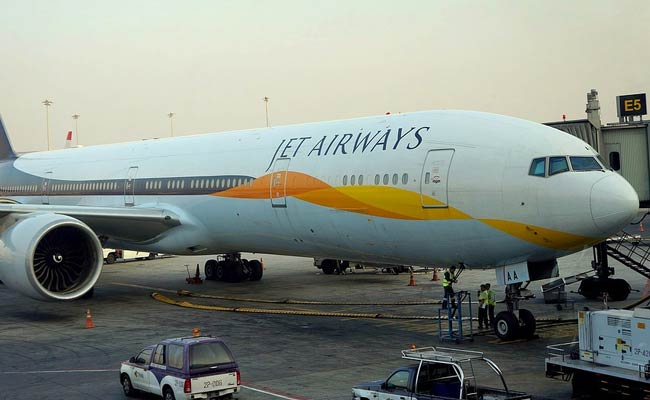
The government has asked state-run banks to rescue privately held Jet Airways without pushing it into bankruptcy, as Prime Minister Narendra Modi seeks to avert thousands of job losses weeks before a general election, two people within the administration told Reuters.
The finance ministry has in the past year sought regular updates from the banks, led by State Bank of India (SBI), on Jet Airways' financial health, the people said. In recent months, the banks have provided weekly updates about a revival plan and also sought government advice, the people added.
"Top officials at the finance ministry seek regular updates on the issue," said an official at one of Jet's lenders, who did not want to be identified as discussions are private.
Details of the discussion between the finance ministry and bankers on bailing out Jet have not been previously reported.
Delhi has urged state-run banks to convert debt into equity and take a stake in Jet in a rare move in India to use taxpayer money to save a struggling private-sector company from bankruptcy. The two people plus one more source, however, said this would be "transitory" and lenders could sell the stakes once Jet revives.
The government has also nudged its 49 per cent-owned National Investment and Infrastructure Fund (NIIF) - created to invest in stalled and new infrastructure projects - to buy a stake in Jet Airways, a separate government source said.
Saddled with more than 1 billion dollars of debt, Jet is struggling to stay aloft. It has delayed payments to banks, suppliers, employees and aircraft lessors - some of which have begun terminating lease deals.
The world's biggest democracy is gearing up for an election next month and its booming aviation sector, which employs close to a million people, has been one of the job-creation success stories that PM Modi can point to as he seeks a second term.
It is crucial for India that Jet revives as the fall of its second-largest airline could have "disastrous consequences for the investment climate" in the sector, a top government official told Reuters.
The official is concerned that if Jet collapses it could drive up airfare in a fast-growing market, wiping out efforts to bring low-cost air travel to the country's hinterland.
A chaotic end could also make it more difficult for the government to sell a stake in Air India, at least in the short run. Last year, it failed to sell part of its stake in the indebted carrier which currently relies on taxpayer money.
If the government's plan for Jet succeeds, then state-run banks including SBI and Punjab National Bank (PNB) as well as NIIF would together own at least a third of the airline until they find a new buyer.
Currently, Abu Dhabi's Etihad Airways is Jet's largest shareholder with a 24 per cent stake.
Finance ministry, SBI, PNB and Jet Airways did not respond to requests for comment.
Kingfisher's Collapse
Most companies in Jet's financial condition would be placed by creditors into the new bankruptcy process, two bankers said. However, memories of the chaos sparked by Kingfisher Airlines' demise in 2012 have prompted the government to seek a more sober road to rescue, they said.
Kingfisher's bankruptcy caused job losses, lessors lost millions of dollars and banks took massive writedowns.
Putting what is essentially a services provider like Jet through the bankruptcy process would diminish its value because it owns no major assets, unlike a manufacturing company, as most of its planes are leased, said another government official.
If it is pushed into bankruptcy and lessors start pulling even more planes out of service, there would be nothing left for any potential investors, the official said. Already 41 planes have been grounded by lessors in the past three months, leading to flight cancellations.
While on the surface Jet's future still hangs in the balance with its main shareholder Etihad at loggerheads over the final terms of any deal, behind-the-scenes support from the government means there is likely to be a bailout.
But there are no easy options, one of the sources said, adding that the lenders do not have the expertise to run an airline so they have to decide what to do once they convert their debt into equity.
Delhi is also backing a proposal for Jet's founder and chairman Naresh Goyal to step down if it means saving the airline, another official said.
"Saving Jet is not equivalent to saving Goyal," the official said.
Rising Airfare
Jet, with its fleet of 119 planes, once controlled a sixth of the domestic aviation market. The 25-year-old airline is also one of only two full-service carriers that flies to international destinations. The other is Air India.
The government ideally wants four to six major airlines to ensure fares are competitive and passengers have greater choice, according to the top government source.
The government plans to build 100 new airports costing about $60 billion which would need a steady stream of flights to sustain them, and that is possible only if there are enough airlines, a separate official said.
"The investment in these airports will solely depend on operators willing to have regular flights at affordable prices and one operator going bankrupt does not help," he said.

-
Indians Are Travelling, But Not Every Journey Is A Holiday | The Week In Whys

Pilgrims, patients and working women are the real travellers, and the system hasn't quite caught up with them.
-
Getting To Work Costs Women More | The Reason Why
It is not just about women paying more than men. It is about women paying much more in cities than in villages.
-
AI Bias In Investing Cannot Be Eliminated, But It Can Be Governed
Framing is a particularly important example as identical financial information presented in terms of gains rather than losses can lead an LLM to reach a different assessment.
-
Joining The Dots | Dark Skies, Steady Diya: Why Hope Holds This Diwali
With war, a weak rupee and foreign outflows weighing on sentiment, policymakers at the NDTV World Summit and market veterans at NDTV Profit Ignite: Diwali Edition offered the same advice: stay invested and filter out the noise.
-
The Curious Case of Equitas Small Finance Bank And A CEO Who Quit For Stock
PN Vasudevan believes persistent investor concerns over a perceived conflict of interest had become a governance overhang on Equitas Small Finance Bank's stock, even as the lender improved profitability and asset quality.
-
Talking Points This Week: AI Cash Burn, A Tiger Comeback And An India That Still Finds Its Own Path
India is not immune to higher oil or tighter global liquidity, yet its earnings base is broader, its domestic policy levers are still available.
-
Foreign Investors Own Half Of HDFC Bank and ICICI Bank. An LTCG Cut Could Matter Most Here
Foreign portfolio investors have US$115 billion parked in HDFC Bank, ICICI Bank. If the government cuts long-term capital gains tax, Jefferies says returning foreign money could land here first.
-
'Never Seen This Level Of Negativity': Sandeep Tandon Says The Next Rally May Be Closer Than You Think
Veteran investor Sandeep Tandon says foreign selling is easing, large-caps are due a comeback and mid-caps are crowded, while he turns positive on gold, power and pharma this Diwali.
-
Indians Stay With Family, Not In Hotels | The Reason Why
India still lacks enough clean, reliable and affordable hotels for budget-conscious travellers.
-
The Economic Imperative: Analysing The Material Driving Force Behind India-Canada Strategic Reset
This economic complementarity is further reinforced by deep institutional investment ties and talent mobility, which form the bedrock of the bilateral framework.










