Central African Republic's Bitcoin Adoption Will Be A Real Test Case: Here's Why
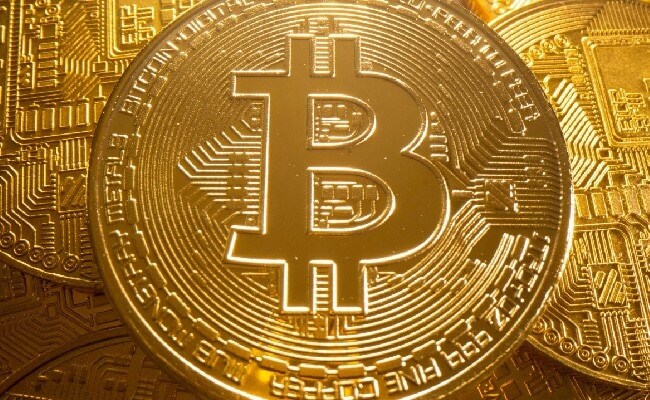
The Central African Republic has become the first country in Africa and second in the world after El Salvador to adopt bitcoin as a legal tender. Among the poorest in the world, the African country is likely to serve as a case study on bitcoin adoption in under-developed and politically unstable regions.
Central African Republic's move towards bitcoin is surprising since it is not among the top African countries in crypto adoption and did not have any supporting infrastructure before the announcement.
A recent Chainalysis data showed Kenya, South Africa, and Nigeria among the top 10 countries in the world for cryptocurrency use.
Reports said that President Faustin Archange Touadera signed a law to make bitcoin an official currency alongside the CFA Franc and legalise cryptocurrencies.
"This move places the Central African Republic on the map of the world's boldest and most visionary countries," the Presidential office said.
Significantly, the civil war-infested country is currently under an IMF-monitored financial reform programme. The IMF has opposed the adoption of bitcoin or any cryptocurrency, calling them 'significant financial risks'.
"In the last decade, many economically-handicapped countries switched over to the US dollar. Now, people – and governments in particular – are looking at cryptocurrencies as the problem solver," crypto expert Anndy Lian told NDTV.
In the case of the Central African Republic, the oft-repeated charge of former colonial power France's overreaching economic influence could have been one of the triggers for legalising bitcoin.
However, there is no official statement yet linking the move to the flaws in the France-supported CFA Franc ecosystem.
While Mr Lian believes bitcoin is a good hedge against country-specific risks, he cautioned that bitcoin could only be a mid-way solution for economic stabilisation.
"Bitcoin can help build the economy in the short run. In the long term, countries need to innovate with a localised, sustainable model," he said.
The African nation's troubles are poor internet penetration and a high unbanked population - two metrics detrimental to adopting a sophisticated technology like bitcoin.
According to a Datareportal report, internet penetration stood at a mere 11.4% in January 2021, while the IMF estimates that 99% of the population is unbanked.
A look at the situation in El Salvador, which on September 7 last year became the first country to adopt bitcoin as a legal tender, suggests that bitcoin as a currency has not yet gained wider acceptance among the general public.
As per a National Bureau of Economic Research survey, the "usage of bitcoin for everyday transactions is low and is concentrated among the banked, educated, young, and male population".
About 70% of El Salvador is unbanked. Interestingly, the government had supported the adoption of bitcoin to enable greater financial inclusion.

-
The More Food Turns Into Fuel, The Harder It Is To Read Agricultural Markets | The Reason Why

A policy designed to reduce dependence on imported fuel can create new pressures elsewhere in the food economy.
-
Your iPhone Costs 12 Grams Of Gold, A Car About 100. What Does Your Life Weigh?
Measured in rupees, almost everything looks more expensive than it did a generation ago. Measured in grams of gold, a lot of it has become cheaper.
-
Gold Is Rs 22,000 Cheaper Than A Month Ago. Should You Buy Amid The Wedding Season?
Gold's potential slide to $3,500 could save around Rs 4,700 per 10 grams, but a soft inflation print could just as easily push prices back up. One way to split the risk is to buy in parts, some now and the rest after the Fed's Dec. 9 decision.
-
AI Agents Are Gaining Power. Who Governs Them?
Artificial intelligence agents promise to transform productivity by moving machines from assisting decisions to executing them. But as organisations delegate greater authority to these AI-agents, they must first establish who controls that authority and who remains accountable when things go wrong.
-
Why Swapping Your Old Gold Can Trigger A Rs 5 Lakh Tax Bill, And How You Can Avoid It Legally
Swapping old gold for new is taxed as a sale and a fresh purchase. Getting your own gold remade can cut most of that bill, though it has its own costs.
-
The AI Trade is Done. The Real Opportunity for Investors Starts in 2027 | Unhedged Position
As pureplay AI stocks plunge and circular, capex-led financing unwinds, 2027 is set to be a year of reckoning for AI companies. Yet the bust clears the way for a better opportunity for investors in 2027 -- shifting the spotlight from AI builders to the companies using AI.
-
Leadership As Mission: Why The Age Of AI Demands More Human Leadership
Debjani Ghosh examines how AI is changing leadership, arguing that its success must be measured by its impact on people and the accountability of those guiding its use.
-
We May Need Another Tukaram Mundhe To Fight Air Pollution | The Reason Why
Developers may install basic measures such as sprinklers and green nets, resume work, and continue violating rules when this equipment stops working.
-
Extracting Value From Battery Scrap Could Be Challenging For India | The Reason Why
A discarded lithium-ion battery still contains valuable materials such as lithium, nickel and cobalt. These can be recovered and reused. When such batteries are crushed and shredded, they produce a dark powder called black mass.
-
One El Nino, India Can Handle. Two Could Break The Granary
India's grain stocks can absorb one bad year, but a second El Nino could drain the buffer in two to three years, economists say.









