Cash Crunch: Government To Raise Printing Of 500 Rupees Notes
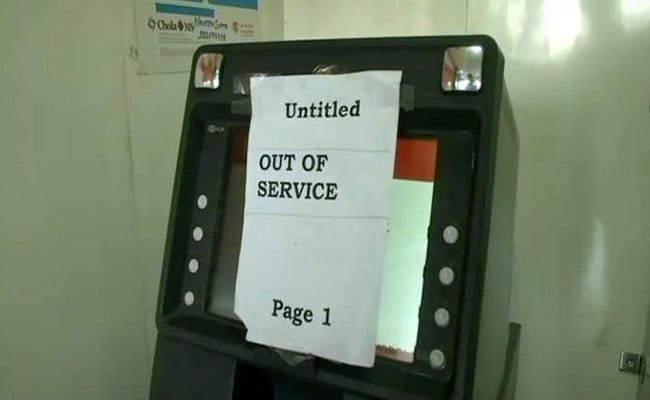
New Delhi: In a bid to meet the "unusual" currency demand, the government has resolved to raise the printing of Rs 500 notes by five times, Economic Affairs Secretary Subhash Chandra Garg on Tuesday said. "We have taken steps to increase the supply of currency in case the demand were to go up further. To give you an example, Rs 500 notes we print about 500 crore of notes per day. We have taken steps to raise this production five times," Garg said at a press meet called to calm fears after reports of currency shortages emerged from several parts of the country.
"Very soon, in the next couple of days, we will have a supply of about Rs 2,500 crore worth of Rs 500 notes per day. In a month, supply would be about Rs 70,000-75,000 crore. These notes alone can more than meet the demand of any month," he said.
Also Read: SBI Chief Says Cash Crunch Situation To Be Resolved In Next One Week
Garg asserted that there was no cash crunch in the country, pointing out that currently around Rs 18 lakh crore worth of currency was in circulation -- a little over what was in circulation at the time of demonetisation.
"We keep Rs 2.5-3 lakh crore more currency in stock for excess demand. In the last few days, we have pumped cash into the system to meet the demand. We still have a reserve of Rs 1.75 lakh crore."
He said there was "unusually high demand" for currency in the last couple of months. As opposed to an average demand of about Rs 20,000 crore a month, "in the first 13 days of April itself there was a demand of Rs 45,000 crore", he said.
Garg attributed this sudden cash demand to localised phenomenon.
"This unusual spurt in demand is seen more in some parts of the country like Andhra Pradesh, Telangana, Karnataka, Madhya Pradesh and Bihar," the Finance Ministry said in a statement on Tuesday.
"We have noted that this is coming more from some parts of the country. There might also be some sort of a feeling in some people that if the cash runs out, why not keep it in reserve so it may be safe... a kind of 'shortage mentality'. But believe us, there is no shortage, there is no cash crunch," he said.
Also Read: Cash Crunch: As The ATMs Go Dry In Some States, Arun Jaitley Puts Up A Brave Front
"There is no shortage of notes in stock, there is no shortage of cash being printed... Therefore I would urge... every citizen not to hoard or stock cash -- it is not required. You are unnecessarily raising your risks. We have adequate cash, but the preferable mode of use is digitisation, so use it," Garg added.
Asked whether there was any hoarding of the Rs 2,000 notes, he said: "In this system, there are about 6.70 lakh crore worth of Rs 2,000 notes. They are more than adequate to meet the transaction demand of customers... But, off late, we have noted somewhat lesser inflow coming back from circulation.
"We have not got this investigated, but you can assume that this one note is most suitable for people to keep with themselves. There has been some tendency of some people using Rs 2,000 notes, but that does not affect the overall supply of the Rs 2,000 notes."
Justifying the higher currency circulation in the system compared to the pre-demonetisation period, Garg said: "At the time of demonetisation, the currency in circulation Rs 17.5 lakh crore. Currency in circulation now is about Rs 18 lakh crore. So it is in absolute numbers higher than at the time of demonetisation."
"But demonetisation is one-and-a-half years earlier... if we had taken that growth path, we would had still been much higher. If the currency had grown as it was growing before demonetisation, probably it would have been somewhere at the level of Rs 22-23 lakh crore. So, we are at a lower level."
(Except for the headline, this story has not been edited by NDTV staff and is published from a syndicated feed.)

-
Signature Play: The Classic Cocktail Is Dead. Or Is It?

Classic cocktails are disappearing from India's cocktail menus. But they're still being ordered, taught to bartenders and borrowed from. So, who's really having the last drink?
-
A New Samvat Wishlist: Inclusive Prosperity And Human Development
India has strengthened its economic foundations through infrastructure, digital access and enterprise. Its next growth chapter must deepen productivity, create better livelihoods and widen participation in prosperity.
-
Love, Sex Aur Dhokha: The Audacious Plot To Spy On Jensen Huang
A Taipei dinner, a Singapore chip buyer and a suspected Chinese asset: inside the alleged spy operation that got close to NVIDIA's Jensen Huang.
-
Ten Things I Learnt This Samvat
Patience can be a trap. Cheap stocks can stay cheap. Leverage can wipe you out. What did Samvat 2082 teach us? Niraj Shah writes on 10 lessons from the year gone by.
-
Talking Points This Week: Tech Nerves, FII Buying, And A Faraway Banking Shock
The global markets are not shining this Diwali. The exception in the large markets is, India.
-
Midterm Rally Lasted A Day. The Hard Reality Of A Divided US May Last Two Years | Opinion
Between a contested AI boom, a debt ceiling that arrives in 2027 and a president with every incentive to act alone, the next two years may prove more volatile than the first day's rally suggests.
-
Blue Wave Will Derail the AI Trade but Won't Dismantle the AI Era | Unhedged Position
The Democrats' sweep of the US Congress will see politics collide with economic forces both over the long and short term.
-
It's Time To Take The GST Council's Bet On Trust Global
Payment records can prove India's services exports, and clear, proportionate rules can bring foreign digital sellers into the tax net.
-
Opinion | India at 38: From Innovation Overperformer to Innovation Powerhouse
India now has 453 VC-backed deep science startups, 18 of them late-stage, after 117 percent growth since 2020. Laurus Labs, at USD 9.3 billion, is the most valuable deep science company in any middle-income economy outside China.









