Global Car Sales Expected To Decline For Third Straight Year: Moody's
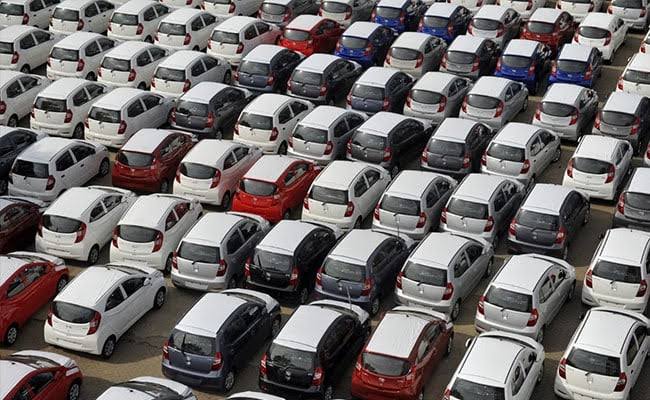
Global credit rating agency Moody's Investors Service said on Monday that its outlook for global automotive manufacturers and parts suppliers is negative.
In its research report, titled "Automotive Manufacturers And Parts Suppliers - Global 2020 Outlook", released on Monday, Moody's said: "Our 2020 outlook for global automotive manufacturers and parts suppliers is negative, driven by our expectations of a continued decline in global light vehicle sales."
Moody's expects the global car sales to decline for third consecutive year. According to Moody's, the global demand for light vehicles will remain sluggish amid weakening economic growth in key markets.
Expecting the growth of gross domestic product (GDP) in China and advanced G-20 countries, Moody's said the negative outlook for the sector is based on its forecast of a 0.9 per cent decline in light vehicle sales following a projected 3.8 per cent decline in 2019.
According to Moody's, political risks, technological changes and environmental regulation will weigh on sector.
The rating agency said Chinese auto sales should eke out a modest one per cent gain, while the contraction in Western European car sales will widen; Japan is on track to post a fourth consecutive year of modest sales growth.
Moody's said light vehicle sales in the US are expect to slip 0.6 per cent in 2020 after falling by a projected 2.9 per cent in 2019. Less aggressive incentives and increased competition from the used car market will contribute to the modest contraction in demand, it added.
Light vehicle sales are expected to fall three per cent in Western European markets in 2020, according to Moody's.
"Demand remains constrained by a weakening macroeconomic environment and the continued uncertainty over the UK's plans to exit the European Union," Moody's said.
"The proposed merger of Fiat Chrysler Automobiles NV ('Ba1' positive) and Peugeot SA ('Baa3' stable) would create the world's fourth-largest automaker, but there are significant uncertainties regarding whether they will reach a definitive merger pact," the report added.
Moody's expect China's overall auto sales to rise one per cent in 2020, as supportive policy guidance announced during 2019, including relaxation on vehicle-ownership control, bolsters auto demand.
In the case of Japan, Moody's said that despite a difficult global sales environment, Toyota Motor Corporation ('Aa3', stable) and Honda Motor Co Ltd ('A2', stable) are maintaining stable margins. Both are effectively managing US incentives, while Honda's profitable motorcycle segment is helping to offset the much lower margin of its auto business, according to Moody's.
"It will be some time before Nissan Motor Co. Ltd.'s (A3 negative) profitability recovers; the company continues to refresh its US models and plans to reduce manufacturing capacity in North America, Europe and some emerging markets," the research report said.
According to Moody's, beginning in 2021, the European Union will require automakers to reduce fleet-wide emissions for new cars to an average of 95 grams of carbon dioxide per kilometre, down from the previous limit of 130 g CO2/km; emissions limits for individual automakers will vary depending on the weight of each company's fleet.
"Implementation includes a phase-in period in 2020, when the emissions limit will apply to each automaker's 95 per cent least emitting new cars; the average emissions of an automaker's entire fleet must comply beginning in 2021," the report said.
Pointing out the penalties for non-compliance could run into billions of euros, Moody's said Japanese company Toyota is already very close to meet its targets, while German premium automakers are still 20-30 per cent short of their targets, and Fiat Chrysler and Honda are furthest behind in meeting their targets.

-
One El Nino, India Can Handle. Two Could Break The Granary

India's grain stocks can absorb one bad year, but a second El Nino could drain the buffer in two to three years, economists say.
-
India's Troika Of Good Luck | Joining The Dots
As Jensen Huang's exit drags Nvidia down, a cooling AI trade and resilient earnings have revived investor interest in India. A likely RBI rate hike looms.
-
Talking Points This Week: Leadership Shock At Nvidia, Earnings Strength, And The Fog Over Hormuz
The Anthropic IPO pricing and first trading day, Nvidia's upcoming earnings, and any fresh signals from Iran will set the tone for the following week.
-
Signature Play: The Classic Cocktail Is Dead. Or Is It?
Classic cocktails are disappearing from India's cocktail menus. But they're still being ordered, taught to bartenders and borrowed from. So, who's really having the last drink?
-
A New Samvat Wishlist: Inclusive Prosperity And Human Development
India has strengthened its economic foundations through infrastructure, digital access and enterprise. Its next growth chapter must deepen productivity, create better livelihoods and widen participation in prosperity.
-
Love, Sex Aur Dhokha: The Audacious Plot To Spy On Jensen Huang
A Taipei dinner, a Singapore chip buyer and a suspected Chinese asset: inside the alleged spy operation that got close to NVIDIA's Jensen Huang.
-
Ten Things I Learnt This Samvat
Patience can be a trap. Cheap stocks can stay cheap. Leverage can wipe you out. What did Samvat 2082 teach us? Niraj Shah writes on 10 lessons from the year gone by.
-
Talking Points This Week: Tech Nerves, FII Buying, And A Faraway Banking Shock
The global markets are not shining this Diwali. The exception in the large markets is, India.
-
Midterm Rally Lasted A Day. The Hard Reality Of A Divided US May Last Two Years | Opinion
Between a contested AI boom, a debt ceiling that arrives in 2027 and a president with every incentive to act alone, the next two years may prove more volatile than the first day's rally suggests.
-
Blue Wave Will Derail the AI Trade but Won't Dismantle the AI Era | Unhedged Position
The Democrats' sweep of the US Congress will see politics collide with economic forces both over the long and short term.









