Can The Government Stop You From Exchanging Old Currency Notes?
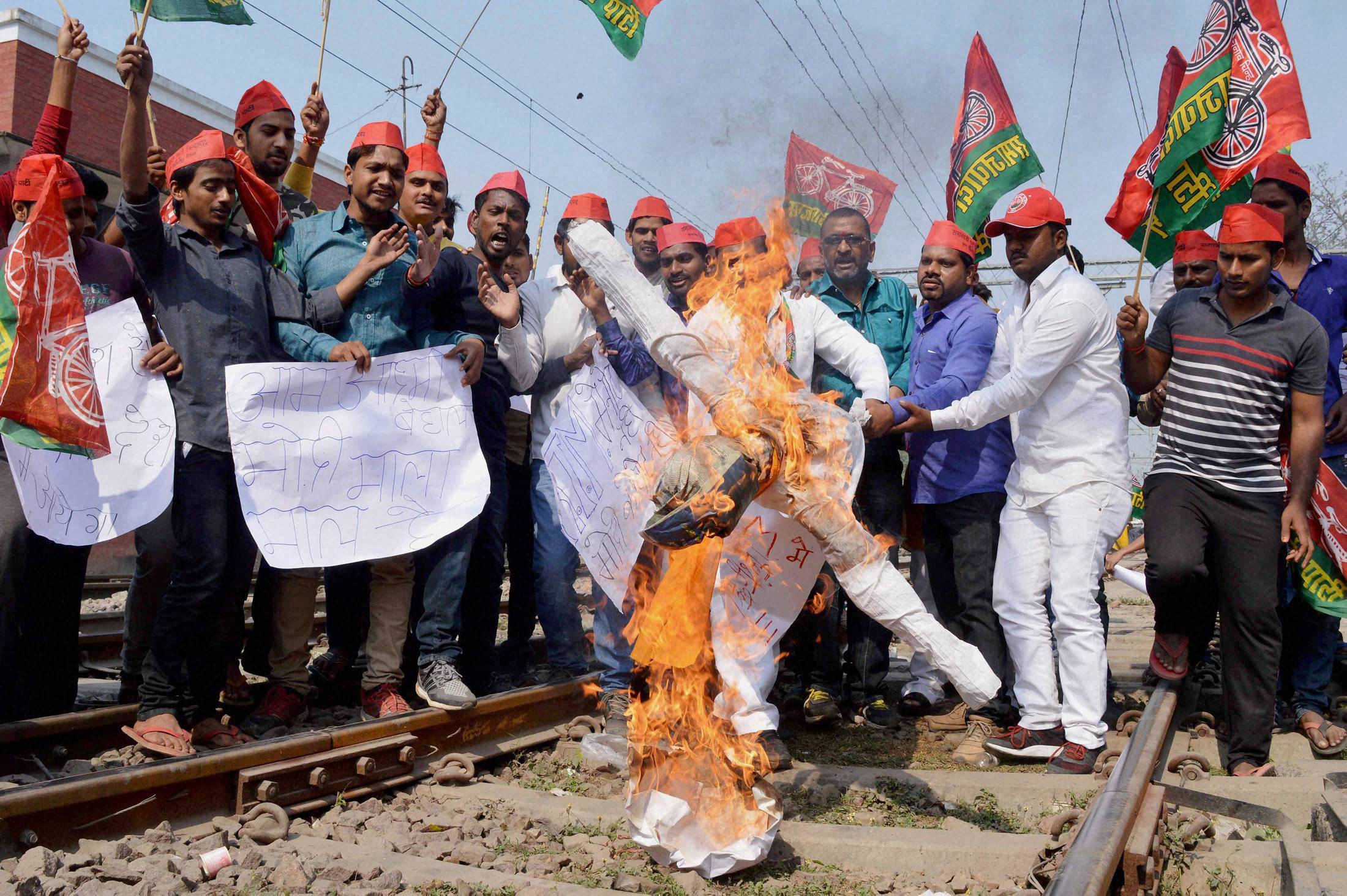
If you are a little confused about how much you can withdraw from an automated teller machine or a bank branch, you are not alone, and it's probably not your fault.
Since Prime Minister Narendra Modi announced the demonetisation of Rs 500 and Rs 1,000 notes on November 8, his government has revised the implementation guidelines several times. On Thursday, the government announced that you can no longer exchange your old notes at a bank.
This decision is in direct conflict with earlier assurances provided by both the central government and the Reserve Bank of India that citizens could exchange their old Rs 500 and Rs 1,000 currency notes till December 30. What's more, the new rule was implemented overnight.
The Demonetisation Flip Flop
November 8:
The Government of India withdraws the legal tender status of Rs 500 and Rs 1,000 notes effective midnight November 9.
For immediate cash requirements, people are told they can exchange their old notes for Rs 4,000 per person over the counter at bank branches.
November 11:
People flock to bank branches, forcing the RBI to issue a statement saying, “Enough cash is available, RBI reassures; urges public to exercise patience and exchange notes at convenience.”
The RBI, in that statement, said, “The facility for exchanging the withdrawn denominations of Rs 500 and Rs 1000 is available for nearly 50 days. The Reserve Bank appeals to members of public to be patient and urges them to exchange their old notes at their convenience, any time before December 30, 2016.”
November 12:
It did not stop there. The RBI issued another statement calling for calm.
It read, “The scheme for exchange of the specified bank notes for other denominations is available all across the country till December 30, 2016 and even beyond, at specified RBI offices. As there is ample time, people need not rush to exchange putting avoidable strain on the banking branch network.”
November 13:
The limit for over-the-counter exchange of currency was reset to Rs 4,500 from Rs 4,000 rupees.
November 15:
The RBI issues a notification to banks, instructing them to use indelible ink to identify depositors, so as to prevent them from repeatedly depositing and exchanging currency.
November 17:
The limit for over-the-counter exchange of currency was once again reset, this time downward to Rs 2,000.
November 22:
The RBI cautions the public against exchanging and dealing with the old currency notes in an “unauthorised” manner.
November 24:
The RBI issues a notification after the government's announcement, stating that over-the-counter exchange of notes would no longer take place at bank branches with effect from midnight on November 25. In a separate statement, it said that people could still exchange their old currency at RBI branches.
Opposition Criticism
While most people seem to agree with the objective of demonetisation, the manner in which it has been implemented so far, has attracted a fair share of detractors. For instance, former Prime Minister Manmohan Singh, in one of his very rare speeches in Parliament, called it “organised loot and legalised plunder”. The renowned economist criticised the frequency with which the government was coming up with new rules since the announcement was made on November 8. The move was a case of “monumental mismanagement”, he said.

To add to the chaos, several public interest litigations (PIL) have been filed various high courts across the country as well as the Supreme Court. While the high courts haven't acted upon these petitions yet, a hearing is scheduled on the matter in the Supreme Court next week. Will the Supreme Court act upon it or dismiss the pleas? Is the government's demonetisation drive illegal or unconstitutional? And most importantly, is the manner in which the ‘surgical strike' on black money have been carried out arbitrary and unfair to the ordinary Indian?
The Legal Argument
The government is well within its powers to demonetise old currency notes under the RBI Act but the ban on exchange of old currency notes is a somewhat “dubious” move, said Alok Prasanna Kumar of the Vidhi Center For Legal Policy in a conversation with BloombergQuint.
Kumar believes that having assured the public that they would have time till December 30 to exchange their old currency, stopping this facility in a seemingly arbitrary manner could be construed as illegal.

-
Signature Play: The Classic Cocktail Is Dead. Or Is It?

Classic cocktails are disappearing from India's cocktail menus. But they're still being ordered, taught to bartenders and borrowed from. So, who's really having the last drink?
-
A New Samvat Wishlist: Inclusive Prosperity And Human Development
India has strengthened its economic foundations through infrastructure, digital access and enterprise. Its next growth chapter must deepen productivity, create better livelihoods and widen participation in prosperity.
-
Love, Sex Aur Dhokha: The Audacious Plot To Spy On Jensen Huang
A Taipei dinner, a Singapore chip buyer and a suspected Chinese asset: inside the alleged spy operation that got close to NVIDIA's Jensen Huang.
-
Ten Things I Learnt This Samvat
Patience can be a trap. Cheap stocks can stay cheap. Leverage can wipe you out. What did Samvat 2082 teach us? Niraj Shah writes on 10 lessons from the year gone by.
-
Talking Points This Week: Tech Nerves, FII Buying, And A Faraway Banking Shock
The global markets are not shining this Diwali. The exception in the large markets is, India.
-
Midterm Rally Lasted A Day. The Hard Reality Of A Divided US May Last Two Years | Opinion
Between a contested AI boom, a debt ceiling that arrives in 2027 and a president with every incentive to act alone, the next two years may prove more volatile than the first day's rally suggests.
-
Blue Wave Will Derail the AI Trade but Won't Dismantle the AI Era | Unhedged Position
The Democrats' sweep of the US Congress will see politics collide with economic forces both over the long and short term.
-
It's Time To Take The GST Council's Bet On Trust Global
Payment records can prove India's services exports, and clear, proportionate rules can bring foreign digital sellers into the tax net.
-
Opinion | India at 38: From Innovation Overperformer to Innovation Powerhouse
India now has 453 VC-backed deep science startups, 18 of them late-stage, after 117 percent growth since 2020. Laurus Labs, at USD 9.3 billion, is the most valuable deep science company in any middle-income economy outside China.









