Can Radio Operators Fend Off The Streaming App Threat?
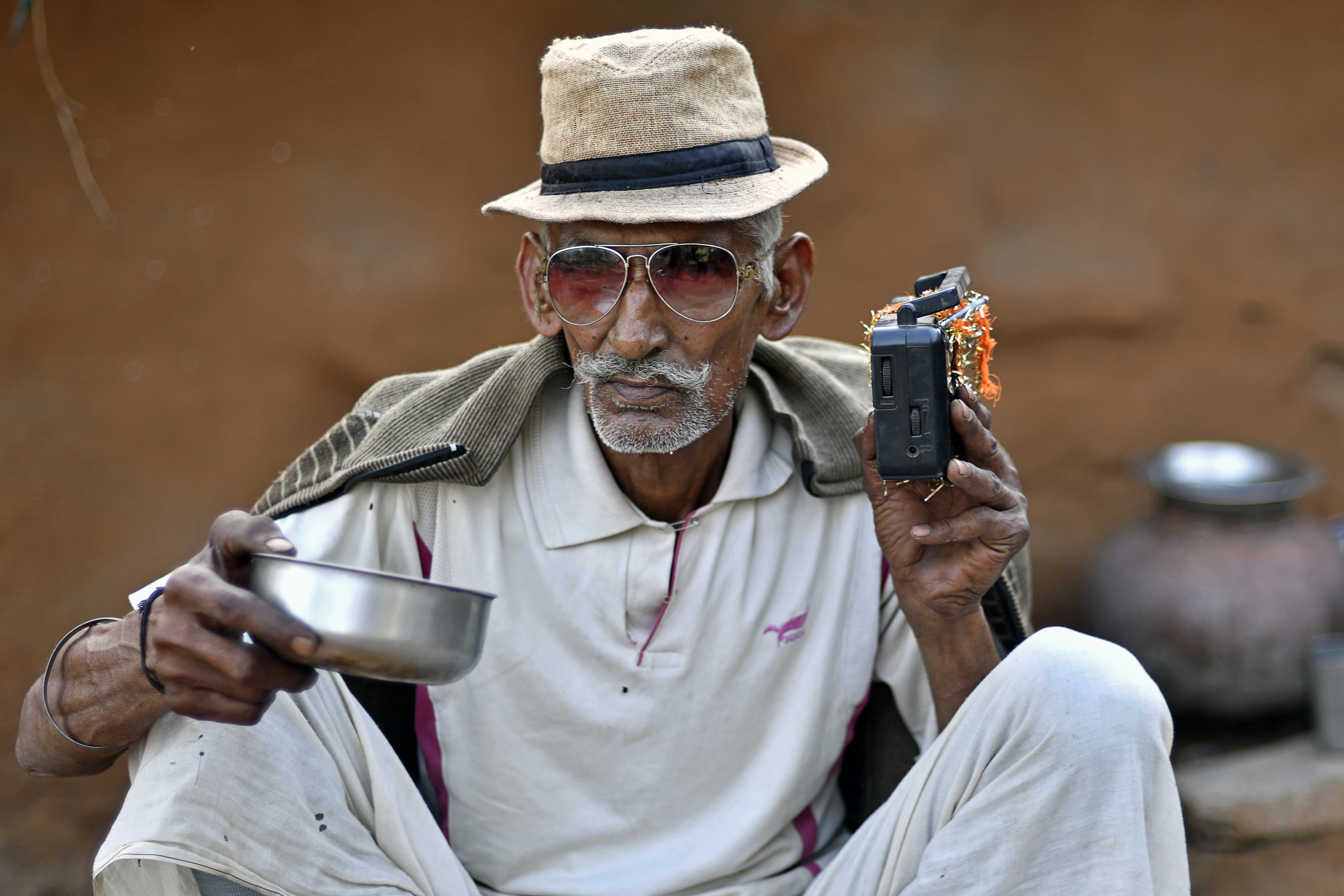
The cheap data boom is increasingly getting Indians hooked to their favourite music online, threatening to wean away listeners from radio.
Streaming apps—called over-the-top service providers in industry parlance— will have an impact on radio in the next three to four years, Depesh Kashyap, an analyst at Equirus Capital, told BloombergQuint. Most such online service providers charge nothing and provide ad-free music, he said, adding that listeners will shift from radio soon.
Consumption of content online has grown exponentially since Asia's richest man Mukesh Ambani upended data tariffs in the world second-biggest telecom market. Indians now use 8.74 gigabytes of data on an average every month, according to the regulator's figures, compared with 240 megabytes in September 2016 when Ambani launched Reliance Jio Infocomm Ltd.
The radio industry, with 386 operational stations, grew 7.5 percent in 2018 to Rs 3,130 crore, taking its share in total advertising to 4.2 percent, according to a report by Ficci and EY. Nearly 70 percent of radio content is consumed through phones. But new smartphones don't come equipped with FM receivers as users are switching to apps.
Online music apps have 150 million monthly active users, said Equirus Capital citing Deloitte data. Less than 1 percent pay and India ranks 16 with a market size of just $87 million, Kashyap said. Still, the opportunity is enormous as more than 570 million Indians now have access to wireless internet. Among those competing in the market are JioSaavn, Gaana, Apple Music, Amazon Music, Google Play Music, Hungama and YouTube music. Spotify also launched recently.
Investors are betting on a boom. Ambani, who is building a technology empire, bought Saavn to merge it with Reliance Jio Infocomm's music. Gaana—part of Times Group that also owns Radio Mirchi FM channel—received $115 million from Chinese's internet giant Tencent Holdings.
Advertisers are shifting from radio to streaming services as listenership data is not available apart from four major cities, according to Kashyap. “For audio OTT platforms, a very precise and insightful database is available, therefore it's easier for advertisers to gauge the reach and identify their target audience.”
Karan Taurani, analyst at Elara Capital, said corporate advertisers are not willing to pay a premium to radio due to poor listenership data analytics. “They are now paying a 4-5 percent price hike compared to 10 percent last year.”
Larger operators are trying to innovate to retain listeners, roping in Bollywood celebrities like Karan Johar and Kareena Kapoor as radio jockeys for shows. Still 53 percent of ad volumes, growing at 3 percent, come from top seven cities.
The importance of non-advertising revenues is increasing, according to the Ficci-EY report. They are increasingly focusing on live events and award ceremonies.
Yet, Apurva Purohit, director at Music Broadcast Ltd., the operator of Radio City FM channel, doesn't see an immediate threat. Streaming industry is still in its nascent stages of growth and has a long way to go before it can be a potential threat to an established medium like radio, she told BloombergQuint. Strong reach, financial health and differentiated content offerings give radio operators an advantage, she said.
Digital Dive
Purohit's company, however, has taken the digital leap. Radio City runs 51 online radio stations in 10 languages with over 800 playlists. It has tied up with Apple Music to provide playlists and also plays top songs from the platform on its channels. India's largest operator Radio Mirchi is available on the Gaana streaming app—both are operated by the Times Group, publisher of India's largest newspaper the Times of India.
“Hopefully Radio Mirchi will be on other platforms as well,” said Prashant Pandey, managing director and chief executive officer at Entertainment Network (India) Ltd. “We have 21 unique (third-party) channels available on Gaana and with this, we have managed to reach the whole world.”
India's first online station Radio Umang, owned by Neeraj Tyagi, founder of BPO Quick Call, was launched in February last year. Radio One India, run by Next Radio Ltd., started the first online re-broadcast of its Delhi, Mumbai and Bangalore international format network FM radio stations.
Streaming services provide radio operators an opportunity to host content, Pandey said. But he admits the challenge, attributing it to lack of FM tuners on smartphones. “To fix that gap, we are hoping to launch FM channels on OTT as well.”

-
Getting To Work Costs Women More | The Reason Why

It is not just about women paying more than men. It is about women paying much more in cities than in villages.
-
AI Bias In Investing Cannot Be Eliminated, But It Can Be Governed
Framing is a particularly important example as identical financial information presented in terms of gains rather than losses can lead an LLM to reach a different assessment.
-
Joining The Dots | Dark Skies, Steady Diya: Why Hope Holds This Diwali
With war, a weak rupee and foreign outflows weighing on sentiment, policymakers at the NDTV World Summit and market veterans at NDTV Profit Ignite: Diwali Edition offered the same advice: stay invested and filter out the noise.
-
The Curious Case of Equitas Small Finance Bank And A CEO Who Quit For Stock
PN Vasudevan believes persistent investor concerns over a perceived conflict of interest had become a governance overhang on Equitas Small Finance Bank's stock, even as the lender improved profitability and asset quality.
-
Talking Points This Week: AI Cash Burn, A Tiger Comeback And An India That Still Finds Its Own Path
India is not immune to higher oil or tighter global liquidity, yet its earnings base is broader, its domestic policy levers are still available.
-
Foreign Investors Own Half Of HDFC Bank and ICICI Bank. An LTCG Cut Could Matter Most Here
Foreign portfolio investors have US$115 billion parked in HDFC Bank, ICICI Bank. If the government cuts long-term capital gains tax, Jefferies says returning foreign money could land here first.
-
'Never Seen This Level Of Negativity': Sandeep Tandon Says The Next Rally May Be Closer Than You Think
Veteran investor Sandeep Tandon says foreign selling is easing, large-caps are due a comeback and mid-caps are crowded, while he turns positive on gold, power and pharma this Diwali.
-
Indians Stay With Family, Not In Hotels | The Reason Why
India still lacks enough clean, reliable and affordable hotels for budget-conscious travellers.
-
The Economic Imperative: Analysing The Material Driving Force Behind India-Canada Strategic Reset
This economic complementarity is further reinforced by deep institutional investment ties and talent mobility, which form the bedrock of the bilateral framework.
-
Medicine Pricing: Where Must Profit Stop?
India must confront excessive margins, hidden incentives and regulatory gaps that threaten the integrity of medicine.










