Can Air India, Saddled With Over Rs 51,000 Crore Debt, Really Turn Around?
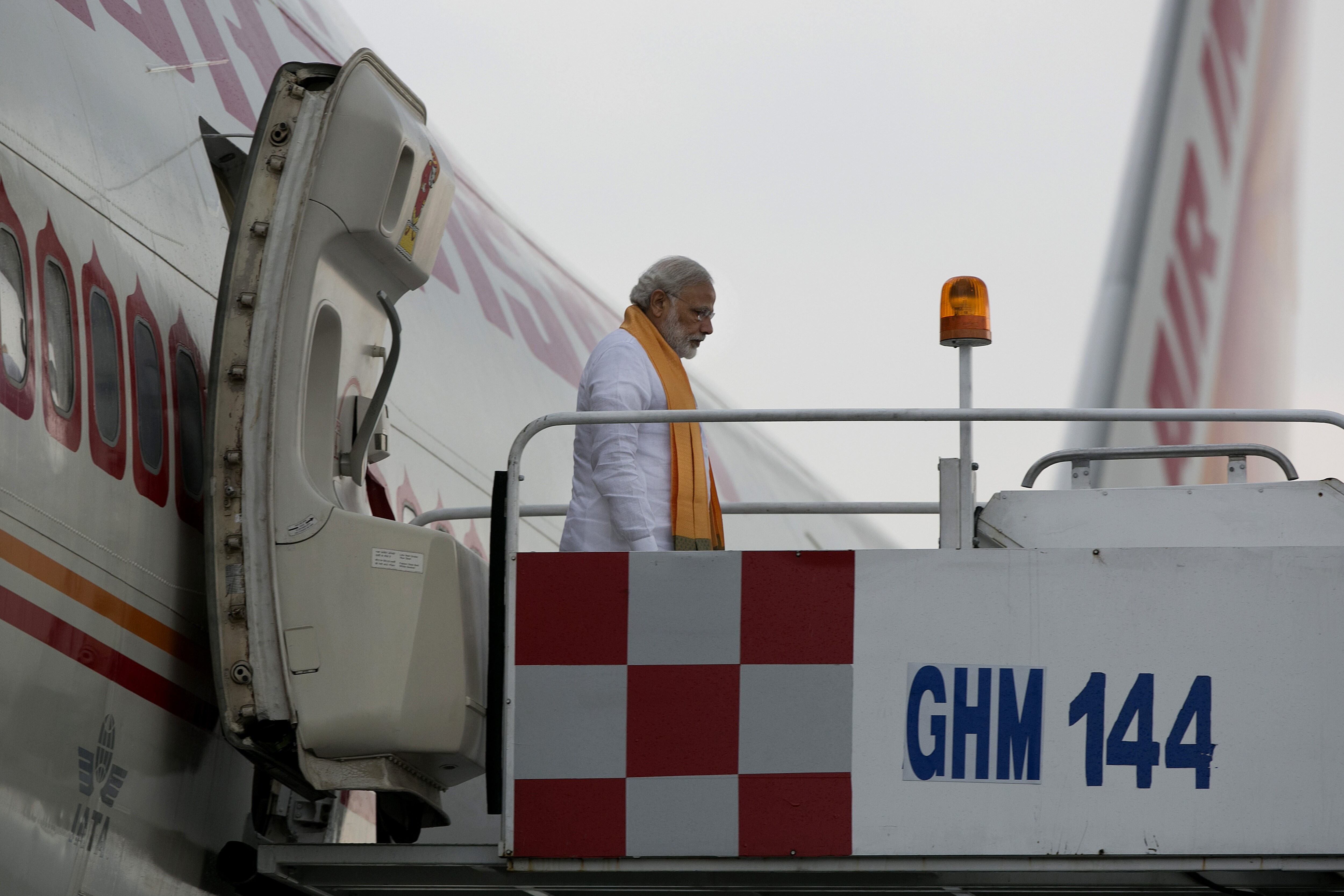
India's national airline, Air India, has ‘operationally' turned around, Prime Minister Narendra Modi said on the occasion of India's 70th Independence Day. Last month, the Minister of State for Civil Aviation Jayant Sinha said, in a reply to the Lok Sabha, that the airline is expected to post a modest operating profit, based on provisional results for financial year 2015-16.
But is the operational profit due to operational efficiency or the benefit of lower fuel prices, is a question that has been raised by both industry experts and rating agencies.
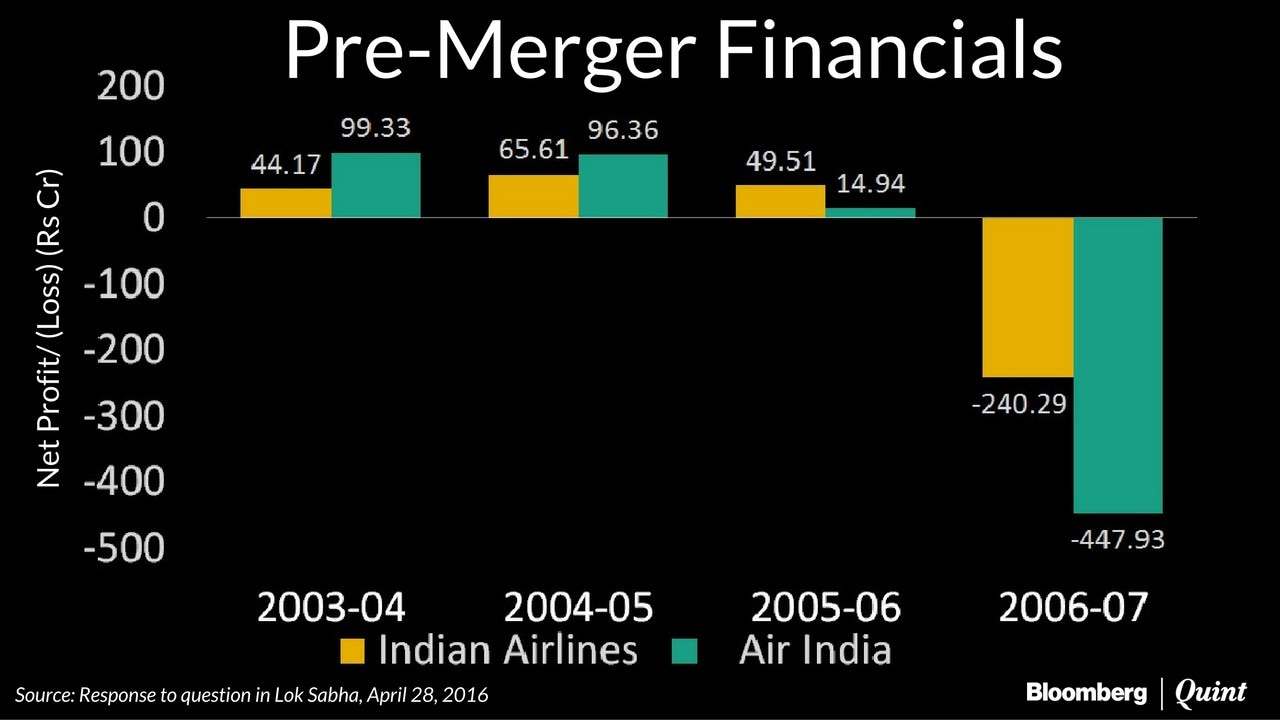
Air India Ltd. was incorporated as National Aviation Company of India Ltd (NACIL) on March 30, 2007, to merge the operations of the erstwhile Air India and Indian Airlines. NACIL was renamed Air India Ltd. on October 26, 2010. The merged airline has been making losses since its inception. In fact, the year preceding the merger, both airlines had a combined loss of around Rs 688 crore, the then Aviation Minister Mahesh Sharma said in response to a question raised in the Lok Sabha.
The Turnaround Plan
As the airline's losses and debt mounted, the government put in place a turnaround plan (TAP) for Air India in April 2012. The TAP provided for equity infusion of Rs 30,231 crore by 2021 subject to the achievement of certain milestones. The restructuring plan for operational and financial turnaround included the following:
- Upfront equity of Rs 6,750 crore in FY12.
- Equity for cash deficit support worth Rs 4,552 crore till FY18.
- Equity for guaranteed aircraft loan and interest worth Rs 18,929 crore till 2021.
- Provision of Rs 11,951 crore towards interest and principle as government guarantee for non-convertible debentures.
- Equity infusion of Rs 3,300 crore in FY16
Losses Mount...
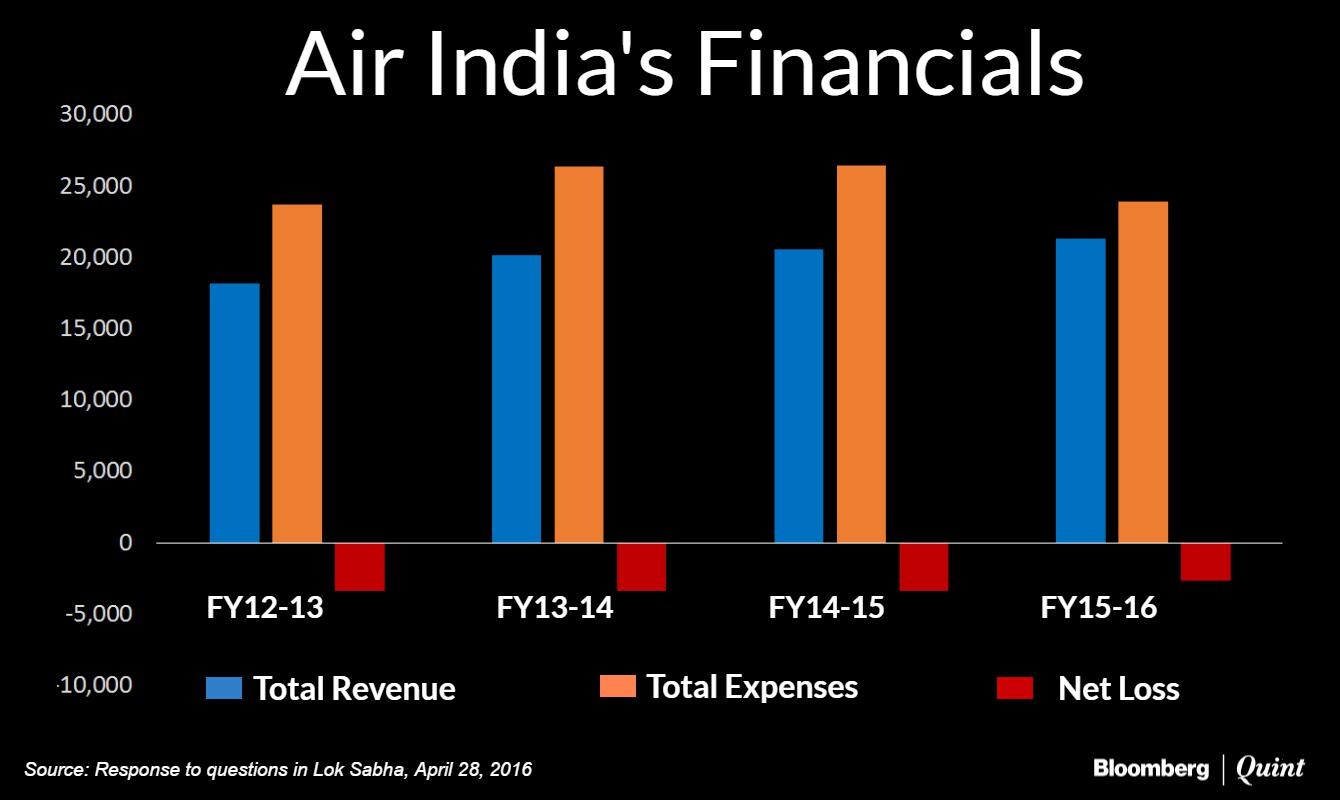
The government has released Rs 23,243 crore of equity support, as part of the turnaround plan, till date but that has clearly not been sufficient to stem the tide of losses. The accumulated losses of the airline during this period stood at Rs 20,266 crore. Between FY13 and FY15, the airline's losses widened from Rs 5,490 crore to Rs 5,859 crore , according to responses from former Aviation Minister Mahesh Sharma in the Lok Sabha in April this year.
...Despite Benign Fuel Prices
The government estimates that Air India's net loss will narrow to Rs 2,636 crore in financial year 2015-16, but that's largely due to the decline in fuel costs which shored up operating profits for all airline operators including Air India, said Kapil Kaul, Chief Executive Officer for South Asia at the Centre for Asia Pacific Aviation in a telephonic interview. Air India's operational profits could also be the result of deferment of expenses, he added.
Deferment of expenses may be key to delivering operating profits. Lower service levels, asset productivity, and customer engagement continue to be a challenge and need to be addressed to ensure structural improvement.Kapil Kaul, Chief Executive Officer -South Asia, Centre for Asia Pacific Aviation
The last available annual report on Air India's website is for the financial year 2013-14. Fuel and oil cost accounted for 35.7 percent of the expenses, followed by the finance cost at 15.4 percent, according to the report. Together they accounted for little over 51 percent of the total expenses for the airline.
Where's The Balance Sheet?
When BloombergQuint tried to access Air India's corporate filings from the website of ministry of corporate affairs, none were available. The company hasn't filed its financial statements with the Bombay Stock Exchange either, where its non-convertible debentures are listed.
Credit rating agencies, India Ratings & Research and Crisil, rate Rs 8,100 crore and Rs 13,600 crore non-convertible debentures of the airline. Crisil declined to comment on individual companies but said in an email statement that it had re-affirmed its ratings in January this year. Air India's Rs 7,400 crore NCD issue, however, is not fully guaranteed by the government against default or delayed interest payment, the statement added.
For the rated Rs 7,400 crore NCD programme, the government's guarantee does not cover the default or additional interest of 2 percent per annum over the coupon rate payable to the debenture holders in case of delays in debt servicing, if any, beyond the specified due dates.Crisil Statement from January 7, 2016
India Ratings has not been able to access the balance sheet of the airline for the last two years and the new management hasn't responded to any communication from the agency, Sudarshan Shrinivas, director of corporates at the rating agency said in a telephonic interview. Air India is sub-investment grade on a standalone basis and they would take the airline's so-called turnaround plan with a pinch of salt, he added.
On a standalone basis, it is nowhere. The rating is close to default kind of a rating, very low rating. But it is purely based on the Government of India rating that we rate this entity.Sudarshan Shrinivas, Director - Corporates, India Ratings & Research
The airline also does not have the capability to service debt, net of expenses, which include fuel and oil costs, Shrinivas
The government has been kind of infusing equity into Air India, and through that Air India has been able to service the debt, in terms of the interest payments. Otherwise, its own cash flow is inadequate to service debt obligations.Sudarshan Shrinivas, Director - Corporates, India Ratings & Research
Refinancing of Debt
The debt burden of Air India stood at Rs 51,367.07 crore as on March 31, 2015, which includes Rs 22,574.09 crore of aircraft financing loans, according to the disclosure made by the then aviation minister in the Lok Sabha. The debt at the end of March 31, 2014 stood at Rs 50,645 crore. The company has an annual interest burden of around Rs 4,000 crore, according to data compiled by BloombergQuint. This constitutes nearly 18-20 percent of its revenue for the financial year 2013-14.
The airline was unsuccessful in its attempt to refinance debt earlier this year. It had sought government guarantee to raise Rs 10,000 crore via tax-free bonds to refinance long-term working capital loan at a low cost, but the proposal was rejected by the finance ministry in view of the limited guarantee space available to the government in the last financial year.

-
Getting To Work Costs Women More | The Reason Why

It is not just about women paying more than men. It is about women paying much more in cities than in villages.
-
AI Bias In Investing Cannot Be Eliminated, But It Can Be Governed
Framing is a particularly important example as identical financial information presented in terms of gains rather than losses can lead an LLM to reach a different assessment.
-
Joining The Dots | Dark Skies, Steady Diya: Why Hope Holds This Diwali
With war, a weak rupee and foreign outflows weighing on sentiment, policymakers at the NDTV World Summit and market veterans at NDTV Profit Ignite: Diwali Edition offered the same advice: stay invested and filter out the noise.
-
The Curious Case of Equitas Small Finance Bank And A CEO Who Quit For Stock
PN Vasudevan believes persistent investor concerns over a perceived conflict of interest had become a governance overhang on Equitas Small Finance Bank's stock, even as the lender improved profitability and asset quality.
-
Talking Points This Week: AI Cash Burn, A Tiger Comeback And An India That Still Finds Its Own Path
India is not immune to higher oil or tighter global liquidity, yet its earnings base is broader, its domestic policy levers are still available.
-
Foreign Investors Own Half Of HDFC Bank and ICICI Bank. An LTCG Cut Could Matter Most Here
Foreign portfolio investors have US$115 billion parked in HDFC Bank, ICICI Bank. If the government cuts long-term capital gains tax, Jefferies says returning foreign money could land here first.
-
'Never Seen This Level Of Negativity': Sandeep Tandon Says The Next Rally May Be Closer Than You Think
Veteran investor Sandeep Tandon says foreign selling is easing, large-caps are due a comeback and mid-caps are crowded, while he turns positive on gold, power and pharma this Diwali.
-
Indians Stay With Family, Not In Hotels | The Reason Why
India still lacks enough clean, reliable and affordable hotels for budget-conscious travellers.
-
The Economic Imperative: Analysing The Material Driving Force Behind India-Canada Strategic Reset
This economic complementarity is further reinforced by deep institutional investment ties and talent mobility, which form the bedrock of the bilateral framework.
-
Medicine Pricing: Where Must Profit Stop?
India must confront excessive margins, hidden incentives and regulatory gaps that threaten the integrity of medicine.










