Cabinet Approves Production-Linked Incentive Scheme For 10 Sectors
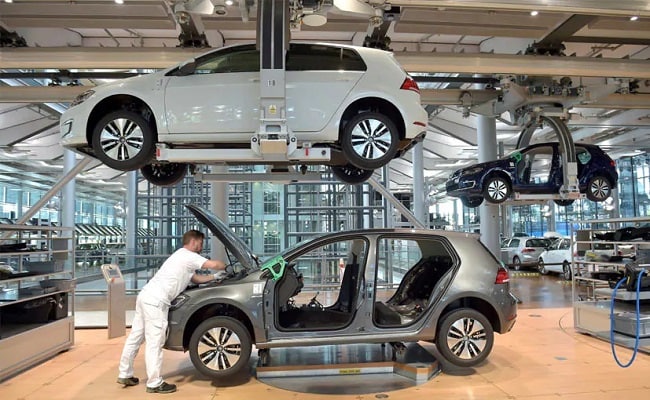
The Union Cabinet has approved Production Linked Incentive (PLI) scheme worth Rs 2 lakh crore for 10 sectors in order to boost India's manufacturing capabilities and enhancing exports. The scheme will make Indian manufacturers globally competitive and attract investment and enhance exports, the Information and Broadcasting Minister Prakash Javadekar said while briefing reporters after a meeting of the Cabinet.
Production-linked incentives will be offered for sectors such as white goods manufacturing, pharmaceutical, specialised steel, auto, telecom, textile, food products, solar photovoltic and cell battery.
Niti Aayog Vice Chairman Rajiv Kumar had announced last month that the government would introduce production-linked incentive (PLI) scheme for additional sectors to boost domestic manufacturing.
The government had earlier rolled out a PLI scheme worth Rs 50,000 crore for large scale electronic goods makers for five years, to attract investments in mobile phone manufacturing and electronic component units.
The government had also announced production linked incentives worth Rs 10,000 crore for pharmaceutical companies to produce bulk drugs and medical devices.
The PLI initiative is a part of the government's plan to support domestic manufacturing and convert India into an attractive and alternate manufacturing destination.
Meanwhile, according to sources in the Finance ministry, another round of stimulus is likely to be announced before Diwali. The stimulus would focus on job manufacturing and a further extension of the cabinet's decision to give a push to growth with productivity-linked schemes.

-
Extracting Value From Battery Scrap Could Be Challenging For India | The Reason Why

A discarded lithium-ion battery still contains valuable materials such as lithium, nickel and cobalt. These can be recovered and reused. When such batteries are crushed and shredded, they produce a dark powder called black mass.
-
One El Nino, India Can Handle. Two Could Break The Granary
India's grain stocks can absorb one bad year, but a second El Nino could drain the buffer in two to three years, economists say.
-
India's Troika Of Good Luck | Joining The Dots
As Jensen Huang's exit drags Nvidia down, a cooling AI trade and resilient earnings have revived investor interest in India. A likely RBI rate hike looms.
-
Talking Points This Week: Leadership Shock At Nvidia, Earnings Strength, And The Fog Over Hormuz
The Anthropic IPO pricing and first trading day, Nvidia's upcoming earnings, and any fresh signals from Iran will set the tone for the following week.
-
Signature Play: The Classic Cocktail Is Dead. Or Is It?
Classic cocktails are disappearing from India's cocktail menus. But they're still being ordered, taught to bartenders and borrowed from. So, who's really having the last drink?
-
A New Samvat Wishlist: Inclusive Prosperity And Human Development
India has strengthened its economic foundations through infrastructure, digital access and enterprise. Its next growth chapter must deepen productivity, create better livelihoods and widen participation in prosperity.
-
Love, Sex Aur Dhokha: The Audacious Plot To Spy On Jensen Huang
A Taipei dinner, a Singapore chip buyer and a suspected Chinese asset: inside the alleged spy operation that got close to NVIDIA's Jensen Huang.
-
Ten Things I Learnt This Samvat
Patience can be a trap. Cheap stocks can stay cheap. Leverage can wipe you out. What did Samvat 2082 teach us? Niraj Shah writes on 10 lessons from the year gone by.
-
Talking Points This Week: Tech Nerves, FII Buying, And A Faraway Banking Shock
The global markets are not shining this Diwali. The exception in the large markets is, India.
-
Midterm Rally Lasted A Day. The Hard Reality Of A Divided US May Last Two Years | Opinion
Between a contested AI boom, a debt ceiling that arrives in 2027 and a president with every incentive to act alone, the next two years may prove more volatile than the first day's rally suggests.









