Buoyant Dollar Recovers Its Luster, Underlining Rebound in U.S. Economy
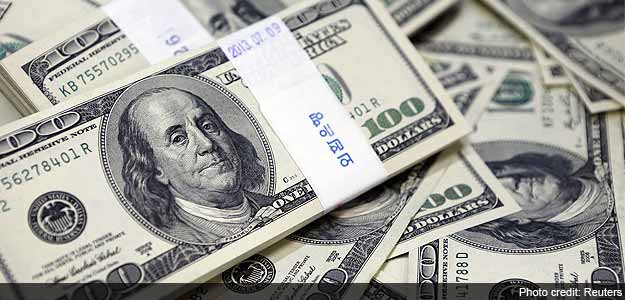
President Barack Obama's handling of the economy may be reviled by his political opponents, but he is receiving support from a surprising quarter: foreign exchange traders.
The U.S. dollar, after one of its most prolonged weak spells ever, has now re-emerged as the preferred currency for global investors. Across trading desks in New York, London and elsewhere, analysts are rushing to raise their dollar forecasts based on the resurgence in the U.S. economy.
In part, this bullish mood is tied to signals from the Federal Reserve that it will soon stop its bond-buying program - a change that would lift interest rates and buoy the dollar.
Yet the recent rally in the dollar - it has gained about 3.2 percent against the euro since Aug. 20 and about 8 percent against the yen since July 1 - underscores expectations that the U.S. economy will continue to grow at a faster clip than that of Europe, Japan and even large emerging markets, all of which are seeing their economies stagnate.
On Thursday, the dollar extended its rise, reaching a two-year high of 1.27 against the euro following the release of data in Germany that showed a decline in business confidence there. Against a broad basket of currencies, the dollar is now trading at a four-year peak.
The gains in the dollar even came on a day when stocks in the United States sustained a broad decline. The benchmark Standard & Poor's 500-stock index closed down 1.6 percent, its biggest drop since July 31. Technology stocks in particular were weak, as shares of Apple slumped 3.8 percent. Safety-seeking investors piled into Treasurys, and the price of the benchmark 10-year Treasury note rose, driving the yield, which moves in the opposite direction from the price, down seven basis points, to 2.50 percent.
After more than a decade of low interest rates and easy money, the notion of a strong dollar harks back to some seemingly distant periods in economic history, like the years of balanced budgets under President Bill Clinton in the 1990s or the height of Ronald Reagan's popularity in the early to mid-1980s.
During those periods, the U.S. economy was flush with health, and a muscular currency - which made it attractive for Americans to travel and enabled investors to snap up overseas assets on the cheap - amplified this sense of global might.
It may be early days for the rally, however. In today's global, highly interwoven economy, currency moves can be deceptive and fleeting. Still, the increasing push by investors into the dollar can be seen as a favorable report card on the U.S. economy, highlighting good performance in crucial benchmarks such as growth and fiscal responsibility, and an increasingly competitive position abroad because of a boom in energy exports.
"As long as the U.S. continues to grow and the rest of the world remains stagnant, the dollar will rally," said Stephen L. Jen, a former economist for the International Monetary Fund who runs a hedge fund in London.
A strong dollar is not always a plus. Over time, it can stall economic growth by hurting exports, although economists point out that even with its recent spurt the currency remains undervalued in historical terms.
Another consequence of a stronger dollar is currency instability in emerging markets.
As currencies like the Turkish lira, the Brazilian real and the Chinese renminbi weaken, investors will be less willing to hold on to their assets in these countries - choosing instead to park their money in higher-yielding U.S. dollar assets.
"The currency markets will become much more volatile," said Mohamed A. El-Erian, a former top executive at the bond giant PIMCO who also worked at the International Monetary Fund.
Bolstering the dollar's fortunes is a realization among traders and economists that the growth gap between the United States and much of the rest of the world has not been this wide for quite some time.
According to estimates from Nomura, the investment bank, the United States' estimated growth of 3.1 percent next year outpaces that of Latin America, emerging and developed Europe, and Japan, with only the Asian bloc of nations, at 6.2 percent, performing better.
"I can't remember the last time there was such a gap," Jen said.
Past periods of dollar strength came when the dollar's status as a reserve currency was more firmly entrenched. More than a decade of easy U.S. credit, the start of the euro and China's emergence as an economic colossus made the dollar less popular for global central banks, which diversified into euros, the renminbi and other alternatives.
Now, with the Federal Reserve cementing its role as a lender of last resort to central banks all over the world, the dollar is poised to recapture lost ground as the preferred currency for central banks.
"The dollar was never going to disappear, and from a comparative point of view it, is more attractive now," said Barry Eichengreen an economist at the University of California, Berkeley, and the author of a recent book on the dollar.
In particular, Eichengreen cites the recent steps by the Fed to formalize the dollar-lending program that it established during the financial crisis when global central banks needed an influx of dollars to lend to their stricken banks.
The U.S. economic problems have not disappeared. Unemployment remains stubbornly high, debt levels are elevated and there has been little effort to curb the growth of government spending on Social Security and other entitlements.
Nevertheless, in the coldblooded world of currency trading, the focus is always on relative, not absolute, performance, and in that regard, the U.S. economy is on a roll.
Some of the dollar's recent strength has come against the euro, following a series of statements made by the European Central Bank's president, Mario Draghi, that were interpreted by currency traders to be supportive of a weak euro. Many European economists say that, in light of the ECB's institutional restraints, a weak euro that would jump-start exports is the easiest way to spur growth in the eurozone.
Since Draghi touched on some of these issues during his speech in Jackson Hole, Wyoming, in late August, the euro has lost significant ground against the dollar, a move that has taken many traders and analysts by surprise.
Traders have subsequently added to their bets that the euro will continue to fall, pointing to such long-term problems as anemic growth and persistent unease over Europe's banks. Data from the U.S. Commodity Futures Trading Commission show that the short positions on the euro are the most popular currency trades.
It is against the Japanese yen that the dollar's move has been most pronounced. Traders are betting that a weak yen will support the aggressive policies put in place by Japan's prime minister, Shinzo Abe, who has promised to revive the country's slumbering economy.
With Japan carrying the largest debt load in the world - 227 percent of its economic output - and with the country's growth rate at barely 1 percent, the yen would seem to be ripe for the type of precipitous fall experienced by many emerging markets in recent years.
Many traders point to the structural problems in Japan to bolster their prediction that the dollar will strengthen against the yen. More than ever though, underpinning their bullishness is the fact that the U.S. economy - younger, more flexible and with a better handle on its finances - is doing so much better than Japan's.
J. Kyle Bass, a hedge fund investor based in Dallas, says an epic collapse of Japan Inc. may be approaching. He believes that the yen is going to weaken to at least 125 yen against the dollar by the end of the year, from about 109 yen now.
Bass has been a frequent and open critic of Japan's economic policies dating to 2010.
Now he notes that for the first time in recent history, Japan's trade gap is widening, while the United States' - thanks to buoyant energy exports - is shrinking.
In effect, his bearish call on Japan has become a bullish bet on the United States.
"There is no more export growth in Japan," Bass said. "And we are the Saudi Arabia of natural gas."
@ 2014 New York Times News Service

-
AI Bias In Investing Cannot Be Eliminated, But It Can Be Governed

Framing is a particularly important example as identical financial information presented in terms of gains rather than losses can lead an LLM to reach a different assessment.
-
Joining The Dots | Dark Skies, Steady Diya: Why Hope Holds This Diwali
With war, a weak rupee and foreign outflows weighing on sentiment, policymakers at the NDTV World Summit and market veterans at NDTV Profit Ignite: Diwali Edition offered the same advice: stay invested and filter out the noise.
-
The Curious Case of Equitas Small Finance Bank And A CEO Who Quit For Stock
PN Vasudevan believes persistent investor concerns over a perceived conflict of interest had become a governance overhang on Equitas Small Finance Bank's stock, even as the lender improved profitability and asset quality.
-
Talking Points This Week: AI Cash Burn, A Tiger Comeback And An India That Still Finds Its Own Path
India is not immune to higher oil or tighter global liquidity, yet its earnings base is broader, its domestic policy levers are still available.
-
Foreign Investors Own Half Of HDFC Bank and ICICI Bank. An LTCG Cut Could Matter Most Here
Foreign portfolio investors have US$115 billion parked in HDFC Bank, ICICI Bank. If the government cuts long-term capital gains tax, Jefferies says returning foreign money could land here first.
-
'Never Seen This Level Of Negativity': Sandeep Tandon Says The Next Rally May Be Closer Than You Think
Veteran investor Sandeep Tandon says foreign selling is easing, large-caps are due a comeback and mid-caps are crowded, while he turns positive on gold, power and pharma this Diwali.
-
Indians Stay With Family, Not In Hotels | The Reason Why
India still lacks enough clean, reliable and affordable hotels for budget-conscious travellers.
-
The Economic Imperative: Analysing The Material Driving Force Behind India-Canada Strategic Reset
This economic complementarity is further reinforced by deep institutional investment ties and talent mobility, which form the bedrock of the bilateral framework.
-
Medicine Pricing: Where Must Profit Stop?
India must confront excessive margins, hidden incentives and regulatory gaps that threaten the integrity of medicine.
-
Why Amazon And Flipkart Are Struggling To Beat Meesho In India's Smaller Cities
With 274 million users and lowest-cost logistics, Meesho is defending its value commerce crown against giants like Amazon and Flipkart.










