Budget 2023: This Law Plays A Key Role In Government Expenses
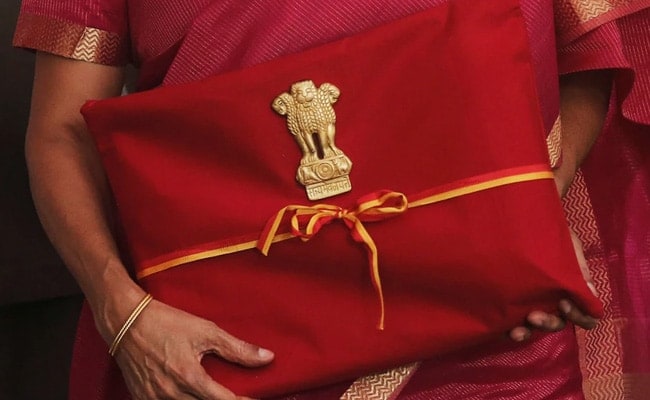
The Union Budget is not a single document. It is a list of 13 documents and three of them - Annual Financial Statement (AFS), Demands for Grants (DG) and the Finance Bill - are mandated by Article 112,113 and 110(a) of the Constitution. Some documents are explanatory notes, which support the mandated documents with narrative for quick or contextual references.
There are two other documents which are a 21st Century addition to the Union Budget. These documents - Macro-Economic Framework Statement and Medium-Term Fiscal Policy cum Fiscal Policy Strategy Statement - are statements under the Fiscal Responsibility and Budget Management (FRBM) Act, 2003. These documents broadly look at the economic health of the country.
What is the FRBM Act?
This Act was enacted in 2003 to help the Centre adhere to the path of fiscal consolidation, which refer to concrete policies for reducing government deficits and debt accumulation. It came into force on July 5, 2004. The Act mandates the Centre to limit the fiscal deficit up to three per cent of Gross Domestic Product (GDP) by March 31, 2021. It further mandates the Centre to limit the General Government Debt to 60 per cent of the GDP and the Centre's Debt to 40 per cent of GDP, by March 31, 2025.
However, the central government has never been able to meet the three per cent target. The three per cent fiscal deficit ceiling is purportedly inspired from the Maastricht treaty, which required annual budget deficits to not cross three per cent of the GDP. However, not just India but several European nations too have not been able to respect the ceiling.
Macro-Economic Framework Statement
The Macro-Economic Framework Statement assesses the GDP growth prospects, domestic economy and the stability of the external sector. It also looks at the fiscal balance of the Centre, which measures the difference between total government spending and revenue. This balance can more often be negative in the modern world, leading to fiscal deficit.
In 2021-22, India's fiscal deficit was at 6.8 per cent of GDP. As per last year's data, the total expenditure in Budget Estimate (BE) 2021-22 was estimated to have increased by one per cent over Revised Estimate 2020-21.
"The Fiscal deficit of the Central Government during April to November 2021 stood at 46.2 per cent of the BE, much lower compared to 135.1 per cent during the same period in 2020-21 and 114.8 per cent during the same period in 2019-20," the 2022 statement tabled by Finance Minister Nirmala Sitharaman noted.
Medium-Term Fiscal Policy cum Fiscal Policy Strategy Statement
The other document, Medium-Term Fiscal Policy cum Fiscal Policy Strategy Statement, sets the three-year rolling targets for specific fiscal indicators - Fiscal Deficit, Revenue Deficit, Primary Deficit, Tax Revenue, Non-tax Revenue and Central Government Debt.
It also explains how the current fiscal policies are in conformity with sound fiscal management principles and gives the rationale for any major deviation in key fiscal measures. For instance, the Covid-19 pandemic led to unprecedented levels of spending, resulting in higher fiscal deficit.
"Notwithstanding the uncertainty and challenges posed by the pandemic, the Central Government has demonstrated commitment to credible fiscal consolidation in its Budget of FY 2021-22 and FY 2022- 23... As a result, the Indian economy is expected to return to a more stable growth trajectory over the medium term," the document read.

-
AI Bias In Investing Cannot Be Eliminated, But It Can Be Governed

Framing is a particularly important example as identical financial information presented in terms of gains rather than losses can lead an LLM to reach a different assessment.
-
Joining The Dots | Dark Skies, Steady Diya: Why Hope Holds This Diwali
With war, a weak rupee and foreign outflows weighing on sentiment, policymakers at the NDTV World Summit and market veterans at NDTV Profit Ignite: Diwali Edition offered the same advice: stay invested and filter out the noise.
-
The Curious Case of Equitas Small Finance Bank And A CEO Who Quit For Stock
PN Vasudevan believes persistent investor concerns over a perceived conflict of interest had become a governance overhang on Equitas Small Finance Bank's stock, even as the lender improved profitability and asset quality.
-
Talking Points This Week: AI Cash Burn, A Tiger Comeback And An India That Still Finds Its Own Path
India is not immune to higher oil or tighter global liquidity, yet its earnings base is broader, its domestic policy levers are still available.
-
Foreign Investors Own Half Of HDFC Bank and ICICI Bank. An LTCG Cut Could Matter Most Here
Foreign portfolio investors have US$115 billion parked in HDFC Bank, ICICI Bank. If the government cuts long-term capital gains tax, Jefferies says returning foreign money could land here first.
-
'Never Seen This Level Of Negativity': Sandeep Tandon Says The Next Rally May Be Closer Than You Think
Veteran investor Sandeep Tandon says foreign selling is easing, large-caps are due a comeback and mid-caps are crowded, while he turns positive on gold, power and pharma this Diwali.
-
Indians Stay With Family, Not In Hotels | The Reason Why
India still lacks enough clean, reliable and affordable hotels for budget-conscious travellers.
-
The Economic Imperative: Analysing The Material Driving Force Behind India-Canada Strategic Reset
This economic complementarity is further reinforced by deep institutional investment ties and talent mobility, which form the bedrock of the bilateral framework.
-
Medicine Pricing: Where Must Profit Stop?
India must confront excessive margins, hidden incentives and regulatory gaps that threaten the integrity of medicine.
-
Why Amazon And Flipkart Are Struggling To Beat Meesho In India's Smaller Cities
With 274 million users and lowest-cost logistics, Meesho is defending its value commerce crown against giants like Amazon and Flipkart.










