Explained: How India Earns Each Rupee And Where It Goes
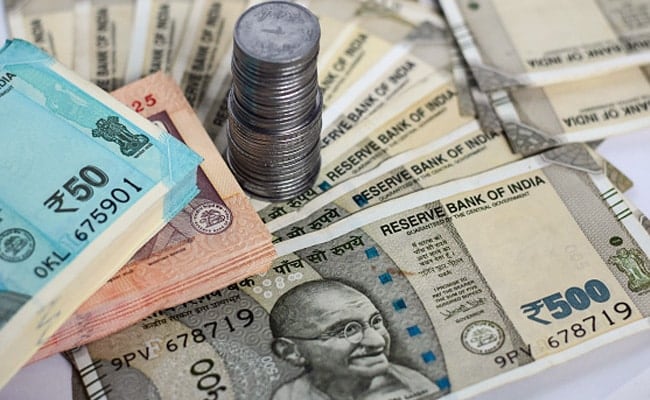
For every rupee that the Government of India earns, 34 paise comes through borrowings and liabilities while Goods and Services Tax (GST) contributes 17 paise, the 2023 Union Budget reveals.
Income tax and corporation tax add 15 paise each to every one rupee the Centre earns each year, while Union Excise Duty and Customs add seven and four paise respectively.
The remaining eight paise comes from non-tax receipts and non-debt capital receipts.
As per Union Budget 2023, the outstanding internal and external debt, and other liabilities of the Centre are estimated at ₹1,69,46,666.85 crore for FY 2023-24. On the other hand, GST is estimated to rise by 12 per cent from ₹8,54,000 crore to ₹9,56,600 crore in 2023-24.

Income tax, which is paid by just a small fraction of India's population, is expected to cross ₹9 lakh crore in 2023-24. Corporation tax, which is the tax levied on companies' incomes, is expected to be at ₹9,22,675 crore by March 2024.
These two taxes along with the total debt and liabilities contribute to 64 per cent of the government's total income, which stands at ₹45 lakh crore in 2023-24.
Non-tax revenue, which is estimated at ₹3,01,650 crore in 2023-24 - an increase of 15.2 per cent over the revised estimate of 2022-23 - adds six per cent to the Centre's coffer.
Where Does One Rupee Go?
The high percentage of debt and liabilities in the government's yearly income, however, also means that interest payments constitute 20 per cent of the expenditure in 2023-24.
In other words: For every rupee that the government spends, 20 paise goes into the repayment of debt and liabilities.
The second biggest chunk of expenditure for the Centre is sharing the revenue earned from taxes and duties with the states - 18 per cent. The total amount that will be shared with states stands at ₹10.21 lakh crore for the financial year 2023-24, which is 41 per cent of the total net proceeds of the sharable central taxes, as per the recommendations of the 15th Finance Commission.
The states of UP and Bihar will get nearly 28 per cent of the total share of central taxes and duties, as per the Union Budget 2023.

Central Sector Schemes (17 per cent) and Centrally Sponsored (9 per cent), which are 100 per cent Centre-funded and partially-funded by the Centre respectively, constitute over one-fourth of the total government spending. In one-rupee terms, 26 paise goes into these schemes.
Defence, which is the single-biggest sectoral expenditure in Indian budget, takes away eight paise of every one rupee the Centre spends. The defence budget in 2023 stands at ₹5.94 lakh crore, which is 13.2 per cent of the total budgeted expenditure of the Centre.
At least seven paise will go into subsidies, one paise less than 2022-23. In the Union Budget, the Centre has cut expenditure on food, fertilisers and petroleum by 28 per cent, compared to the revised estimates for the ongoing financial year.

-
Talking Points This Week: Leadership Shock At Nvidia, Earnings Strength, And The Fog Over Hormuz

The Anthropic IPO pricing and first trading day, Nvidia's upcoming earnings, and any fresh signals from Iran will set the tone for the following week.
-
Signature Play: The Classic Cocktail Is Dead. Or Is It?
Classic cocktails are disappearing from India's cocktail menus. But they're still being ordered, taught to bartenders and borrowed from. So, who's really having the last drink?
-
A New Samvat Wishlist: Inclusive Prosperity And Human Development
India has strengthened its economic foundations through infrastructure, digital access and enterprise. Its next growth chapter must deepen productivity, create better livelihoods and widen participation in prosperity.
-
Love, Sex Aur Dhokha: The Audacious Plot To Spy On Jensen Huang
A Taipei dinner, a Singapore chip buyer and a suspected Chinese asset: inside the alleged spy operation that got close to NVIDIA's Jensen Huang.
-
Ten Things I Learnt This Samvat
Patience can be a trap. Cheap stocks can stay cheap. Leverage can wipe you out. What did Samvat 2082 teach us? Niraj Shah writes on 10 lessons from the year gone by.
-
Talking Points This Week: Tech Nerves, FII Buying, And A Faraway Banking Shock
The global markets are not shining this Diwali. The exception in the large markets is, India.
-
Midterm Rally Lasted A Day. The Hard Reality Of A Divided US May Last Two Years | Opinion
Between a contested AI boom, a debt ceiling that arrives in 2027 and a president with every incentive to act alone, the next two years may prove more volatile than the first day's rally suggests.
-
Blue Wave Will Derail the AI Trade but Won't Dismantle the AI Era | Unhedged Position
The Democrats' sweep of the US Congress will see politics collide with economic forces both over the long and short term.
-
It's Time To Take The GST Council's Bet On Trust Global
Payment records can prove India's services exports, and clear, proportionate rules can bring foreign digital sellers into the tax net.
-
Opinion | India at 38: From Innovation Overperformer to Innovation Powerhouse
India now has 453 VC-backed deep science startups, 18 of them late-stage, after 117 percent growth since 2020. Laurus Labs, at USD 9.3 billion, is the most valuable deep science company in any middle-income economy outside China.









