Budget A Shot In The Arm For Economy, No Material Effect On Credit Factors: S&P
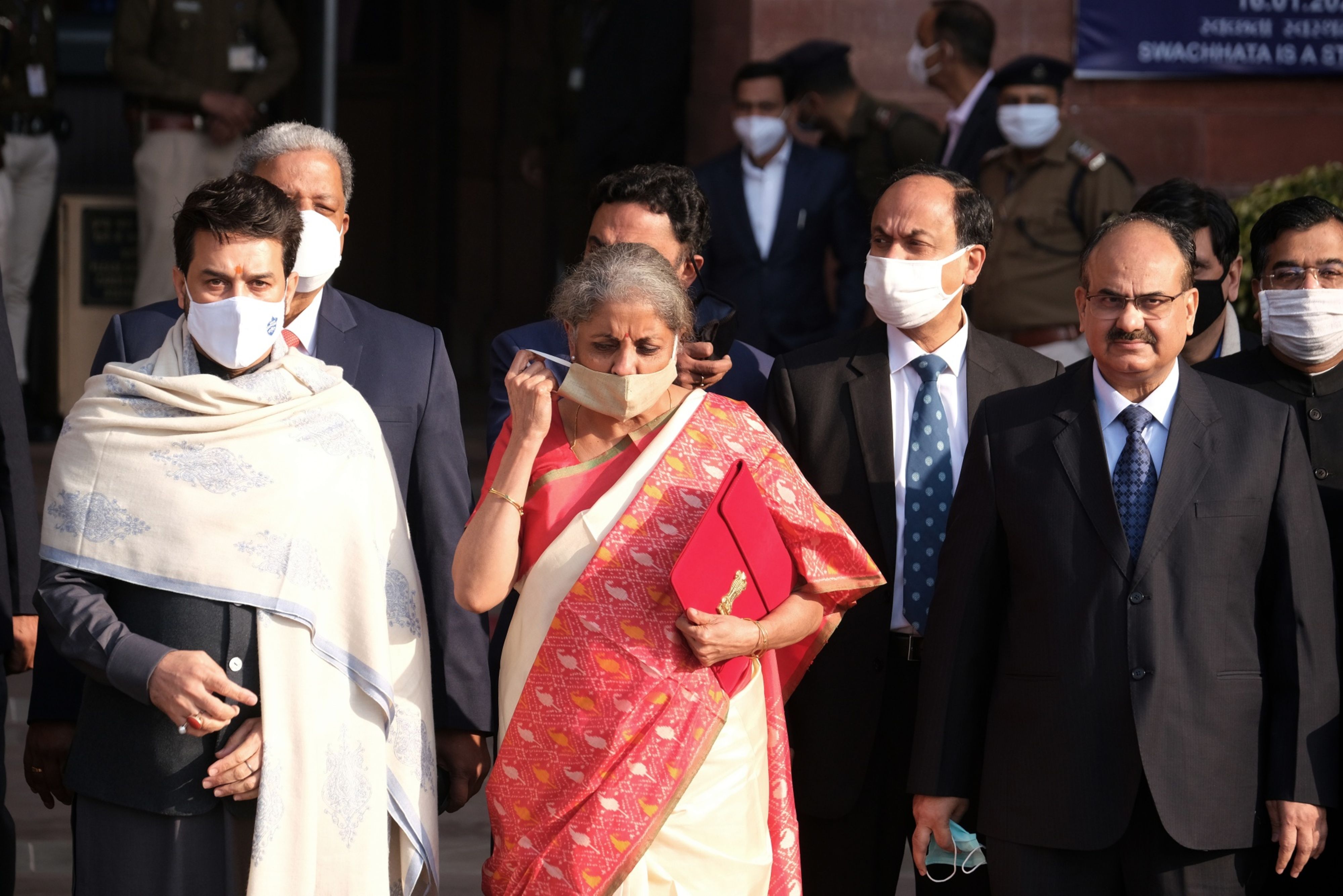
Budget 2021-22 is a comprehensive effort by India to shore up a nascent economic recovery, S&P Global Ratings said, even as aggressive provisioning to help heal the country will be costly.
India's budget is a “shot in the arm” for the economy but the “brawny” spending programme also entails higher-than-expected general government deficits, the rating agency said in a note. It estimates the general government deficit at more than 14% of GDP in 2020-21 and at 11.6% in 2021-22.
“While we currently see no material effect from the budget on India's key credit factors, the economy's brightening growth prospects will be critical to maintain sustainability of India's public finances, with general government debt likely to hover at more than 90% of GDP over the next few years,” S&P Global Ratings said.
Amid uncertainty over enduring pandemic-related risks, the measures in the budget, including the ramp-up in healthcare expenditure and capital spending, should aid the economy in getting back on track, it said.
The budget's emphasis on capital expenditure marks a noteworthy shift and higher investment in India's physical infrastructure should help to raise investment potential and competitiveness in the economy over time.S&P Global Ratings
Budget 2021: Related Coverage
S&P expects the Indian economy to contract 7.7% in 2020-21 compared to its previous estimate of a 9% decline. But it will take a long time for India's economy to heal from the pandemic. The economy is likely to recover to its pre-Covid output level in the next fiscal when it is estimated to grow 10%, it said.
India's consistently strong real GDP growth is an important support to the sovereign ratings, and the government's efforts to fortify growth prospects should help to maintain the economy's healthy long-term prospects, it said. Should economic growth materially underperform, weaker financial savings generation could imperil the government's ability to continue to finance itself at relatively affordable rates, the rating agency cautioned. Sustained high deficits, it said, could also distort capital allocation, pressuring private sector investment.
Finance minister Nirmala Sitharaman during her budget speech said the central government's fiscal deficit settled at 9.5% in 2020-21—the highest since at least liberalisation in 1991—and will be targeted at 6.8% in 2021-22.
“As a consequence of India's exceptionally high fiscal deficit this fiscal, in combination with the economy's record contraction, we estimate that the general government's net stock of debt will surge by about 18% to 92% of GDP by the end of 2020-21,” S&P said. With the deficit set to remain higher than 10% of GDP in fiscal 2022, and likely to recede only gradually thereafter, strong nominal GDP growth will be critical in the government's plans to grow its revenue at a clip of 23% next year, and in keeping the debt stock stable at just above 90% of GDP through 2023, it said.
Budget 2021: Related Coverage

-
The Economic Imperative: Analysing The Material Driving Force Behind India-Canada Strategic Reset

This economic complementarity is further reinforced by deep institutional investment ties and talent mobility, which form the bedrock of the bilateral framework.
-
Medicine Pricing: Where Must Profit Stop?
India must confront excessive margins, hidden incentives and regulatory gaps that threaten the integrity of medicine.
-
Why Amazon And Flipkart Are Struggling To Beat Meesho In India's Smaller Cities
With 274 million users and lowest-cost logistics, Meesho is defending its value commerce crown against giants like Amazon and Flipkart.
-
High US Salaries, No Green Card Certainty: The Financial Calculation Facing Indian H-1B Families
The suspension of PERM processing at eight technology employers does not cancel existing H-1B visas. What it does is force a question many Indian families have been avoiding: is the US salary worth tying your career and family plans to one employer?
-
Swiggy vs Eternal: Food Delivery's Two Rivals Are No Longer In The Same Race
Eternal is building a private AI assistant, dark.ai. Swiggy is still working out how to make Instamart pay, with an operating loss of Rs 895 crore in the July-September quarter while Blinkit stayed profitable.
-
Where You Live Shapes How You Get To Work | The Reason Why
Two-wheelers are the most popular way to get to work in India, accounting for nearly 43% of workplace commutes.
-
Unhedged Position: Can India See An Indonesia-Style Time Correction?
The Nifty is trading below levels it first clocked in 2024. Is there, then, as I have suggested in the headline, potential that the current time correction drags on painfully for the next three-five, even ten years?
-
Navigating Friction And Energy Realities: An Analysis Of Marco Rubio's October Visit To India
Occurring at a critical juncture marked by stalled trade negotiations and escalating geopolitical pressures over global energy supplies, the visit offers a profound window into modern US-India relations.
-
India Exports Capital. Why Not Export Trusteeship?
The big question, then, is whether India can build an institution that global borrowers, investors, banks, and lawyers can trust, even without an Indian connection.
-
France's Economy & Politics Are In Crisis | The Reason Why
Let's look at how the French economy and politics evolved under Nicolas Sarkozy, Franois Hollande and Emmanuel Macron.










