Budget 2021: Railways Get An Investment Boost
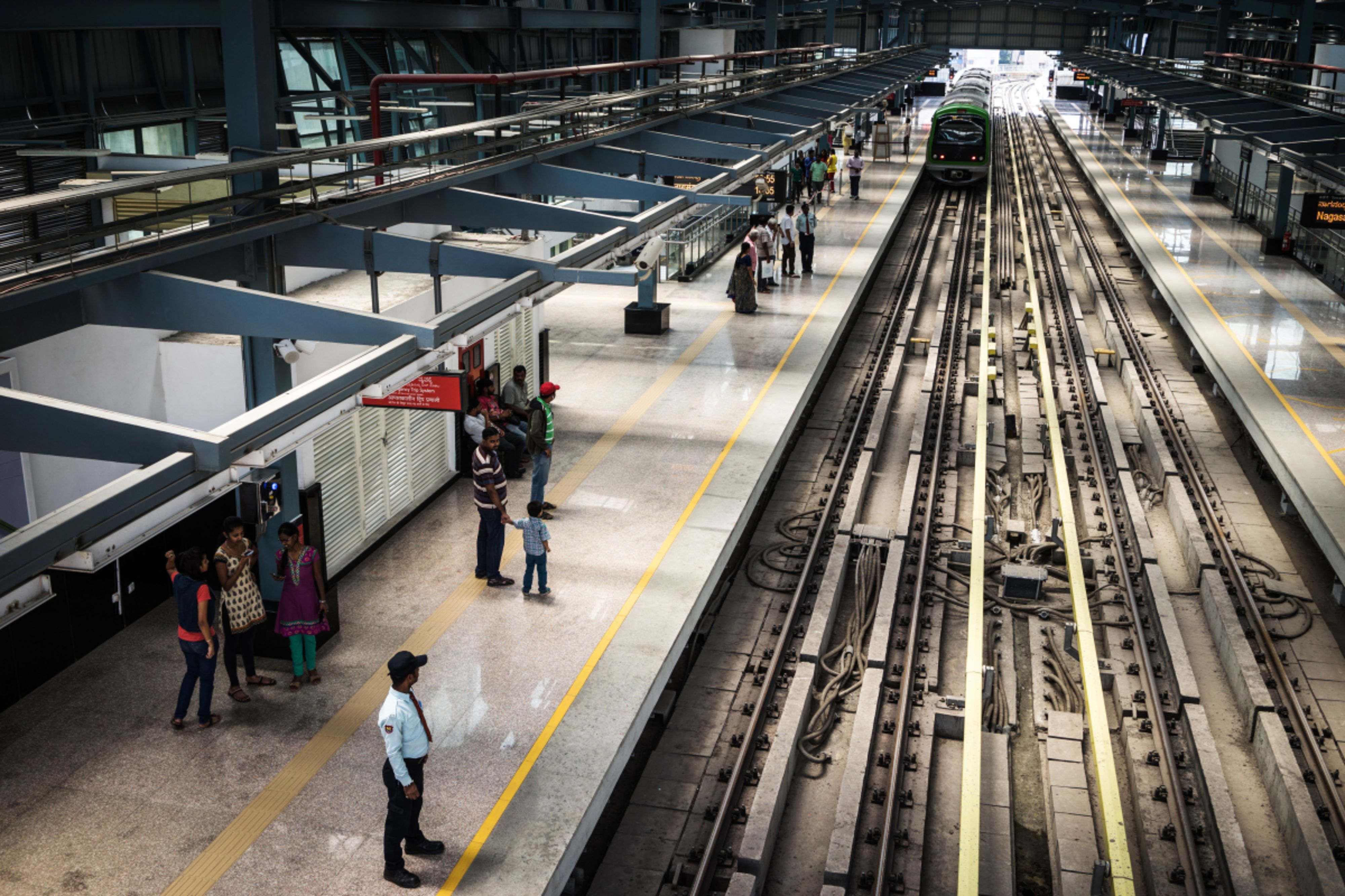
The investment deficit of the Indian Railways has ended. This financial year has seen the highest investment so far at Rs 2.4 lakh crore. Of this, the budgetary support was a little over a trillion rupees. Retained earnings and borrowing contributed Rs 1.32 lakh crore.
Next fiscal year, Rs 2.15 lakh crore is expected to be invested. The budget contribution will remain almost the same at Rs 1.07 lakh crore. The Indian Railway Finance Corp. will pitch in with Rs 70,000 crore. The dedicated freight corridors have been provided nearly Rs 20,000 crore, of which 80% will be budgetary support. Much is expected from public-private partnerships. They are expected to contribute Rs 24,000 crore.
Similar expectations last year were belied. They brought in just 17% of the target, at Rs 4,186 crore.
Capex Push
Capital expenditure has seen a ramp-up under the National Democratic Alliance government. In 2014-15, it was nearly Rs 66,000 crore. The following year, it rose to Rs 1 lakh crore. That figure held more or less for the next two years, after which there were significant increases.
Rather than spread money thinly, 146 projects were identified as crucial from the point of view of freight earnings. They were prioritised and provided sufficient funds for completion.
The focus is on projects that are needed for operational efficiency and enhancement of network capacity. A standard contacting document was adopted.
The national rail policy whose draft was published in December for comments from the public intends to raise the share of railways in freight traffic to 40% by 2024 by installing multiple tracks on dense routes and electrifying the entire network. Two-thirds of the network was electrified by November 2020 and the rest will be done by 2023. The Railways expect to save Rs 14,500 crore in fuel costs every year as a result. Electrification, it says, will make it zero-carbon by 2030. Unless the dependence on coal for generating electricity reduces and the share of renewables increases, this may not be possible.
Also Read: Superwoman Delivers, With A “Main Hoon Na” Backstop
Freight-Passenger Balance
Freight earnings this year were impacted by disruptions caused by the pandemic. They are nearly Rs 19,000 crore less than budgeted. But the road sector was impacted more, so some of the traffic moved to the railways which could run more and faster freight trains as the movement of passengers was curtailed. Time-tabled parcel services were launched to provide reliable services to courier services and e-commerce companies. The speed of freight trains has increased from 24 kilometres per hour to 46 km/h.
Overall earnings were Rs 30,000 crore less than in the previous year. Total expenditure exceeded earnings and the government had to bail the Railways out with a special loan.
Also Read: Budget 2021—Truth And Reconciliation
The Next Growth Driver
The Finance Minister said the dedicated freight corridors will be commissioned by June 2022. This should increase the speed of freight trains to an average of 70 km/h. It will be possible to run long, 1.5-km trains, of 13,000 tonnes and double-stack container trains. The lower cost of transportation and reliable delivery should force a shift in freight from roads to railways.
Once the freight corridors are commissioned, spare capacity will be available on the existing routes. In anticipation, the Railways invited expressions of interest for running passenger trains on 12 clusters. In October 2020, it received 120 applications from 15 firms, including Welspun Enterprises Ltd., Gateway Rail Freight Ltd., L&T Infrastructure Development Projects Ltd., Indian Railway Catering and Tourism Corp., GMR Highways Ltd., and Bharat Heavy Electricals Ltd.
Also Read: Can India Spend Its Way To A V-Shaped Recovery?
Organisational Reform
During the year, the Railway Board was recast along functional lines. The chairman was designated as the CEO. The members were renamed as Member (signalling and telecom), Member (infrastructure) in charge of tracks and land, Member (operations and business development), and Member (traction and rolling stock). The financial commissioner was made Member (Finance). The Rakesh Mohan committee had recommended this 20 years ago. Hopefully, a corporate structure will be adopted. Staff policies will also have to change. Promotion should be on the basis of performance and not just seniority. Outside talent should be inducted into the higher posts.
The Finance Minister made no mention of a rail regulator that will be necessary to provide comfort to private operators. The accounting system needs to be changed from the cash system to an accrual system. The status of station redevelopment was not conveyed. Overall, the Railway Budget seems to be on track.
Vivian Fernandes is a Delhi-based journalist who has tracked Indian Railways for more than 20 years. He is also Consulting Editor at Smart Indian Agriculture.
The views expressed here are those of the author and do not necessarily represent the views of BloombergQuint or its editorial team.

-
The Economic Imperative: Analysing The Material Driving Force Behind India-Canada Strategic Reset

This economic complementarity is further reinforced by deep institutional investment ties and talent mobility, which form the bedrock of the bilateral framework.
-
Medicine Pricing: Where Must Profit Stop?
India must confront excessive margins, hidden incentives and regulatory gaps that threaten the integrity of medicine.
-
Why Amazon And Flipkart Are Struggling To Beat Meesho In India's Smaller Cities
With 274 million users and lowest-cost logistics, Meesho is defending its value commerce crown against giants like Amazon and Flipkart.
-
High US Salaries, No Green Card Certainty: The Financial Calculation Facing Indian H-1B Families
The suspension of PERM processing at eight technology employers does not cancel existing H-1B visas. What it does is force a question many Indian families have been avoiding: is the US salary worth tying your career and family plans to one employer?
-
Swiggy vs Eternal: Food Delivery's Two Rivals Are No Longer In The Same Race
Eternal is building a private AI assistant, dark.ai. Swiggy is still working out how to make Instamart pay, with an operating loss of Rs 895 crore in the July-September quarter while Blinkit stayed profitable.
-
Where You Live Shapes How You Get To Work | The Reason Why
Two-wheelers are the most popular way to get to work in India, accounting for nearly 43% of workplace commutes.
-
Unhedged Position: Can India See An Indonesia-Style Time Correction?
The Nifty is trading below levels it first clocked in 2024. Is there, then, as I have suggested in the headline, potential that the current time correction drags on painfully for the next three-five, even ten years?
-
Navigating Friction And Energy Realities: An Analysis Of Marco Rubio's October Visit To India
Occurring at a critical juncture marked by stalled trade negotiations and escalating geopolitical pressures over global energy supplies, the visit offers a profound window into modern US-India relations.
-
India Exports Capital. Why Not Export Trusteeship?
The big question, then, is whether India can build an institution that global borrowers, investors, banks, and lawyers can trust, even without an Indian connection.
-
France's Economy & Politics Are In Crisis | The Reason Why
Let's look at how the French economy and politics evolved under Nicolas Sarkozy, Franois Hollande and Emmanuel Macron.










