From Dosas To Thalis: When Economists Use Everyday Analogies To Explain Complex Concepts
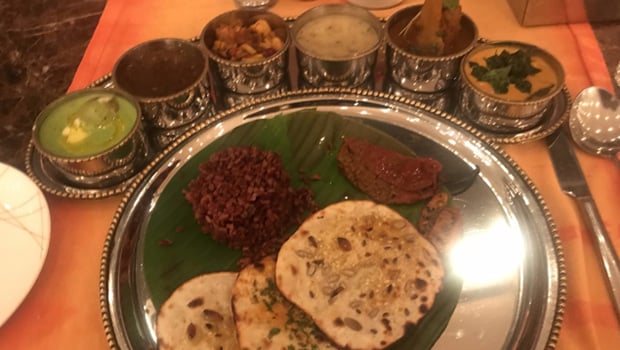
The Economic Survey for the financial year ending in March 2020 dedicated a full chapter to "thalinomics", a portmanteau of 'thali' and 'economics'. Defining it as the economics of a plate of food in India, the annual report card on the economy stated that the cost of a thali has risen in recent months courtesy an increase in the prices of food items such as vegetables and pulses. The mention of "thalinomics" in an official document was a reminder to the economics fraternity of the time the governor of Reserve Bank of India used the example of "dosa economics" to explain the concept of inflation.
In January 2016, it was then central banker Raghuram Rajan who cited the example of a pensioner buying dosas to explain how inflation works in relation to savings interest rates. He was delivering the CD Deshmukh lecture at New Delhi's National Council of Applied Economic Research (NCAER).
"What better way to make economics relate to the common person than something that s(he) encounters every day - a plate of food?" reads the introduction of the chapter, followed by:
- Has a Thali become more or less affordable?
- Has inflation in the price of a Thali increased or decreased?
- Is the inflation the same for a vegetarian Thali as for a non-vegetarian one?
- Is the inflation in the price of a Thali different across different states and regions in India?
There was a shift in the dynamics of thali prices in 2015-16, according to the Economic Survey, prepared by Mr Subramanian and his team. "Many reform measures were introduced since 2014-15 to enhance the productivity of the agricultural sector as well as efficiency and effectiveness of agricultural markets for better and more transparent price discovery," it elaborates.
In the 27-page long chapter on Thalinomics, the Economic Survey discusses the trends in the affordability of the constituents of different thalis (vegetarian vs non-vegetarian) in different parts of the country.
Thali inflation - or the annual rate of increase in thali prices - has shown significant reduction after remaining elevated, the Economic Survey states.
What Economists Say
“Thalinomics is a theoretical construction which selectively looks at certain food items on the vegetarian and non-vegetarian plate and concludes that individuals are actually better off over the last few years. Therefore it is quite a useful indicator of selective food inflation,” Madan Sabnavis, chief economist, CARE Ratings, told NDTV.
“However, this is not quite reflective of the actual price of a thali or plate of food which we cook even at home as all the accompanying costs like transport, fuel, other inputs are not considered. But just like how one defines a poverty line based on consumption of certain products, this thali too can be looked at in a similar way.”
Krishnamurthy Subramanian was appointed the Chief Economic Advisor of the government in December 2018. He earned his doctorate from the University of Chicago Booth School of Business under Raghuram Rajan, who served as central bank governor from September 2013 to September 2016.
Mr Rajan was also chief economic advisor of the UPA II government from August 2012 to September 2013.
(With inputs from agencies)

-
Indians Are Travelling, But Not Every Journey Is A Holiday | The Week In Whys

Pilgrims, patients and working women are the real travellers, and the system hasn't quite caught up with them.
-
Getting To Work Costs Women More | The Reason Why
It is not just about women paying more than men. It is about women paying much more in cities than in villages.
-
AI Bias In Investing Cannot Be Eliminated, But It Can Be Governed
Framing is a particularly important example as identical financial information presented in terms of gains rather than losses can lead an LLM to reach a different assessment.
-
Joining The Dots | Dark Skies, Steady Diya: Why Hope Holds This Diwali
With war, a weak rupee and foreign outflows weighing on sentiment, policymakers at the NDTV World Summit and market veterans at NDTV Profit Ignite: Diwali Edition offered the same advice: stay invested and filter out the noise.
-
The Curious Case of Equitas Small Finance Bank And A CEO Who Quit For Stock
PN Vasudevan believes persistent investor concerns over a perceived conflict of interest had become a governance overhang on Equitas Small Finance Bank's stock, even as the lender improved profitability and asset quality.
-
Talking Points This Week: AI Cash Burn, A Tiger Comeback And An India That Still Finds Its Own Path
India is not immune to higher oil or tighter global liquidity, yet its earnings base is broader, its domestic policy levers are still available.
-
Foreign Investors Own Half Of HDFC Bank and ICICI Bank. An LTCG Cut Could Matter Most Here
Foreign portfolio investors have US$115 billion parked in HDFC Bank, ICICI Bank. If the government cuts long-term capital gains tax, Jefferies says returning foreign money could land here first.
-
'Never Seen This Level Of Negativity': Sandeep Tandon Says The Next Rally May Be Closer Than You Think
Veteran investor Sandeep Tandon says foreign selling is easing, large-caps are due a comeback and mid-caps are crowded, while he turns positive on gold, power and pharma this Diwali.
-
Indians Stay With Family, Not In Hotels | The Reason Why
India still lacks enough clean, reliable and affordable hotels for budget-conscious travellers.
-
The Economic Imperative: Analysing The Material Driving Force Behind India-Canada Strategic Reset
This economic complementarity is further reinforced by deep institutional investment ties and talent mobility, which form the bedrock of the bilateral framework.










