Budget 2014: Iraq-Driven Oil Spike Threatens to Blow Hole
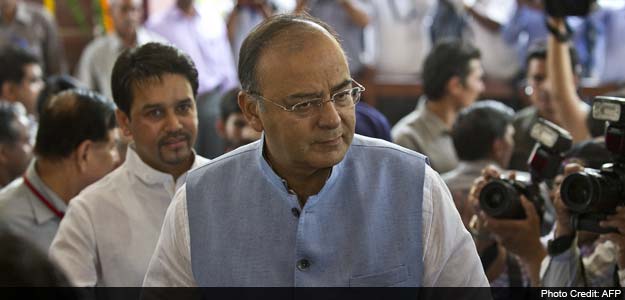
The government expects oil prices to rise as high as $120 per barrel for several months because of fighting in Iraq, potentially driving a hole of at least Rs 20,000 crore ($3.3 billion) in the budget, two government sources told Reuters.
Prime Minister Narendra Modi won last month's general election by a landslide with promises of faster economic growth and new jobs, tapping into voter anger over India's longest slowdown in a quarter of a century.
Ahead of his maiden budget next month, Finance Minister Arun Jaitley is grappling with a food inflation scare, and now faces the risk that higher oil prices could swell the government's subsidy bill.
"If oil prices remain high even for three to four months around $120 a barrel, it could have a significant impact on the fiscal deficit and economic growth," a senior Finance Ministry official told Reuters on condition of anonymity.
The official added that this could increase subsidy costs by Rs 20000-22500 crore in the fiscal year to March 31, 2015.
That would threaten the deficit target of 4.1 percent of gross domestic product inherited from the last government.
"If oil prices remain high, it would not be easy to meet the fiscal deficit target," the source added.
India, the world's fourth-largest oil consumer, imports around 4 million barrels a day of crude oil - costing $165 billion a year at current prices, or more than a third of its total import bill.
The last government based its interim budget in February on an assumption that India's basket of oil imports would cost around $105 per barrel on average in the current fiscal year.
Prices for Brent crude, an international oil benchmark, have risen by $3 to $113 over the past week, during which Islamic militants have taken control over tracts of northern Iraq and threatened the authority of the Baghdad government.
For every dollar that oil prices rise, the government incurs annual costs of Rs 7000-7500 crore (around $1.2 billion) to compensate state oil firms for selling diesel, kerosene and other fuels at below cost.
Subsidies are assessed quarterly, based on the average oil price in the preceding quarter. That means that the higher expected oil price would feed through into subsidy costs in the second half of the fiscal year.
REFINERY LOSSES
As well as paying out cash subsidies, previous Finance Minister P. Chidambaram allowed liabilities to pile up towards lossmaking state oil refiners, leading to accusations that he was shifting debts off the government's balance sheet.
An official at the Oil Ministry said that these revenue losses at state fuel retailers, or "under-recoveries", could again touch last year's level of nearly RS 1.4 lakh crore, up from an earlier estimate of nearly Rs 1 lakh crore.
ICRA, the Indian arm of ratings agency Moody's, estimates that the losses could rise further to Rs 1.5 lakh crore if the rupee falls further to 62 to the US dollar.
The rupee sank on Tuesday to its lowest level since late April, before recovering slightly to 60.12 on Wednesday after senior officials played down the economic threat posed by the Iraq crisis.
Fuel subsidies have been widely criticised as a regressive tax on the poor that rewards relatively affluent Indian drivers, and retail prices for diesel are being gradually raised to bring them into line with market prices over time.
Finance Ministry officials and private economists favour a one-time hike in diesel prices of about one rupee a litre and a marginal increase in kerosene and liquefied petroleum gas prices to offset the fiscal impact of elevated oil prices.
But the government is unlikely to hike fuel prices beyond monthly increases of 50 paise per litre in diesel prices already being made, amid growing fears of a drought and its impact on inflation.
India's consumer price inflation eased to 8.28 percent in May, but remains a concern. Wholesale price inflation was stronger than expected at 6.01 percent, a five-month high.
"An increase in diesel prices by one rupee a litre could lead to a rise in retail inflation by 0.8 to 1 percentage point," said N.R. Bhanumurthy, an economist at the National Institute of Public Finance and Policy, a Delhi think-tank.
"It may be politically acceptable at this stage," he said.
Copyright: Thomson Reuters 2014

-
Indians Are Travelling, But Not Every Journey Is A Holiday | The Week In Whys

Pilgrims, patients and working women are the real travellers, and the system hasn't quite caught up with them.
-
Getting To Work Costs Women More | The Reason Why
It is not just about women paying more than men. It is about women paying much more in cities than in villages.
-
AI Bias In Investing Cannot Be Eliminated, But It Can Be Governed
Framing is a particularly important example as identical financial information presented in terms of gains rather than losses can lead an LLM to reach a different assessment.
-
Joining The Dots | Dark Skies, Steady Diya: Why Hope Holds This Diwali
With war, a weak rupee and foreign outflows weighing on sentiment, policymakers at the NDTV World Summit and market veterans at NDTV Profit Ignite: Diwali Edition offered the same advice: stay invested and filter out the noise.
-
The Curious Case of Equitas Small Finance Bank And A CEO Who Quit For Stock
PN Vasudevan believes persistent investor concerns over a perceived conflict of interest had become a governance overhang on Equitas Small Finance Bank's stock, even as the lender improved profitability and asset quality.
-
Talking Points This Week: AI Cash Burn, A Tiger Comeback And An India That Still Finds Its Own Path
India is not immune to higher oil or tighter global liquidity, yet its earnings base is broader, its domestic policy levers are still available.
-
Foreign Investors Own Half Of HDFC Bank and ICICI Bank. An LTCG Cut Could Matter Most Here
Foreign portfolio investors have US$115 billion parked in HDFC Bank, ICICI Bank. If the government cuts long-term capital gains tax, Jefferies says returning foreign money could land here first.
-
'Never Seen This Level Of Negativity': Sandeep Tandon Says The Next Rally May Be Closer Than You Think
Veteran investor Sandeep Tandon says foreign selling is easing, large-caps are due a comeback and mid-caps are crowded, while he turns positive on gold, power and pharma this Diwali.
-
Indians Stay With Family, Not In Hotels | The Reason Why
India still lacks enough clean, reliable and affordable hotels for budget-conscious travellers.
-
The Economic Imperative: Analysing The Material Driving Force Behind India-Canada Strategic Reset
This economic complementarity is further reinforced by deep institutional investment ties and talent mobility, which form the bedrock of the bilateral framework.










