Budget 2014: Government Spells Out 'Modi-Nomics' in First Budget
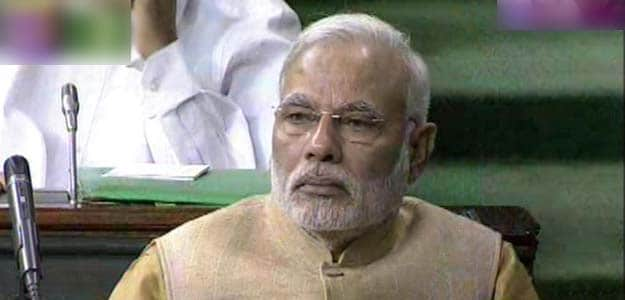
India's new right-wing government under Prime Minister Narendra Modi unveiled its maiden budget on Thursday, promising a new era of fiscal prudence and greater opportunities for foreign investors in key sectors of the economy.
Finance Minister Arun Jaitley told parliament that the new right-wing government, in office since May, had inherited a "challenging" situation of low growth and high inflation from the previous Congress administration.
But he laid out what he said were broad indicators of the direction the government intended to travel in: towards lower government debt, more privatisation and greater openness to foreign investors.
Government overspending would be brought down dramatically in the next three years, with the fiscal deficit reduced to 3.0 percent in 2016/17 from a target of 4.1 percent this financial year, Mr Jaitley pledged.
"We cannot leave behind a legacy of debt for future generations," he said.
He said the budget was "the beginning of a journey to sustain seven to eight percent growth in the next three to four years."
Mr Jaitley also announced an increase in the permitted level of foreign direct investment in the defence and insurance sectors to 49 percent from 26 percent.
He also said the government intended to sell an unspecified amount of shares in the debt-laden public banks which are in need of fresh equity.
"The government will continue to hold majority ownership, but the citizens of India will get direct shareholding in these banks," he said.
But the Sensex, the leading index of the Bombay Stock Exchange, fell 0.99 percent to 25,193.55 points around noon as investors apparently reacted with disappointment to the absence of any sweeping structural reforms.
Markets were expecting that Modi's new government would use the budget to flesh out campaign promises to lift Asia's number-three economy from its longest stretch of sub-five percent growth in a quarter-century.
With two-thirds of India's 1.25 billion population living on less than $2 a day, according to World Bank figures, and worries about a below-average monsoon, Mr Jaitley said the government would continue to care for the poor.
But, taking up a theme repeated during election campaigning by Mr Modi, he argued that the poor had become newly aspirational and wanted job opportunities and better infrastructure, not just handouts.
"It is the poor that suffer the most," Mr Jaitley said. "We have to ensure that our anti-poverty programmes are well targeted."
- 'Maximum governance, minimum government' -
Growth has crashed from near double-digits a few years ago to 4.7 percent in 2013, marking the second straight year of sub-five percent expansion amid high interest rates, falling investment and wage-eroding inflation.
The finance ministry's India Economic Survey forecast Wednesday the economy could expand 5.4-5.9 percent this year, but cautioned the patchy annual rains, running at 42 percent below average, threatened growth.
Since taking charge after a landslide win over the left-leaning Congress, swept out by voters angry about weak growth and scandals, Mr Modi has sent strong signals he will pursue his "Modinomics" agenda of "maximum governance, minimum government".
Mr Modi has consolidated ministries and scrapped cabinet panels to streamline administration and speed decisions.
Mr Jaitley has criticised "mindless populism" burdening public finances.

-
We May Need Another Tukaram Mundhe To Fight Air Pollution | The Reason Why

Developers may install basic measures such as sprinklers and green nets, resume work, and continue violating rules when this equipment stops working.
-
Extracting Value From Battery Scrap Could Be Challenging For India | The Reason Why
A discarded lithium-ion battery still contains valuable materials such as lithium, nickel and cobalt. These can be recovered and reused. When such batteries are crushed and shredded, they produce a dark powder called black mass.
-
One El Nino, India Can Handle. Two Could Break The Granary
India's grain stocks can absorb one bad year, but a second El Nino could drain the buffer in two to three years, economists say.
-
India's Troika Of Good Luck | Joining The Dots
As Jensen Huang's exit drags Nvidia down, a cooling AI trade and resilient earnings have revived investor interest in India. A likely RBI rate hike looms.
-
Talking Points This Week: Leadership Shock At Nvidia, Earnings Strength, And The Fog Over Hormuz
The Anthropic IPO pricing and first trading day, Nvidia's upcoming earnings, and any fresh signals from Iran will set the tone for the following week.
-
Signature Play: The Classic Cocktail Is Dead. Or Is It?
Classic cocktails are disappearing from India's cocktail menus. But they're still being ordered, taught to bartenders and borrowed from. So, who's really having the last drink?
-
A New Samvat Wishlist: Inclusive Prosperity And Human Development
India has strengthened its economic foundations through infrastructure, digital access and enterprise. Its next growth chapter must deepen productivity, create better livelihoods and widen participation in prosperity.
-
Love, Sex Aur Dhokha: The Audacious Plot To Spy On Jensen Huang
A Taipei dinner, a Singapore chip buyer and a suspected Chinese asset: inside the alleged spy operation that got close to NVIDIA's Jensen Huang.
-
Ten Things I Learnt This Samvat
Patience can be a trap. Cheap stocks can stay cheap. Leverage can wipe you out. What did Samvat 2082 teach us? Niraj Shah writes on 10 lessons from the year gone by.
-
Talking Points This Week: Tech Nerves, FII Buying, And A Faraway Banking Shock
The global markets are not shining this Diwali. The exception in the large markets is, India.









