Budget 2014: Five Tax Expectations From Arun Jaitley
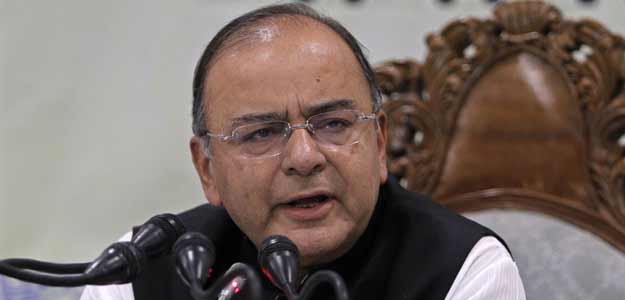
For millions of Indians, budget announcements are just about whether taxes have gone up or down, but this year, the excitement among taxpayers is palpable as the new Modi government is expected to fulfill its promise of "acche din".
According to Barclays, corporate and personal income taxes are on the high side in India compared with most of its peer economies, while the breadth of its tax net is relatively narrow. High earners in the country pay more taxes (34 per cent) than their counterparts in Singapore (20 per cent) and Canada (29 per cent), and only marginally less than high earners in the US (40 per cent).
Surely, there is a case for Finance Minister Arun Jaitley to rationalise taxes in his maiden budget. However, the FM will also have an eye on the precarious state of government finance. India is in the midst of its worst economic slowdown in over 25 years, which means the government does not have many levers to raise revenues to compensate for any shortfall in tax collections.
1. Raise income tax slabs: Currently, there is no tax for income up to Rs 2 lakh. According to PricewaterhouseCoopers (PwC), exemption limit on income tax should be hiked to Rs 3 lakh. Deutsche Bank says any increase in income tax slabs will lower tax outgo and increase disposable income. The move may lead to increased spending needed at a time when the Indian economy is facing its worst slowdown in over 25 years.
Probability=low. Personal income tax is an important revenue source for the government. According to Edelweiss, income tax contributed to 2.1 per cent of India's GDP in financial year 2013-14, i.e. roughly the same amount the government spent towards food, fuel and fertiliser subsidies in the same year.
If Mr Jaitley raises tax slabs, he will have to make up for revenues by i) cutting subsidies, which would be politically tough; ii) hiking corporate tax, which will again be difficult because of the economic slowdown; iii) hiking indirect taxes, which will fuel inflation and hurt the economy.
So, analysts say Mr Jaitley may settle for status quo as far as raising tax slabs is concerned.
2. Hike deduction limit under Section 80C of the Income Tax Act: This section gives tax breaks to long-term financial savings instruments such as housing loan repayment, five-year and above tenure fixed deposits, provident funds (PFs) and life insurance policy premiums. According to Ambit, Mr Jaitley should incentivize financial savings by expanding the current Section 80C limit from Rs 1 lakh to Rs 1.50 lakh. PwC has called for doubling of deduction under 80C to Rs 2 lakh. An increase in 80C limits will increase domestic savings, which can be utilised for infrastructure development.
Probability=low to moderate. A Rs 1 lakh hike in 80C limit will lead to a revenue loss of Rs 30,000 crore.
3. Increase in exemption limit for housing loan interest: Currently, interest up to Rs 1.50 lakh on home loan for self-occupied property is tax free. Analysts say the current ceiling should go up to Rs 4 lakh or Rs 5 lakh to account for the sharp rise in property prices over the last ten years. Enhancing interest exemption limit will increase affordability and benefit the entire real estate sector, which contributes nearly 6 per cent to the GDP.
Probability=low. Property prices have not corrected despite severe slowdown and rising inventories. The move may help developers more than buyers.
4. Up medical reimbursements to Rs 50,000 from Rs 15,000 now, conveyance allowance to Rs 2,500 from the present Rs 800: Limits on these sub-heads have not changed for the last many years and have lost their relevance. Healthcare costs have gone up substantially and so have fuel costs, necessitating a rethink over these exemptions.
Probability=low to moderate. Mr Jaitley may consider raising medical and conveyance limits if he does not make major changes in the above three laws.
5. Increase tax on high earners: Currently, individuals (42,800 to be precise) whose taxable income exceeds Rs 1 crore, have to pay a surcharge of 10 per cent. Mr Jaitley may increase the tax rate on these high earners or may impose even higher tax on people earning more than Rs 10 crore annually to compensate for revenue shortfall for any of the above-mentioned sops.
Probability=low to moderate. Ambit says the government may create a fourth income tax slab at a higher rate.
The government can also announce changes in indirect taxes that will impact many consumers. Mr Jaitley is expected to slash duty on gold, which currently stands at 10 per cent. Gold duty was hiked to dis-incentivize imports and bring down current account deficit. Both objectives have been met. Excise duty on cigarettes may go up by 15-20 per cent, analysts say. This will make cigarettes and other tobacco products costlier.
Probability=high. Health Minister Harsh Vardhan has been repeatedly demanding a substantial hike in excise duty on cigarettes and other tobacco products.

-
Getting To Work Costs Women More | The Reason Why

It is not just about women paying more than men. It is about women paying much more in cities than in villages.
-
AI Bias In Investing Cannot Be Eliminated, But It Can Be Governed
Framing is a particularly important example as identical financial information presented in terms of gains rather than losses can lead an LLM to reach a different assessment.
-
Joining The Dots | Dark Skies, Steady Diya: Why Hope Holds This Diwali
With war, a weak rupee and foreign outflows weighing on sentiment, policymakers at the NDTV World Summit and market veterans at NDTV Profit Ignite: Diwali Edition offered the same advice: stay invested and filter out the noise.
-
The Curious Case of Equitas Small Finance Bank And A CEO Who Quit For Stock
PN Vasudevan believes persistent investor concerns over a perceived conflict of interest had become a governance overhang on Equitas Small Finance Bank's stock, even as the lender improved profitability and asset quality.
-
Talking Points This Week: AI Cash Burn, A Tiger Comeback And An India That Still Finds Its Own Path
India is not immune to higher oil or tighter global liquidity, yet its earnings base is broader, its domestic policy levers are still available.
-
Foreign Investors Own Half Of HDFC Bank and ICICI Bank. An LTCG Cut Could Matter Most Here
Foreign portfolio investors have US$115 billion parked in HDFC Bank, ICICI Bank. If the government cuts long-term capital gains tax, Jefferies says returning foreign money could land here first.
-
'Never Seen This Level Of Negativity': Sandeep Tandon Says The Next Rally May Be Closer Than You Think
Veteran investor Sandeep Tandon says foreign selling is easing, large-caps are due a comeback and mid-caps are crowded, while he turns positive on gold, power and pharma this Diwali.
-
Indians Stay With Family, Not In Hotels | The Reason Why
India still lacks enough clean, reliable and affordable hotels for budget-conscious travellers.
-
The Economic Imperative: Analysing The Material Driving Force Behind India-Canada Strategic Reset
This economic complementarity is further reinforced by deep institutional investment ties and talent mobility, which form the bedrock of the bilateral framework.
-
Medicine Pricing: Where Must Profit Stop?
India must confront excessive margins, hidden incentives and regulatory gaps that threaten the integrity of medicine.










