BSNL Asks Circles To Cut Down On Contract Labour
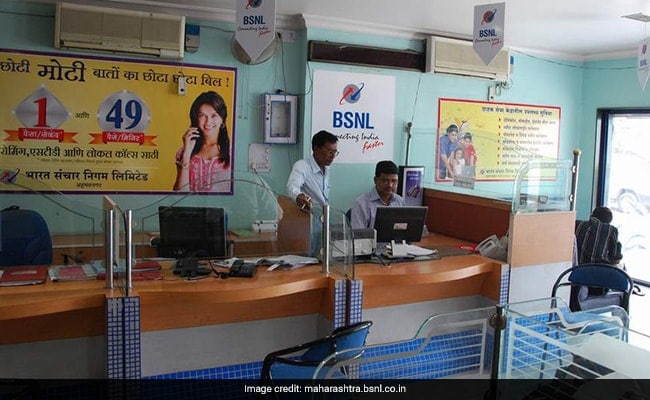
State-run BSNL, which is trying to overcome liquidity crunch and financial squeeze, has undertaken fresh measures to cut avoidable expenditures on contract labour and do a cost-benefit analysis of the legacy landline and broadband exchanges as well as towers to achieve network optimisation.
"During the various review meetings with the higher management, the liquidity position and financial crunch in BSNL had been discussed and it was decided to issue necessary instructions/guidelines immediately to reduce the expenditure in the various items including outsourcing Contract Labour," said a letter from BSNL's corporate office on June 4 to all circle heads across the country.
These contract labours who are outsourced by BSNL are hired for administrative/operational activities in fields -- housekeeping, security and data feeding.
The BSNL management has decided to review all outsourced labour contracts to reduce expenditures and generate savings and after the review the performance status report should be submitted by the circle heads by June 20.
"Hence, suitable measures may be taken to reduce expenditure on outsourcing in the administrative/operational activities in field -- house keeping, security and data feeding. Thus a through review of all outsourcing contracts involving labour should be done with a view to reduce expenditure and obtain savings," the letter said.
The letter further adds: "Next quarters payment may be released only after it is certified by the CGM that such a review has been done. The action may be taken in cases where revenue generation is minimal or less compared to expenditures incurred on the same other than salary expenditures."
The corporate office which is the headquarter of the PSU (public sector undertaking) has also directed the circles taking austerity measures on network optimisation.
The PSU in the last past three months had instructed its circles to do a review of landline exchanges, broadband networks elements, and towers in the context of revenue earned from such exchanges or towers and the expenditure done on the same to achieve network performance optimisation.
"It has been directed that analysis may clearly point out exchanges which are critical to network or have potential for revenue increases to offset the losses due to high expenditure on such exchanges," said the communication.
The PSU has sought performance status report by June 20.
BSNL is expecting normalcy in cash flows in the second quarter (July-September) of FY20, according to its Director (Finance) who had blamed the "predatory pricing" for the current crisis in the sector and in BSNL.
"The liquidity position of the company may start improving and normalcy could be restored in the next quarter," SK Gupta, BSNL director (finance), had stated in a May 16 letter to the chief general managers and financial advisors of all its telecom circle heads and district maintenance regions.
BSNL has been incurring losses for the last many years and except in 2014-15 where it had got an operating profit of Rs 672 crore. BSNL had registered a profit of Rs 10,000 crore till 2004, but recorded a loss of Rs 8,000 crore during the next ten years. Its 1.76 lakh employees consume 55 per cent of its revenue which is also falling due to hyper competition.
The severe liquidity crisis earlier this year pushed BSNL to delay salary of February by one-and-half-months.

-
The Economic Imperative: Analysing The Material Driving Force Behind India-Canada Strategic Reset

This economic complementarity is further reinforced by deep institutional investment ties and talent mobility, which form the bedrock of the bilateral framework.
-
Medicine Pricing: Where Must Profit Stop?
India must confront excessive margins, hidden incentives and regulatory gaps that threaten the integrity of medicine.
-
Why Amazon And Flipkart Are Struggling To Beat Meesho In India's Smaller Cities
With 274 million users and lowest-cost logistics, Meesho is defending its value commerce crown against giants like Amazon and Flipkart.
-
High US Salaries, No Green Card Certainty: The Financial Calculation Facing Indian H-1B Families
The suspension of PERM processing at eight technology employers does not cancel existing H-1B visas. What it does is force a question many Indian families have been avoiding: is the US salary worth tying your career and family plans to one employer?
-
Swiggy vs Eternal: Food Delivery's Two Rivals Are No Longer In The Same Race
Eternal is building a private AI assistant, dark.ai. Swiggy is still working out how to make Instamart pay, with an operating loss of Rs 895 crore in the July-September quarter while Blinkit stayed profitable.
-
Where You Live Shapes How You Get To Work | The Reason Why
Two-wheelers are the most popular way to get to work in India, accounting for nearly 43% of workplace commutes.
-
Unhedged Position: Can India See An Indonesia-Style Time Correction?
The Nifty is trading below levels it first clocked in 2024. Is there, then, as I have suggested in the headline, potential that the current time correction drags on painfully for the next three-five, even ten years?
-
Navigating Friction And Energy Realities: An Analysis Of Marco Rubio's October Visit To India
Occurring at a critical juncture marked by stalled trade negotiations and escalating geopolitical pressures over global energy supplies, the visit offers a profound window into modern US-India relations.
-
India Exports Capital. Why Not Export Trusteeship?
The big question, then, is whether India can build an institution that global borrowers, investors, banks, and lawyers can trust, even without an Indian connection.
-
France's Economy & Politics Are In Crisis | The Reason Why
Let's look at how the French economy and politics evolved under Nicolas Sarkozy, Franois Hollande and Emmanuel Macron.










