BSE Fines 530 Firms for Delay in Appointing Women Directors
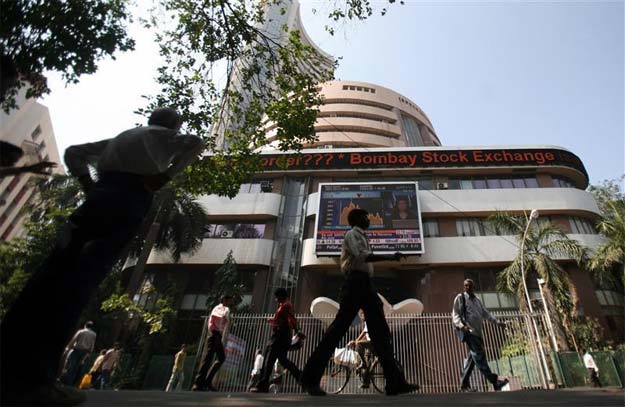
New Delhi: The Bombay Stock Exchange (BSE) has slapped fines on 530 listed companies for failing to meet a deadline to appoint a women director and boost gender diversity in their boardrooms, an official from the bourse said on Tuesday.
The Securities and Exchange Board of India (Sebi) last year imposed a quota of at least one female director on the board of every listed firm, and warned of "very serious" consequences if the thousands of companies did not comply by an April 1 deadline.
The BSE said in a statement that capital market regulator Sebi's rules meant companies who failed to comply would face a scheduled fine. This ranges from Rs 50,000 ($790) to Rs 1.42 lakh ($2,240), till October 1, 2015. After this, they would pay an additional Rs 5,000 ($78) per day until they complied.
"As per the provisions of the SEBI circular, BSE has till date (July 13) issued advisory letters to 530 companies regarding levy of fines for non-compliance with the said provision within the prescribed timelines," said a statement.
A BSE spokesman said he could not disclose the names of the 530 firms from the 5,711 companies listed on the exchange that were being penalised.
The National Stock Exchange (NSE) said it had also sent out letters informing 260 listed firms, many of which are also listed on the BSE, of its intention to levy fines.
An NSE spokesman said Sebi could take further action against companies which had not paid up fines and appointed a woman director by September 30, 2015.
"SEBI may take any other action, against the non-compliant entities, their promoters and/or directors or issue such directions in accordance with law, as considered appropriate," he said quoting the Sebi directive.
Not enough
According to PRIME Database, a market research group, which monitors the NSE, 105 companies out of 1,733 still had vacancies for women directors on their boards as of Tuesday.
These include private firms such as Aditya Birla Chemicals, Nissan Copper Ltd and Infotech Ltd as well as state-run companies such as the Bank of India, the State Trading Corporation of India and the Bank of Maharashtra.
Analysts welcomed the move, but said it was insufficient to force companies give women seats at the tables.
"The fines really are not enough. If you look at it, a company would be paying only around 63,000 rupees or $1,000 - for non-compliance if they paid today," PRIME Database managing director Pranav Haldea said.
"Asking a company to pay that amount will not exactly burn a hole in their pockets."
Sebi could take stronger action such as suspension from trading or freezing promoters' share holdings, Mr Haldea said.
The companies have argued there are too few professionally qualified women to fill boardroom positions. But others say there are many women who can do the job but need support in terms of visibility and networking.
"While Sebi is right to have fined companies for non-compliance to appoint women on boards, is the government doing enough to ensure that women are appointed on boards of companies?" said Sarika Bhattacharyya, co-founder and director of Biz Divas, a non-profit promoting women leadership.
"India is still in the nascent stage of appointing women on boards and if necessary steps are taken by the government, we should be able to see better traction."
Ahead of Sebi's April 1 deadline, thousands of companies rushed to recruit women directors, with many installing the wives and mother-in-laws of their top executives.
But the scarcity of women in the boardroom is not unique to India. Nearly one-fifth of the world's 200 largest companies have no women directors, according to an August 2014 report by Biz Divas.

-
A New Samvat Wishlist: Inclusive Prosperity And Human Development

India has strengthened its economic foundations through infrastructure, digital access and enterprise. Its next growth chapter must deepen productivity, create better livelihoods and widen participation in prosperity.
-
Love, Sex Aur Dhokha: The Audacious Plot To Spy On Jensen Huang
A Taipei dinner, a Singapore chip buyer and a suspected Chinese asset: inside the alleged spy operation that got close to NVIDIA's Jensen Huang.
-
Ten Things I Learnt This Samvat
Patience can be a trap. Cheap stocks can stay cheap. Leverage can wipe you out. What did Samvat 2082 teach us? Niraj Shah writes on 10 lessons from the year gone by.
-
Talking Points This Week: Tech Nerves, FII Buying, And A Faraway Banking Shock
The global markets are not shining this Diwali. The exception in the large markets is, India.
-
Midterm Rally Lasted A Day. The Hard Reality Of A Divided US May Last Two Years | Opinion
Between a contested AI boom, a debt ceiling that arrives in 2027 and a president with every incentive to act alone, the next two years may prove more volatile than the first day's rally suggests.
-
Blue Wave Will Derail the AI Trade but Won't Dismantle the AI Era | Unhedged Position
The Democrats' sweep of the US Congress will see politics collide with economic forces both over the long and short term.
-
It's Time To Take The GST Council's Bet On Trust Global
Payment records can prove India's services exports, and clear, proportionate rules can bring foreign digital sellers into the tax net.
-
Opinion | India at 38: From Innovation Overperformer to Innovation Powerhouse
India now has 453 VC-backed deep science startups, 18 of them late-stage, after 117 percent growth since 2020. Laurus Labs, at USD 9.3 billion, is the most valuable deep science company in any middle-income economy outside China.
-
Navigating Energy Crossroads: S Jaishankar's Call For Diversified Supply Chains At G20 Ministerial Meeting
As geopolitical fault lines continue to test maritime trade routes and commodity flows, Jaishankar's message remains pertinent: true economic resilience requires open markets, protected transit lines, and a genuine commitment to multilateral cooperation rather than coercion.









