BS-III Vehicles Ban 'Frustrating', Says Auto Industry Body
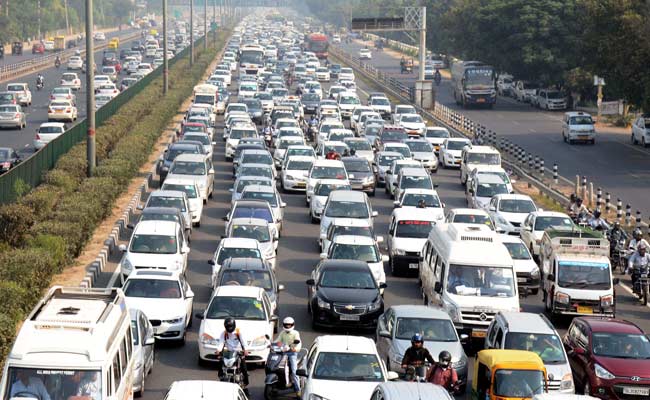
The Supreme Court on Wednesday banned the sale and registration of vehicles which are not BS-IV compliant from April 1, 2017 across the country. A two-member bench of Madan B Lokur and Deepak Gupta said that health of millions of citizens was more important than commercial interests of manufacturers and directed the government not allow registration of polluting BS-III vehicles after March 31. While many green bodies and auto manufacturers have lauded the ruling, those opposing the ruling have warned that the switch to Bharat Stage-IV emission standards can cause difficulties to the entire automotive sector and price increases for the customer to ensure compliance.
The Supreme Court verdict banning BS-III vehicles from April will have to be respected but it is "frustrating" that the existing law allowing sale of these vehicles was ignored, said Vinod Dasari, president of auto industry body SIAM (Society of Indian Automobile Manufacturers).
While earlier orders banned the production of BS-III complaint vehicles, Wednesday's ruling completely bans such vehicles from plying on the road.
"We all have to respect the Supreme Court verdict," Mr Dasari said adding that commercial vehicle makers have been producing BS-IV units since 2010 but they have been selling BS-III for the last seven years because of lack of fuel.
EY Partner and automotive sector leader Rakesh Batra said: "This industry works globally on 20 to 30 days inventory within the distribution channel and this should have considered as part of the transition plan when migrating from BS-III to BS-IV."
"Unfortunately a last minute decision does not help any of the industry stakeholders or consumers, in the month of March when volumes are higher due to year-end purchases and deals," Mr Batra added.
Environmental bodies however lauded the move terming it as an acknowledgement to the public health crisis and a step in right direction towards fighting air pollution.
The Global Burden of Disease (GBD) 2017 report suggests India has the second highest number of early deaths due to particulate matter 2.5 in the world.
Anumita Roychowdhury, executive director, Centre for Science and Environment, said "This is a significant step forward as this gives the message and the lesson that the automobile industry will have to walk the extra mile to address the expansive concern around public health and not weigh down the transition by taking a very narrow technical view."
"Matter of principle"
Many automakers also voiced support for the Supreme Court order. Bajaj Auto managing director Rajiv Bajaj said: "There are some things on which you can't put a price. This is for the future of our children. This is a matter of principle."
Similarly, Toyota Kirloskar and Honda Motorcycle and Scooter India Motor have also lauded the ruling as a move towards meeting global standards of emission and safety. Car market leader Maruti Suzuki is least affected by the order and has been making BS-IV vehicles since 2010.
According to media reports, motor companies are holding a stock of 8,24,275 BS-III vehicles, which includes 96,724 commercial vehicles, 6,71,308 two-wheelers, 40,048 three-wheelers and 16,198 cars.

-
Gold Is Rs 22,000 Cheaper Than A Month Ago. Should You Buy Amid The Wedding Season?

Gold's potential slide to $3,500 could save around Rs 4,700 per 10 grams, but a soft inflation print could just as easily push prices back up. One way to split the risk is to buy in parts, some now and the rest after the Fed's Dec. 9 decision.
-
AI Agents Are Gaining Power. Who Governs Them?
Artificial intelligence agents promise to transform productivity by moving machines from assisting decisions to executing them. But as organisations delegate greater authority to these AI-agents, they must first establish who controls that authority and who remains accountable when things go wrong.
-
Why Swapping Your Old Gold Can Trigger A Rs 5 Lakh Tax Bill, And How You Can Avoid It Legally
Swapping old gold for new is taxed as a sale and a fresh purchase. Getting your own gold remade can cut most of that bill, though it has its own costs.
-
The AI Trade is Done. The Real Opportunity for Investors Starts in 2027 | Unhedged Position
As pureplay AI stocks plunge and circular, capex-led financing unwinds, 2027 is set to be a year of reckoning for AI companies. Yet the bust clears the way for a better opportunity for investors in 2027 -- shifting the spotlight from AI builders to the companies using AI.
-
Leadership As Mission: Why The Age Of AI Demands More Human Leadership
Debjani Ghosh examines how AI is changing leadership, arguing that its success must be measured by its impact on people and the accountability of those guiding its use.
-
We May Need Another Tukaram Mundhe To Fight Air Pollution | The Reason Why
Developers may install basic measures such as sprinklers and green nets, resume work, and continue violating rules when this equipment stops working.
-
Extracting Value From Battery Scrap Could Be Challenging For India | The Reason Why
A discarded lithium-ion battery still contains valuable materials such as lithium, nickel and cobalt. These can be recovered and reused. When such batteries are crushed and shredded, they produce a dark powder called black mass.
-
One El Nino, India Can Handle. Two Could Break The Granary
India's grain stocks can absorb one bad year, but a second El Nino could drain the buffer in two to three years, economists say.
-
India's Troika Of Good Luck | Joining The Dots
As Jensen Huang's exit drags Nvidia down, a cooling AI trade and resilient earnings have revived investor interest in India. A likely RBI rate hike looms.
-
Talking Points This Week: Leadership Shock At Nvidia, Earnings Strength, And The Fog Over Hormuz
The Anthropic IPO pricing and first trading day, Nvidia's upcoming earnings, and any fresh signals from Iran will set the tone for the following week.









