Broken Supply Chain Drags Patanjali’s Sales Down First Time In Five Years

Sales of Patanjali Ayurved Ltd. fell for the first time in five years as the goods and services tax left the distribution network of the homegrown consumer goods maker broken.
Yoga guru Ramdev-backed company's standalone consumer goods revenue declined more than 10 percent to Rs 8,148 crore in the year ended March 2018—the first time since 2013, according to a report by Care Ratings. “The decline was primarily because of its inability to adapt in time to the goods and services tax regime and develop infrastructure and supply chain.”
The fast-moving consumer goods company's sales grew more than fourfold in three years through March 2017, and it aimed to overthrow market leader Hindustan Unilever Ltd. and No. 2 ITC Ltd. by selling everything from staples to salt. The new nationwide sales tax rolled out in July last year that subsumed a web of levies and mandates multiple monthly returns to improve compliance stalled the growth of India's consumer goods sector. While rivals managed to recover, Patanjali still hasn't.
Patanjali's technology back-end was not ready for the GST-related inventory and invoicing management in time, a person aware of the company's affairs told BloombergQuint requesting anonymity.
Patanjali's spokesman SK Tijarawala, when speaking to BloombergQuint over the phone, denied that. Distributors were slow to transition to the new indirect tax system, he said.
Till last year, the company relied on exclusive partners to supply products. It's now aggressively adding those who also manage supplies of large consumer goods makers like HUL and ITC, according to Dhairyashil Patil, national president of All India Consumer Products Distributors' Federation.
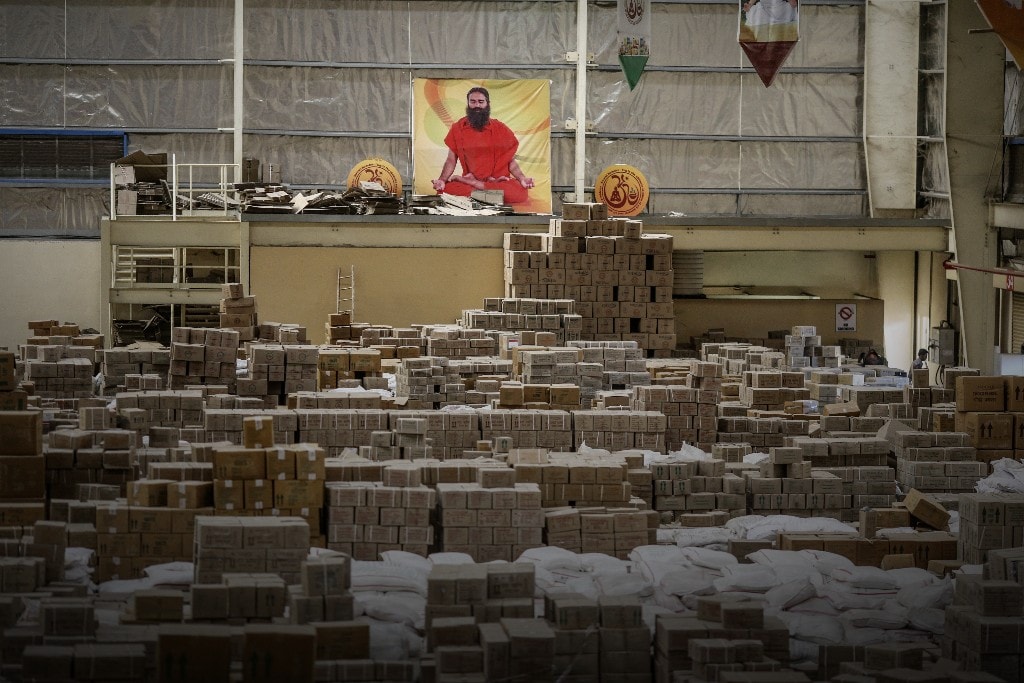
Its problems resulted in a mismatch between the products required and sent, according to Patil. Some items are in excess while there's a shortage for others, he said. Distributors are also sitting on damaged inventory, he said. “That's deterred them from stocking Patanjali's products.”
The company retails through 5 lakh franchisee stores and also via supermarkets like Big Bazaar and Reliance Retail and online retailers including Amazon. Patil said nearly 90 percent of the small outlets that exclusively sold its products from biscuits and instant noodles to shampoos soaps and shampoos face supply crunch.
Patanjali is trying to plug the gaps. It's integrating technology to ensure stock matches demand, Tijarawala said, admitting that there was a “problem of oversupply in a few areas”.
For distributors, disruption also means that supplies come late. By the time products land, they are close to the date of expiry, according to Ashish Jaiswal, a company distributor in Nagpur, told BloombergQuint. “Also, the company takes time to settle claims.”
The problems with the distribution network come as, according to Care Ratings, Patanjali is in the middle of a debt-fuelled expansion. Increased overhead costs because of the expansion, higher distribution and selling expenses, advertising and promotion expenses and higher dealer discounts and commissions will keep its performance subdued in the medium term, the rating agency said.
Patanjali needs to ensure it resolves the issues with its supply chain at the earliest, brokerage IIFL said in an October report. The slowdown is a direct result of poor management of trade channels and lack of a coherent advertising strategy, it said. “Exclusive retailers who were excited and enthusiastic two years ago feel angry or defeated today.”

-
'Never Seen This Level Of Negativity': Sandeep Tandon Says The Next Rally May Be Closer Than You Think

Veteran investor Sandeep Tandon says foreign selling is easing, large-caps are due a comeback and mid-caps are crowded, while he turns positive on gold, power and pharma this Diwali.
-
Indians Stay With Family, Not In Hotels | The Reason Why
India still lacks enough clean, reliable and affordable hotels for budget-conscious travellers.
-
The Economic Imperative: Analysing The Material Driving Force Behind India-Canada Strategic Reset
This economic complementarity is further reinforced by deep institutional investment ties and talent mobility, which form the bedrock of the bilateral framework.
-
Medicine Pricing: Where Must Profit Stop?
India must confront excessive margins, hidden incentives and regulatory gaps that threaten the integrity of medicine.
-
Why Amazon And Flipkart Are Struggling To Beat Meesho In India's Smaller Cities
With 274 million users and lowest-cost logistics, Meesho is defending its value commerce crown against giants like Amazon and Flipkart.
-
High US Salaries, No Green Card Certainty: The Financial Calculation Facing Indian H-1B Families
The suspension of PERM processing at eight technology employers does not cancel existing H-1B visas. What it does is force a question many Indian families have been avoiding: is the US salary worth tying your career and family plans to one employer?
-
Swiggy vs Eternal: Food Delivery's Two Rivals Are No Longer In The Same Race
Eternal is building a private AI assistant, dark.ai. Swiggy is still working out how to make Instamart pay, with an operating loss of Rs 895 crore in the July-September quarter while Blinkit stayed profitable.
-
Where You Live Shapes How You Get To Work | The Reason Why
Two-wheelers are the most popular way to get to work in India, accounting for nearly 43% of workplace commutes.
-
Unhedged Position: Can India See An Indonesia-Style Time Correction?
The Nifty is trading below levels it first clocked in 2024. Is there, then, as I have suggested in the headline, potential that the current time correction drags on painfully for the next three-five, even ten years?
-
Navigating Friction And Energy Realities: An Analysis Of Marco Rubio's October Visit To India
Occurring at a critical juncture marked by stalled trade negotiations and escalating geopolitical pressures over global energy supplies, the visit offers a profound window into modern US-India relations.










