#BQDebates: Should The NGT Chairperson Be Re-Hearing Cases Reserved For Judgment?
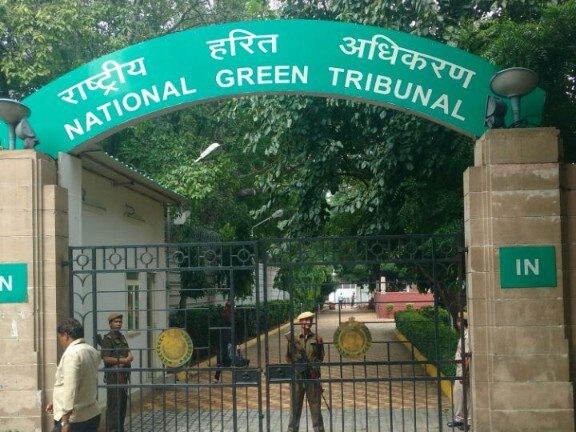
In a curious move, the National Green Tribunal is set to re-hear 18 cases that have already been heard and were reserved for judgment. Its insistence to do, despite being cautioned by the Supreme Court in one matter, is puzzling.
Take the Uttarakhand Char Dham highway project case. It had been reserved for judgment by a three-member bench in May. It was sought to be re-heard on Aug. 6 after the NGT chairperson Justice AK Goel joined the bench. When the petitioner, Citizens for Green Doon, moved the Supreme Court against the re-hearing of the case, the apex court ruled on Aug. 27 that the original bench of three members, could hold additional hearings if needed, but without any changes to the bench.
On Sept. 4, this three-member bench ruled “that matter requires rehearing by a larger Bench,” thereby persisting in its efforts to add Justice Goel to the bench and to re-hear the case from scratch.
Meanwhile, in identical orders passed on Aug. 31 by different benches, 17 other cases previously reserved for judgment were also referred to the chairperson's bench for re-hearing. The reason - the judgments had been reserved for over a month.
On Sep. 4, the chairperson's bench took up a few of these cases, extended the timeline for hearing in some, gave a date for subsequent hearing in some others, directed the Maharashtra government to file its Coastal Zone Management Plan in disposing one case, and deferred to proceedings underway in the Karnataka High Court and the Supreme Court in another.
These developments were first reported by The Indian Express.
Leading lawyers told BloombergQuint that the move to re-hear cases is “unprecedented”, made with no “no valid grounds”, as there is “no rule that requires a bench to release a reserved case.”
‘No Valid Grounds To Order Re-Hearing'
Ritwick Dutta – Environmental Lawyer and Managing Trustee, Legal Initiative for Forest and Environment (Counsel in two cases ‘released' for re-hearing)
The decision to rehear all the 18 cases is indeed very unusual. There are no valid reasons for requiring a rehearing of the cases. The ground stated by the National Green Tribunal that judgments could not be pronounced within one month is not a ground since neither any judgment of the Supreme Court nor any statutory provisions provide for the same.
The other ground that has been given by the NGT that these issues are “complex” is again not a valid ground. Judges are appointed and are trained to deal with complex issues. A single judge in the High Court and trial court are able to adjudicate on complex issues involving a large number of witnesses and examining evidence, it is strange that three members including a technical member find themselves incapable of adjudicating on issues. One must not forget that some of the most complex cases in NGT were adjudicated by two members – the cases related to the Posco Steel Plant in Orissa, the Lower Demwe Project in Arunachal Pradesh, the Aranmula Airport in Kerala, and the Subansiri Dam in Arunachal Pradesh were all decided by a two-member bench.
The recourse available before the citizens are multiple. In addition the Supreme Court, the High Courts could also be approached since the superintendence of all tribunals under Article 227 lies with the High Court. The High Courts can intervene if a tribunal under its jurisdiction is acting in a patently illegal manner. It does not matter if the tribunal is headed by former judges of the Supreme Court or the High Court. Public faith and confidence is the hallmark of judicial institutions and once this faith is eroded, it is difficult to restore it back.
‘NGT Chairperson Wants These Cases To Go By His Views'
Prashant Bhushan – Senior Advocate, Supreme Court
This is very unusual, almost unprecedented. It has never happened before. It's also very irregular.
It shows that the chairperson wants his own views to prevail in all these matters which have been heard by different benches and judgment has been reserved.
So, he is clearly a person who wants all these cases to go by his views.
He has his own views and he has his own background and connections as well. It is well known that he was a member of the RSS, the chairperson. His affiliation with RSS in the past will certainly colour his views and it may colour his judgment as well.
It is also well known that he was appointed NGT chairperson on the day of his retirement from the Supreme Court. I mean, it is a kind of gift by the government to him. So one has to put all these things together to understand what is happening.
The recourse is to challenge this decision in the Supreme Court. Earlier, in one of these cases, that is the Char Dham case, it was challenged. The decision to re-hear the matter was challenged and the Supreme Court said yes, it can't be re-heard by a different bench. If any re-hearing is required, then it should be by the same bench and yet, that same bench has referred it to him.
‘Common For Cases To Be Reserved For Months'
Shibani Ghosh – Public Interest Lawyer and Fellow at the Centre for Policy Research
I am personally not aware of any case before the NGT where this has happened before – i.e. the bench has released a matter that has been reserved for judgment after hearing, to be reheard by a different bench. There is no rule that requires a bench to release a reserved case if more than a month has passed.
In fact, it is not uncommon in the Supreme Court and High Courts, and even in the NGT, that judgments are delivered several months after the hearing is completed and the case is reserved.
A bench can rehear matters if it needs clarifications on certain aspects before it makes a final decision, or if there has been a substantial change in the factual or legal situation during the time the case was reserved for judgment – on which it may require the parties to make submissions. But just the fact that a month or more has passed since the case was reserved seems rather unusual.
The cases were released for rehearing and transferred to the chairperson's bench by judicial orders passed by a different bench of the NGT – which did not include the chairperson. I am not aware of the administrative procedure which may have led to these judicial orders, if any, and therefore cannot comment on it being a move made by the chairperson.
As these are all judicial orders of the NGT, persons aggrieved by such orders can file a statutory appeal to the Supreme Court (under Section 22 of the NGT Act 2010).

-
Getting To Work Costs Women More | The Reason Why

It is not just about women paying more than men. It is about women paying much more in cities than in villages.
-
AI Bias In Investing Cannot Be Eliminated, But It Can Be Governed
Framing is a particularly important example as identical financial information presented in terms of gains rather than losses can lead an LLM to reach a different assessment.
-
Joining The Dots | Dark Skies, Steady Diya: Why Hope Holds This Diwali
With war, a weak rupee and foreign outflows weighing on sentiment, policymakers at the NDTV World Summit and market veterans at NDTV Profit Ignite: Diwali Edition offered the same advice: stay invested and filter out the noise.
-
The Curious Case of Equitas Small Finance Bank And A CEO Who Quit For Stock
PN Vasudevan believes persistent investor concerns over a perceived conflict of interest had become a governance overhang on Equitas Small Finance Bank's stock, even as the lender improved profitability and asset quality.
-
Talking Points This Week: AI Cash Burn, A Tiger Comeback And An India That Still Finds Its Own Path
India is not immune to higher oil or tighter global liquidity, yet its earnings base is broader, its domestic policy levers are still available.
-
Foreign Investors Own Half Of HDFC Bank and ICICI Bank. An LTCG Cut Could Matter Most Here
Foreign portfolio investors have US$115 billion parked in HDFC Bank, ICICI Bank. If the government cuts long-term capital gains tax, Jefferies says returning foreign money could land here first.
-
'Never Seen This Level Of Negativity': Sandeep Tandon Says The Next Rally May Be Closer Than You Think
Veteran investor Sandeep Tandon says foreign selling is easing, large-caps are due a comeback and mid-caps are crowded, while he turns positive on gold, power and pharma this Diwali.
-
Indians Stay With Family, Not In Hotels | The Reason Why
India still lacks enough clean, reliable and affordable hotels for budget-conscious travellers.
-
The Economic Imperative: Analysing The Material Driving Force Behind India-Canada Strategic Reset
This economic complementarity is further reinforced by deep institutional investment ties and talent mobility, which form the bedrock of the bilateral framework.
-
Medicine Pricing: Where Must Profit Stop?
India must confront excessive margins, hidden incentives and regulatory gaps that threaten the integrity of medicine.










